
Best White Noise Machines for Better Sleep
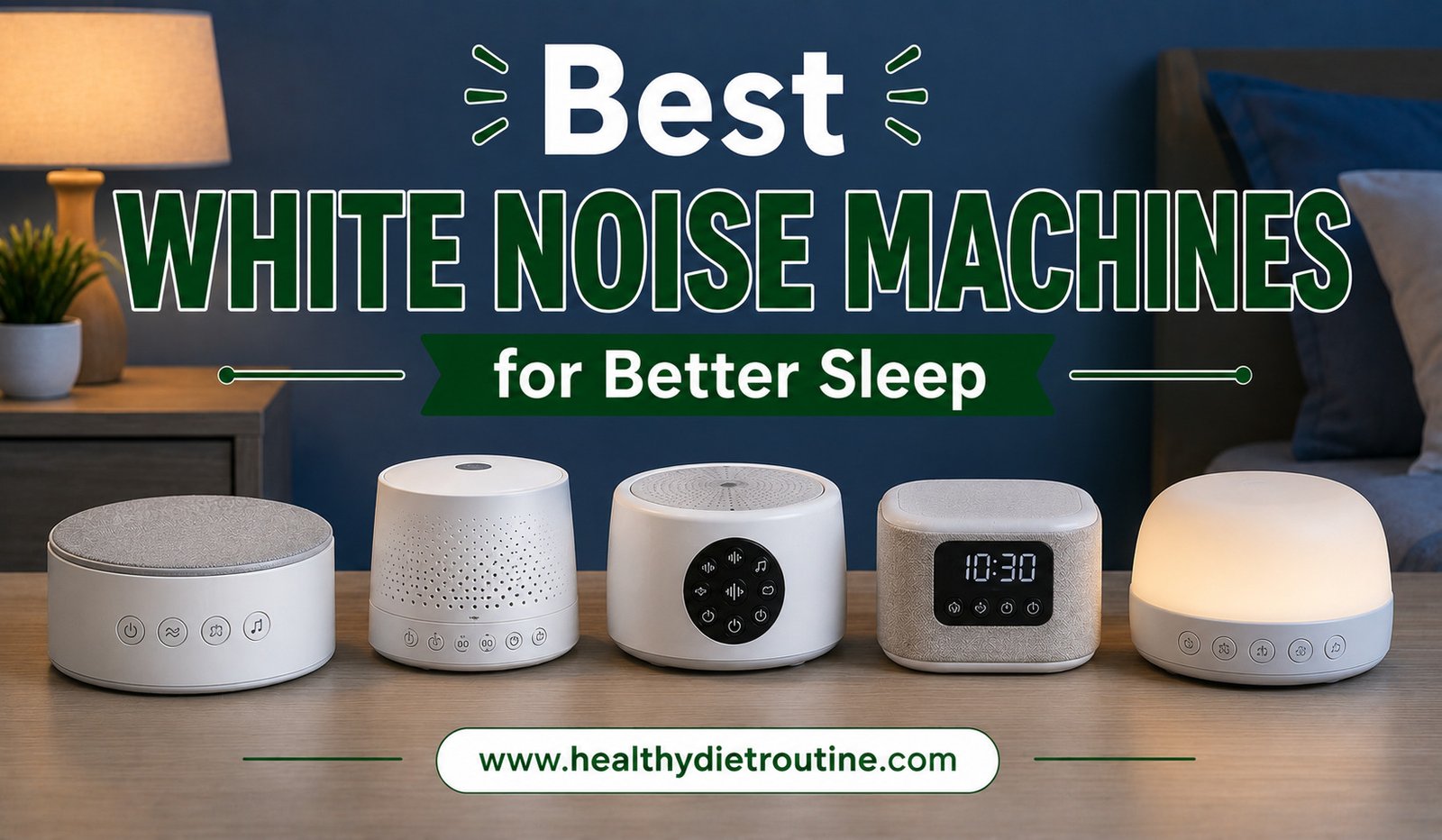
Getting a good night’s sleep can be difficult when your bedroom is surrounded by unpredictable sounds. Traffic outside, barking dogs, neighbors, household appliances, conversations, or sudden noises can interrupt an otherwise comfortable night. For people who are sensitive to sound, a white noise machine for better sleep can provide a simple way to create a more consistent bedroom environment.
White noise machines produce continuous background sounds that can help mask sudden or distracting noises. Some modern devices also offer pink noise, brown noise, rainfall, ocean sounds, fans, and other calming audio options.
However, white noise should not be considered a guaranteed treatment for insomnia or other sleep disorders. Research has produced mixed results, although some newer studies suggest that sound masking may improve sleep quality in certain groups. A 2025 systematic review of randomized controlled trials found improvements in sleep-quality scores among adult and older-adult patients, while also noting substantial variation between studies.
What Is a White Noise Machine?
A white noise machine is a small electronic device designed to play a continuous sound. Unlike music or podcasts, the sound generally remains consistent rather than changing from one moment to another.
White noise contains sound energy across a broad range of audible frequencies and is often perceived as a steady “hissing” sound. Pink noise has a deeper character because its energy is distributed differently across frequencies.
The purpose of a sound machine is usually not to make the bedroom completely silent. Instead, it creates a predictable background sound that can make sudden environmental noises less noticeable.
Why Use a White Noise Machine for Sleep?
One of the main reasons people use white noise is to mask unwanted sounds. If your bedroom is near a busy road or you live in a noisy apartment, a consistent background sound may make occasional disturbances less noticeable.
A systematic review of auditory stimulation and sleep found that some studies reported positive sleep outcomes from white or pink noise, but the overall evidence was not strong enough to establish a clear benefit for everyone.
A newer 2025 meta-analysis found more encouraging results in adult and older-adult populations, including improvements in sleep-quality scores. However, the researchers also highlighted heterogeneity between studies and the need for higher-quality research.
This means a white noise machine may work well for some people, particularly those whose sleep is disturbed by inconsistent environmental sounds, but it is not necessarily useful for everyone.
Types of Sleep Sound Machines to Consider
1. Traditional White Noise Machines
Traditional models focus on producing steady white noise. They are often simple to operate and may include volume controls and timers.
These machines are suitable for people who prefer a consistent background sound without a large selection of audio tracks.
2. Multi-Sound Sleep Machines
Modern sound machines often provide several options, including white noise, pink noise, brown noise, rainfall, ocean waves, fans, and nature sounds.
This flexibility can be useful if you are unsure which sound you prefer. You can experiment with different options and select the one that feels least distracting.
3. Portable White Noise Machines
Compact machines are designed for travel, hotel rooms, offices, or temporary sleeping spaces.
Battery-powered or rechargeable models can be particularly convenient because they do not always require a nearby electrical outlet.
4. White Noise Machines With Timers
Some devices allow users to set a timer so the sound stops after a specific period. This can be useful if you only want background noise while falling asleep.
Other models are designed to run continuously throughout the night. The preferred option depends on whether your main problem is falling asleep or staying asleep.
5. Smart Sound Machines
Smart models may offer app controls, schedules, customized sound profiles, and additional sleep-related features.
These devices can be useful for people who enjoy technology and want more control over their nighttime routine. However, advanced features are not necessary if your primary goal is simply to mask background noise.
Features to Look for in the Best White Noise Machine
The best white noise machine is not necessarily the most expensive one. Focus on features that improve everyday usability.
Adjustable volume: The ability to control volume is important. The sound should be noticeable enough to mask disturbances without becoming irritating.
Multiple sound options: White noise, pink noise, brown noise, fan sounds, and nature sounds give you more flexibility.
Timer settings: A timer can allow the device to shut off automatically after you fall asleep.
Continuous playback: If sudden silence wakes you easily, continuous playback may be more suitable than a device that stops after a short period.
Compact design: A small machine takes up less space on a bedside table and is easier to travel with.
Easy controls: Simple buttons can be preferable to complicated menus when you are using the device late at night.
Memory function: Some models remember your preferred volume and sound settings, making daily use easier.
Low mechanical noise: If the machine has a fan or moving components, make sure its mechanical noise is not more distracting than the sound it produces.
White Noise vs Pink Noise vs Brown Noise
Not every person enjoys traditional white noise.
White noise generally has a brighter, more hiss-like sound. Pink noise is often perceived as softer or deeper, while brown noise has an even stronger emphasis on lower frequencies.
There is currently no universal “best” sleep sound. Individual preference matters because a sound that feels soothing to one person may be irritating to another.
Research on auditory stimulation has investigated both white and pink noise, but systematic reviews have concluded that the overall evidence remains inconsistent.
The best approach is to choose a sound that feels comfortable and does not keep your attention focused on the machine.
How to Use a White Noise Machine for Better Sleep
Placement can make a difference. Rather than placing the machine directly beside your head, position it at a reasonable distance so the sound spreads naturally through the room.
Start with a relatively low volume. The goal is to create a comfortable background layer rather than make the room loud.
If you are using the machine to mask traffic or household sounds, adjust the volume only enough to reduce the contrast between the background noise and sudden disturbances.
You can also experiment with different sounds. Some people may prefer traditional white noise, while others may find pink noise, rainfall, or a fan-like sound more relaxing.
Consistency can also be useful. Using the same sound as part of a regular bedtime routine may help make the sleep environment feel familiar.
Are White Noise Machines Safe?
For most healthy adults, moderate use of sound machines has generally been well tolerated in short-term research. A 2025 systematic review of sound-machine studies in hospitalized adults reported no major adverse effects, although a small number of participants discontinued use because they found the sound uncomfortable or unacceptable.
Volume is an important consideration. A sound machine does not need to be loud to be useful. Keeping the volume at a comfortable level can reduce unnecessary exposure to sound.
If the device causes ringing in the ears, discomfort, headaches, or disturbed sleep, reduce the volume, change the sound, move the machine farther away, or stop using it.
People with significant hearing concerns or other relevant medical conditions can discuss appropriate sound exposure with a healthcare professional.
White Noise Machine vs Smartphone Apps
A smartphone can play white noise without requiring another device. There are numerous apps and streaming services that offer white noise, rainfall, fan sounds, and other sleep audio.
However, a dedicated machine has some advantages. It does not require phone notifications to be managed, and using a separate device can help keep your phone away from the bed.
For people trying to reduce nighttime screen exposure, a standalone sound machine may therefore be more convenient than keeping a smartphone next to the pillow.
Who Can Benefit From a White Noise Machine?
A white noise machine may be useful for people who:
- Live near busy roads or noisy neighborhoods
- Sleep in apartments with unpredictable sounds
- Have partners with different sleep schedules
- Work night shifts and sleep during the day
- Travel frequently
- Prefer consistent background sounds
- Want a simple addition to their bedtime routine
It may be particularly useful when unpredictable environmental noise is the main problem rather than difficulty sleeping for other reasons.
How to Choose the Best White Noise Machine
Start by identifying why you want one. If external noise is your biggest concern, prioritize volume control and continuous playback. If you are sensitive to different sounds, choose a model with multiple sound options.
For travel, portability and battery life are more important. For everyday bedroom use, sound quality, simple controls, timer options, and reliable operation may matter more.
You should also consider whether you want a basic machine or a smart model with app-based controls. Extra technology can be convenient, but it does not necessarily mean better sleep.
Most importantly, choose a sound you can comfortably tolerate for extended periods.
Other Habits That Support Better Sleep
A white noise machine works best as part of a broader sleep routine. Keeping the bedroom dark, comfortable, and relatively cool can help create a more sleep-friendly environment.
A consistent bedtime, limiting stimulating activities before bed, and avoiding excessive caffeine late in the day may also support better sleep.
If you regularly struggle to fall asleep, wake frequently, wake too early, or feel excessively tired during the day, a sound machine may not address the underlying problem. Persistent sleep difficulties may require professional evaluation.
Final Thoughts
The best white noise machines for better sleep are those that provide comfortable sound, simple controls, adjustable volume, and reliable operation. Some people may prefer traditional white noise, while others may sleep better with pink noise, brown noise, rainfall, or fan sounds.
Scientific evidence is mixed. Earlier systematic reviews found that evidence supporting continuous white noise as a sleep aid was very limited, while more recent research has reported improvements in sleep-quality measures in some adult populations.
For this reason, a white noise machine should be viewed as a practical sleep-environment tool rather than a medical treatment. Keep the volume comfortable, choose a sound that does not become distracting, and combine it with healthy sleep habits.
For people whose sleep is frequently interrupted by unpredictable background noise, a good sound machine can be a simple and convenient way to create a more consistent nighttime environment.