
Best Portable Health Devices for Travel
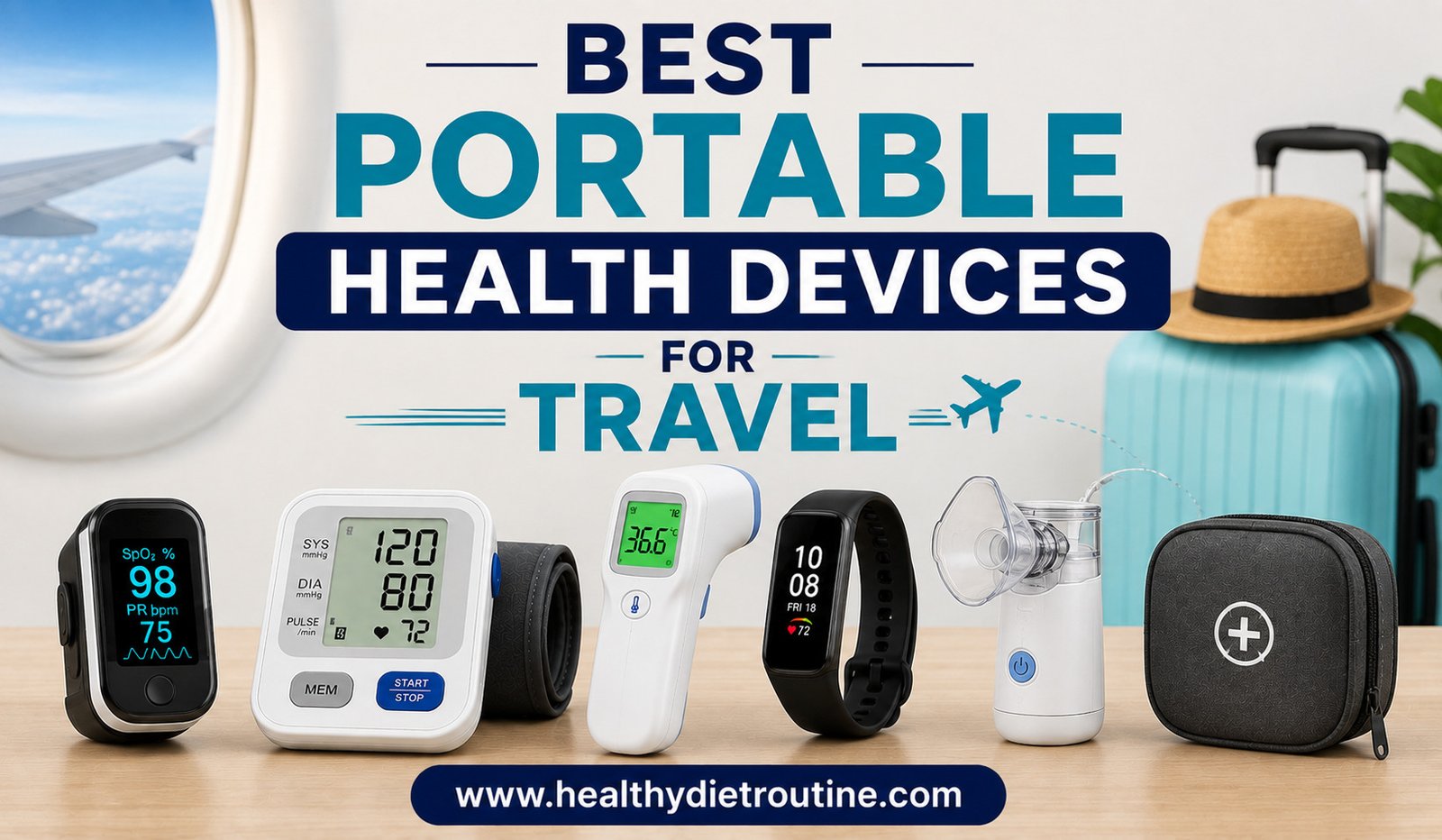
Traveling can be exciting, but maintaining your health while away from home can sometimes be challenging. Changes in weather, food, sleep schedules, altitude, long journeys, and unfamiliar surroundings can all affect how you feel. Carrying a few compact health devices can make it easier to monitor basic health measurements and manage minor health concerns while traveling.
The good news is that many health devices are now small enough to fit easily into a handbag, backpack, or travel medical kit. Digital thermometers, pulse oximeters, portable blood pressure monitors, glucometers, and smart health devices are among the options available to Indian travelers.
A portable health device should not take up too much space or require complicated setup. It should also be easy to operate, reliable, and powered by batteries or a convenient charging method. Current Indian healthcare listings include compact BP monitors, thermometers, pulse oximeters, and other devices specifically suited to personal health monitoring.
Here are some of the best portable health devices for travel to consider in 2026.
1. Portable Digital Thermometer
A digital thermometer is one of the easiest health devices to pack when traveling. It is small, lightweight, inexpensive, and useful when you need to check your body temperature.
A thermometer can be particularly helpful when traveling with children or older family members. Instead of relying on whether someone feels warm, you can obtain an actual temperature reading.
Basic digital thermometers can be extremely compact and require very little storage space. Some models also have flexible tips, automatic shut-off, and clear digital displays. Indian pharmacy listings currently include compact models from brands such as Omron, Dr Morepen, and Hicks.
For travel, choose a model with a protective case if available and keep spare batteries when necessary.
2. Fingertip Pulse Oximeter
A pulse oximeter is another useful travel-friendly device. It clips onto a finger and provides an estimate of blood oxygen saturation and pulse rate.
Its small size makes it particularly convenient for travel. It can be useful for people who have been advised to monitor oxygen levels, especially when traveling to high-altitude destinations. Portable pulse oximeters are specifically promoted for travel because they are lightweight and can provide readings within seconds.
When selecting one, look for a clear display, comfortable finger clip, simple controls, and dependable construction.
Remember that readings can be affected by movement, cold fingers, positioning, and other factors. An unexpected reading should be checked carefully rather than immediately interpreted as a medical diagnosis.
3. Portable Blood Pressure Monitor
People who regularly monitor their blood pressure may want to carry a portable BP monitor while traveling.
Modern digital monitors can be relatively compact, although an upper-arm model may require more space than a fingertip oximeter or thermometer. Some newer portable models are designed specifically for easier transportation and may support USB-C charging and memory storage.
When choosing a travel BP monitor, look for a compact carrying case, suitable cuff size, simple operation, memory storage, and reliable power options.
Although wrist BP monitors can be convenient for travel, do not choose one solely because it is smaller. Measurement method, correct positioning, and device validation are important. If you have been advised to monitor your blood pressure, choose a device appropriate for your healthcare needs.
4. Travel Glucometer
A glucometer can be essential for travelers who have been advised to monitor blood glucose regularly.
A typical glucose-monitoring kit can fit inside a small pouch and may include the meter, test strips, lancets, and a lancing device. This makes it practical to carry during domestic or international trips.
Before traveling, check that you have enough test strips and lancets for the entire journey, along with extras in case of delays. Keep supplies stored according to the manufacturer’s instructions.
It is also a good idea to keep the meter and supplies in your hand luggage rather than placing them in checked baggage when flying.
If you use medication for diabetes, follow your healthcare professional’s travel instructions and do not change your treatment based solely on readings from the device.
5. Smartwatch With Health Features
A smartwatch can function as a multipurpose travel companion. Instead of carrying several separate gadgets, a wearable may provide activity tracking, heart-rate monitoring, sleep information, and other wellness features.
Some smartwatches also include GPS, emergency features, smartphone notifications, and other functions that can be useful while traveling.
For frequent travelers, battery life is especially important. A watch that requires charging every day may be inconvenient during long journeys. Look for a model that can comfortably last through your travel schedule.
However, health measurements from consumer smartwatches should generally be considered wellness information unless a specific feature is medically validated for the intended purpose.
6. Smart Health Band
If you want something smaller and lighter than a smartwatch, a fitness or health band can be a good alternative.
A smart band can track steps, heart rate, sleep, workouts, and sometimes blood oxygen. It can also provide reminders and smartphone notifications depending on the model.
The slim design makes it particularly suitable for travelers who want to minimize luggage. Long battery life can also reduce the need to carry charging equipment.
For travel, choose a band that is comfortable enough to wear throughout the day and night and has a companion application that works reliably with your smartphone.
7. Compact Nebulizer
A portable nebulizer can be useful for travelers who have been specifically advised to use nebulized medication.
Traditional compressor nebulizers can be relatively bulky, but compact and portable models are available. A travel-friendly design can make it easier to continue a prescribed respiratory treatment routine while away from home.
When choosing one, consider size, weight, power requirements, cleaning, noise, and availability of replacement accessories.
Do not purchase a nebulizer simply because it is advertised as a general travel health gadget. It is most appropriate for people who have a medical reason to use nebulized medication and have been advised how to use it.
8. Portable Body Weight Scale
A compact digital weighing scale can be useful for people who regularly monitor their weight while traveling.
Travel scales are smaller than standard household models and can be convenient for long trips where maintaining a regular health routine is important.
However, this is not an essential device for most travelers. If luggage space is limited, you may prefer to leave the scale at home and focus on maintaining healthy habits during the trip.
Smart scales can also synchronize measurements with smartphone applications, but their additional body-composition estimates should be treated as general wellness information rather than medical measurements.
9. Portable Heating Pad
A compact heating pad can be useful for travelers who experience occasional muscle stiffness or discomfort and already use heat as part of their normal wellness routine.
Some portable models are rechargeable or designed to take up less space than traditional heating pads.
When traveling, check the device’s power requirements and charging method before packing it. If it uses a rechargeable battery, make sure it is appropriate for your method of transport.
Heat-producing devices should always be used according to the manufacturer’s instructions. Avoid excessive heat or prolonged direct contact with the skin.
10. Personal Health Tracker
A smartphone health application combined with a wearable can act as a personal travel health tracker.
Many modern health ecosystems can record steps, workouts, heart rate, sleep, weight, and other information in one place. Connected health devices can also maintain historical records, making it easier to review trends later.
For travelers who already use health technology, this can reduce the need to carry several separate devices.
However, do not become overly focused on health data while traveling. The purpose of tracking should be to support healthy habits rather than create unnecessary stress over small changes in readings.
How to Choose the Best Portable Health Device for Travel
Travel devices should be chosen differently from devices intended to remain at home.
Size and weight are important. A device should fit comfortably into your luggage without taking up unnecessary space.
Battery life is another major consideration. For rechargeable devices, carry the appropriate charging cable or adapter. For battery-powered devices, consider carrying spare batteries when permitted.
Ease of use matters even more when traveling. You may need to use the device in an airport, hotel room, train compartment, or unfamiliar location. Complicated controls can become frustrating.
Durability should also be considered. A device that comes with a protective case can be easier to carry safely.
Accuracy and suitability should remain the priority for health-monitoring equipment. Current Indian health-device guidance recommends focusing on appropriate device selection and consistent measurement practices rather than simply choosing a gadget because it has more features.
What Should Be in a Basic Travel Health Kit?
For most travelers, there is no need to carry every health gadget available.
A simple kit could include a digital thermometer and a pulse oximeter. People who regularly monitor blood pressure can add a portable BP monitor, while those monitoring glucose can carry their glucometer and sufficient testing supplies.
If you are traveling with an older family member or someone with a specific health condition, the contents of the kit should be based on their usual healthcare needs and professional advice.
Some combination kits can reduce the number of separate items you need to pack. For example, current Indian listings include health kits combining a BP monitor, thermometer, and pulse oximeter in one package.
Tips for Carrying Health Devices While Traveling
Keep important health devices in an easily accessible part of your luggage. Avoid placing essential monitoring equipment where you cannot reach it during the journey.
Protect devices from excessive heat, moisture, and physical impact. Follow the manufacturer’s storage recommendations, especially for glucose-monitoring supplies.
Before leaving home, check batteries, charging cables, accessories, and consumable supplies. A device is not particularly useful if you discover that its batteries are empty after reaching your destination.
If you are flying internationally, also check airline and destination-specific rules for electronic devices, batteries, medicines, and medical equipment before departure.
Final Thoughts
The best portable health devices for travel are compact, dependable, easy to operate, and genuinely relevant to your health needs.
A digital thermometer is an inexpensive and practical starting point, while a fingertip pulse oximeter takes up very little luggage space. Travelers who regularly monitor blood pressure or glucose may benefit from carrying their respective devices. Smartwatches and fitness bands can combine several wellness features into one wearable, while portable nebulizers may be useful when medically recommended.
The key is to avoid overpacking. Choose the devices that you are likely to need and make sure you know how to use them before leaving home.
Most importantly, travel health gadgets are designed to help with monitoring and everyday wellness. They should not replace professional medical care. If you experience serious symptoms or repeatedly abnormal readings during a trip, seek appropriate medical assistance instead of relying only on a portable device.
With a small, well-planned health kit, travelers can stay better prepared while keeping their luggage light and their journey more comfortable.