Best Digital Tools for Tracking Fitness Progress
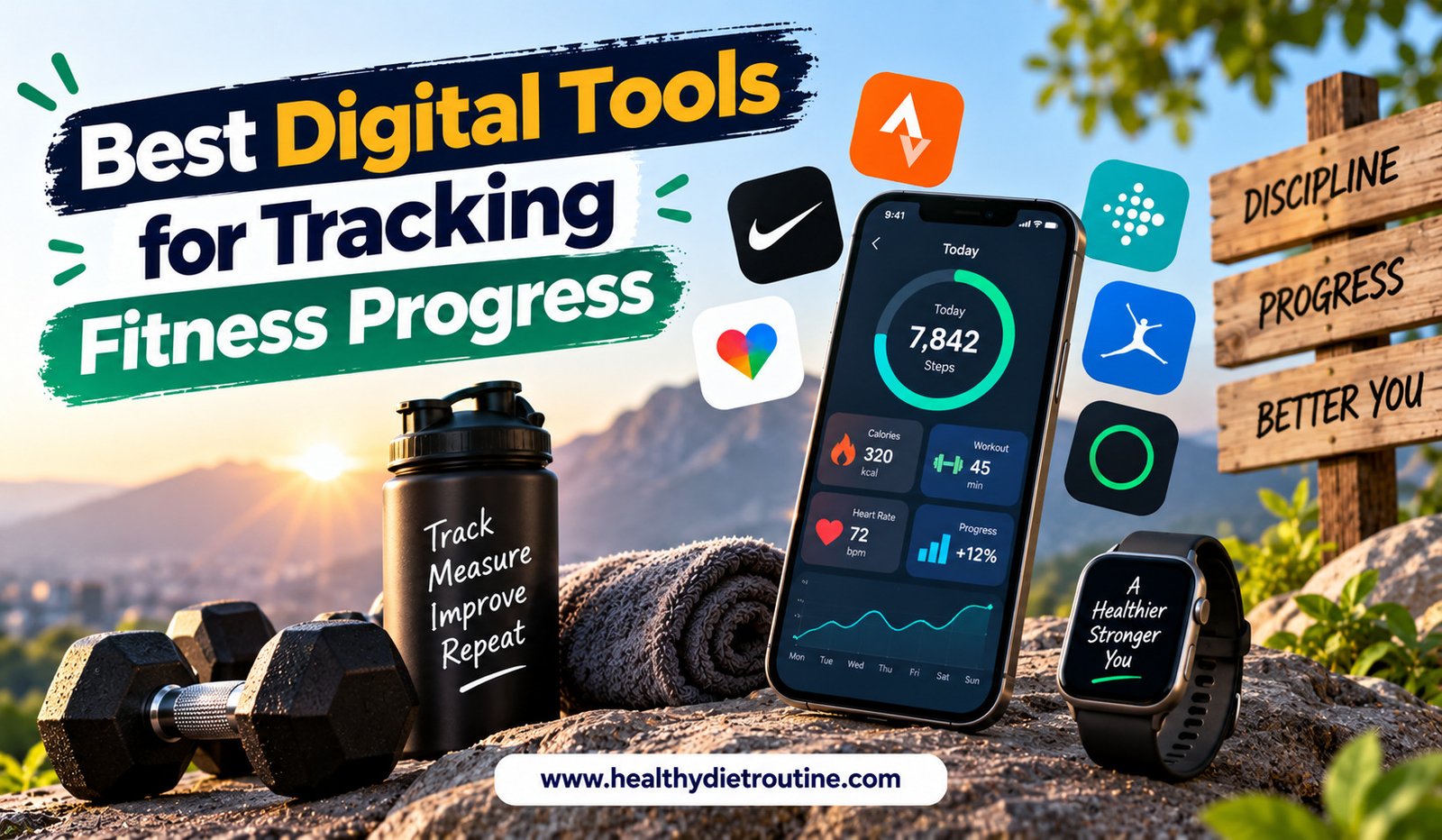
Tracking fitness progress is no longer limited to writing workouts in a notebook or checking your weight once a week. Today, digital fitness tools make it easier to monitor workouts, steps, nutrition, sleep, body measurements, strength gains, and other important indicators of progress.
Whether you are trying to lose weight, build muscle, improve endurance, or simply become more active, the right digital fitness tools can help you understand what is working and where you need to improve. Instead of depending on memory or guesswork, you can use data to make better decisions about your fitness routine.
Why Is Fitness Progress Tracking Important?
Starting a workout routine is one thing, but knowing whether you are actually improving is another. Progress can happen in several ways. You might lift heavier weights, run longer, recover faster, complete more repetitions, or notice improvements in your energy levels.
Digital tracking helps turn these changes into measurable information. For example, recording your workouts can show whether your strength is increasing over several weeks. A step tracker can reveal whether your daily activity is improving, while nutrition apps can help you understand your eating habits.
Progress tracking can also provide motivation. When results are not immediately visible in the mirror or on the weighing scale, looking back at previous workouts can remind you how far you have come.
1. Fitness and Workout Tracking Apps
Workout tracking apps are among the most useful digital tools for people who exercise regularly. These apps allow you to record exercises, sets, repetitions, weights, workout duration, and other details.
For strength training, a workout app can help you maintain a record of exercises such as squats, bench presses, rows, lunges, and deadlifts. Over time, you can compare your current performance with previous sessions.
Many apps also provide workout plans, exercise demonstrations, progress charts, and reminders. This can make them useful for both beginners and experienced gym users.
The biggest advantage is consistency. Instead of trying to remember what you did during your last workout, you have a digital record that you can check before your next session.
2. Smartwatches and Fitness Trackers
Smartwatches and fitness bands have become popular tools for monitoring everyday activity. They can track information such as steps, distance, active minutes, heart rate, and workout duration.
Some advanced devices can also monitor sleep patterns and provide estimates related to recovery. During activities such as walking, running, cycling, or swimming, they can collect additional performance information.
A wearable device is particularly useful because it can collect data throughout the day without requiring you to manually enter every activity.
However, it is important to remember that consumer wearables provide estimates rather than perfect measurements. Their biggest value often comes from identifying trends over time rather than focusing on a single daily number.
3. Running and Cycling Apps
If your fitness goals involve running or cycling, specialized tracking apps can provide detailed information about your performance.
For runners, useful metrics may include distance, pace, time, speed, elevation, and route. Cyclists may track distance, average speed, duration, elevation, and other performance measurements depending on the device being used.
Looking at these metrics over several weeks can help you identify improvements. For instance, you might discover that you can now run the same distance at a faster pace or complete a longer cycling route without feeling as tired.
These apps can also make outdoor exercise more engaging by allowing you to set targets and review previous activities.
4. Nutrition and Calorie-Tracking Apps
Fitness progress is strongly influenced by nutrition, which is why food-tracking apps can be valuable alongside workout tools.
Nutrition apps can help users record meals, snacks, beverages, and portion sizes. Depending on the app and its database, you may also be able to monitor calories, protein, carbohydrates, fats, fiber, and other nutrients.
For someone trying to lose weight, tracking food intake can make eating patterns more visible. Someone focused on building muscle may use nutrition tracking to pay closer attention to protein and overall energy intake.
The goal should not be to obsess over every number. Instead, food tracking can provide a clearer picture of your habits and help you make more informed choices.
5. Sleep and Recovery Tracking Tools
Exercise is only part of fitness. Recovery plays an equally important role, especially when you train frequently.
Sleep-tracking tools can provide information about sleep duration and patterns. Some wearable devices also offer estimates related to sleep stages, resting heart rate, or recovery.
This information can help you notice connections between sleep and workout performance. For example, you may find that workouts feel more difficult after several nights of poor sleep.
Rather than treating recovery scores as absolute measurements, use them as general indicators. Your personal energy levels, soreness, stress, and overall well-being should also be considered when deciding how hard to train.
6. Body Measurement and Weight-Tracking Apps
The weighing scale is still useful, but body weight alone does not tell the entire fitness story.
Digital weight-tracking tools can help you record changes over time and visualize trends. Some smart scales also estimate measurements such as body fat percentage, muscle mass, and other body-composition indicators.
These estimates can vary depending on hydration and other factors, so they should not be treated as exact medical measurements.
For a more complete picture, consider tracking waist measurements, workout performance, progress photos, and how your clothes fit alongside body weight.
7. Digital Fitness Journals
Sometimes the simplest digital tool is one of the most effective. A digital fitness journal can be created using a notes app, spreadsheet, or dedicated fitness platform.
You can record your workout, energy level, sleep quality, soreness, body measurements, and personal observations.
This approach gives you more flexibility than automated trackers because you can record information that technology cannot easily measure. For example, you can write that a particular workout felt easier than usual or that your form improved.
A digital journal is especially useful for people who want detailed records without relying on a complicated fitness ecosystem.
8. Fitness Platforms With Multiple Features
Some digital fitness platforms combine several tracking functions in one place. Depending on the service, you may be able to monitor workouts, nutrition, activity, body measurements, and goals from a single dashboard.
This can be convenient because your information is not scattered across multiple apps. It can also make it easier to see relationships between different aspects of your lifestyle.
However, more features do not automatically mean better results. Choose a platform that matches your goals and is easy enough to use consistently.
How to Choose the Right Digital Fitness Tool
The best fitness tracking tool depends on what you want to accomplish.
If your main goal is strength training, prioritize workout logging and progression tracking. If you enjoy running, look for reliable distance and pace tracking. For weight management, nutrition and body-measurement tools may be more useful.
Ease of use is another important factor. A complicated app that you stop using after two weeks will be less helpful than a simple tool that becomes part of your daily routine.
Also consider privacy, subscription costs, device compatibility, battery life, and whether the app can export or synchronize your data.
How to Use Fitness Data Without Becoming Obsessed With Numbers
Digital fitness tools are designed to support your goals, not control your life. It is easy to become focused on daily steps, calories, weight, or workout scores and forget the bigger picture.
Look for long-term trends rather than reacting to every small change. Weight naturally fluctuates, workout performance varies from day to day, and wearable measurements are not always perfectly accurate.
Your progress should also be judged by practical improvements. Are you stronger? Can you exercise for longer? Is your stamina improving? Do you feel more energetic? Are your workouts becoming more consistent?
These questions can be just as important as the numbers displayed on your phone or smartwatch.
Final Thoughts
The best digital tools for tracking fitness progress are the ones that help you stay consistent and understand your personal development. Workout apps, smartwatches, nutrition trackers, running platforms, sleep tools, and digital journals can all provide useful information when used correctly.
You do not need every available fitness app or the most expensive wearable. Start with the tool that supports your primary goal, use it consistently, and review your progress over time.
Fitness is a long-term process. Digital tracking cannot replace effort, recovery, good nutrition, or consistency, but it can make your journey more organized and measurable. When you use fitness data wisely, it becomes easier to recognize progress, adjust your routine, and stay motivated toward your goals.