
Common Workout Mistakes Beginners Can Avoid
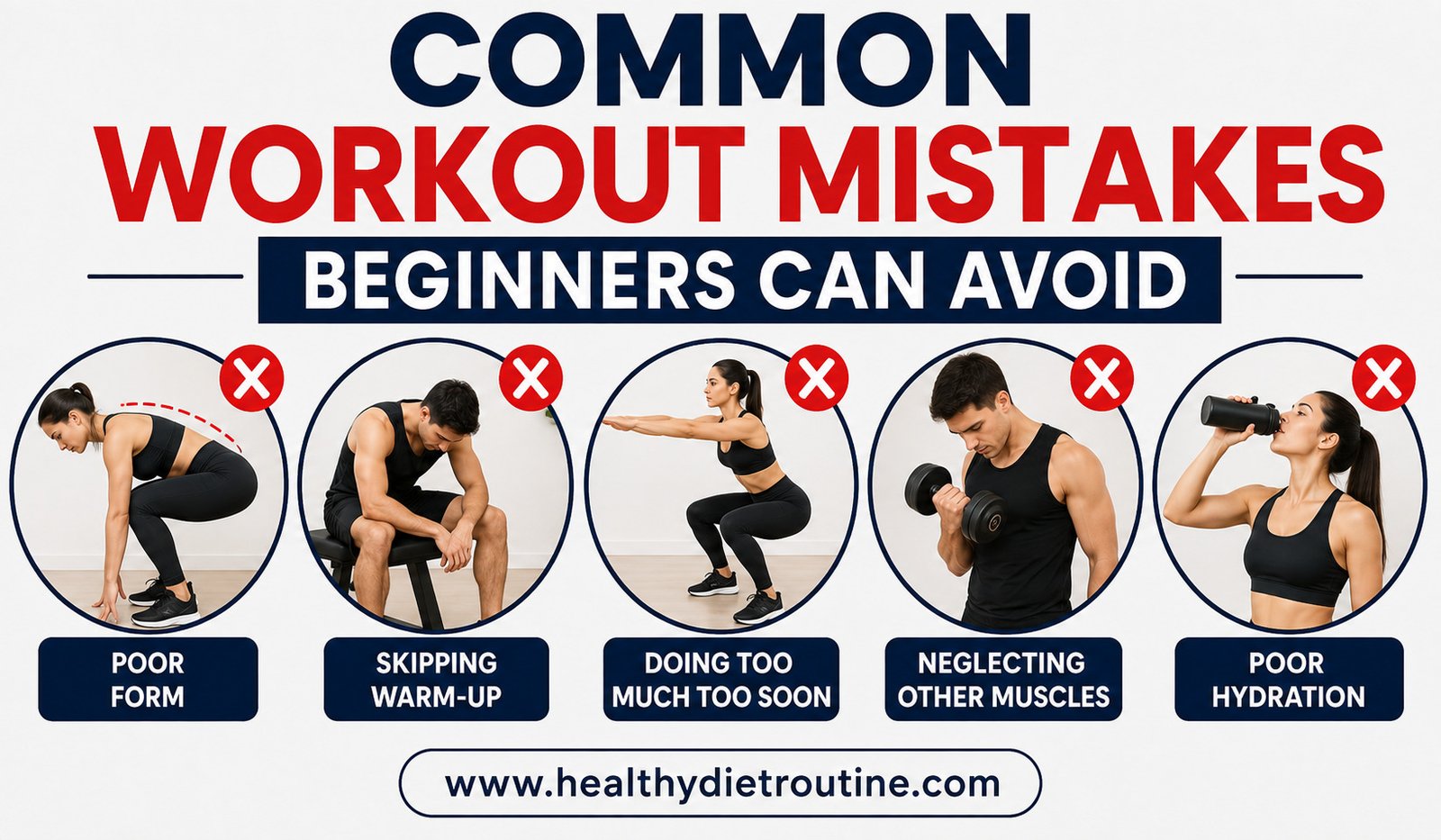
Starting a workout routine is an exciting step toward becoming stronger, fitter, and more energetic. However, beginners often make simple mistakes that can slow progress, cause unnecessary soreness, or even lead to injuries. The good news is that most of these mistakes are easy to avoid once you know what to look for.
Whether you are exercising at home, joining a gym, or simply trying to become more active, understanding common workout mistakes can help you build better habits from the beginning. You do not need a complicated training plan or expensive equipment to make progress. Consistency, proper technique, recovery, and realistic expectations are much more important.
1. Starting With Too Much Intensity
One of the most common workout mistakes beginners make is trying to do too much too soon. After deciding to get fit, it can be tempting to exercise every day, lift heavy weights, or complete intense workouts immediately.
While motivation is useful, your body needs time to adapt to physical activity. Beginning with excessive intensity can result in extreme muscle soreness, fatigue, poor form, and a higher risk of injury. It may also make exercise feel exhausting rather than enjoyable.
Start with manageable workouts and gradually increase the duration or intensity. A routine that you can maintain for several weeks is more valuable than an intense routine that you abandon after a few days.
2. Skipping the Warm-Up
Another common mistake is starting a workout without preparing the body. A warm-up gradually increases body temperature, gets the muscles moving, and prepares your body for the activity ahead.
A beginner does not need a long or complicated warm-up. Five to ten minutes of light movement can be enough. You might walk, march in place, perform gentle bodyweight movements, or use dynamic movements related to your workout.
For example, if you plan to perform squats, a few controlled bodyweight squats can help you practice the movement before adding resistance.
3. Using Poor Exercise Form
Good technique is more important than the amount of weight you lift or the number of repetitions you complete. Beginners sometimes focus on finishing a workout quickly instead of performing exercises correctly.
Poor form can place unnecessary stress on joints and muscles. It can also reduce the effectiveness of an exercise.
When learning a new movement, slow down and concentrate on control. If you are using weights, start with a resistance level that allows you to maintain proper technique throughout the exercise.
Watching reliable demonstrations or working with a qualified fitness professional can also help you learn basic movement patterns correctly.
4. Trying to Copy Advanced Workouts
Social media is filled with challenging workouts performed by experienced athletes and fitness creators. Beginners may see these routines and immediately try to copy them.
The problem is that an advanced workout is usually designed for someone who has already developed strength, mobility, coordination, and exercise tolerance.
Your workout should match your current fitness level rather than someone else’s. Beginner-friendly exercises can be surprisingly effective. As your strength and fitness improve, you can gradually introduce more challenging movements.
Progress does not require doing the hardest workout available. It requires doing the right workout for your current ability.
5. Ignoring Rest and Recovery
Exercise creates a training stimulus, but recovery allows your body to adapt. Beginners sometimes believe that exercising every day will produce faster results.
In reality, insufficient recovery can leave you constantly tired and make it harder to perform your workouts effectively. Rest days also give muscles and connective tissues time to recover.
Recovery does not always mean sitting completely still. Light walking, gentle mobility work, and normal daily activities can be useful between harder sessions.
Pay attention to how your body feels. Persistent pain, unusual fatigue, or declining performance can be signs that you need more recovery.
6. Focusing Only on Cardio or Strength Training
Another beginner workout mistake is believing that one type of exercise is enough for every fitness goal.
Cardio activities such as walking, cycling, swimming, and jogging can support cardiovascular fitness and endurance. Strength training can help develop muscular strength and support everyday movement. Mobility and flexibility exercises can help you move comfortably through different ranges of motion.
A balanced workout routine can include different forms of physical activity throughout the week. You do not need to do everything in a single session. The goal is to create a routine that supports your individual needs and can be maintained over time.
7. Chasing Soreness as Proof of a Good Workout
Many beginners assume that a workout is successful only when they are extremely sore afterward. Muscle soreness can happen when you perform unfamiliar or demanding activities, but it is not a reliable measurement of workout quality.
A good workout does not have to leave you struggling to walk the next day. Progress can also be measured through better technique, increased strength, improved endurance, greater energy, and the ability to perform everyday activities more comfortably.
Instead of chasing soreness, focus on gradual and sustainable improvement.
8. Neglecting Hydration and Nutrition
Exercise is only one part of a healthy lifestyle. Beginners sometimes concentrate heavily on workouts while overlooking hydration and balanced nutrition.
Drinking enough fluids is especially important when you exercise in hot or humid conditions. Your nutritional needs depend on factors such as activity level, body size, goals, and overall health.
Rather than relying on extreme diets or restrictive eating plans, focus on balanced meals that include nutritious sources of carbohydrates, protein, healthy fats, fruits, vegetables, and other foods that fit your needs.
Your goal should be to support your workouts rather than punish yourself for what you eat.
9. Expecting Results Too Quickly
One of the biggest workout mistakes beginners can avoid is having unrealistic expectations. Fitness improvements rarely happen overnight.
Some people expect dramatic changes in body shape or strength within a few weeks. When those results do not appear immediately, they may lose motivation and stop exercising.
Instead, focus on smaller improvements. Completing workouts consistently, increasing repetitions gradually, improving exercise technique, walking more, or feeling more energetic are all meaningful signs of progress.
Give your body time to adapt. Long-term consistency usually matters more than short-term perfection.
10. Following a Routine They Do Not Enjoy
A workout routine may be effective, but if you dislike doing it, maintaining it can become difficult.
You do not have to spend hours in a gym to become more active. Walking, dancing, cycling, home workouts, recreational sports, bodyweight exercises, and resistance-band training can all provide useful forms of physical activity.
Experiment with different activities and find something that fits your interests and lifestyle. Enjoyment can make it easier to stay consistent.
11. Forgetting to Track Progress
Beginners sometimes depend entirely on the weighing scale to judge whether their workouts are working. Body weight can be one measurement, but it is not the only one.
Consider tracking workout consistency, repetitions, resistance levels, walking distance, endurance, or how confidently you perform certain exercises.
Keeping a simple workout journal can help you recognize improvements that may otherwise go unnoticed. Seeing gradual progress can also provide motivation to continue.
12. Ignoring Pain
There is an important difference between normal exercise discomfort and pain that may indicate a problem. Beginners sometimes try to push through sharp, sudden, or unusual pain because they believe discomfort is always part of getting fit.
That approach can make an injury worse.
If an exercise causes significant or persistent pain, stop the movement and assess what is happening. Consider getting advice from an appropriate healthcare or fitness professional, particularly if symptoms continue or are severe.
Learning to listen to your body is an important part of safe training.
How Beginners Can Build Better Workout Habits
The best beginner workout routine is usually simple, realistic, and progressive. Start at a level that feels manageable and focus on learning proper movement techniques.
Set small goals instead of trying to transform your fitness overnight. Schedule workouts around your daily routine, allow enough recovery time, stay hydrated, and choose activities you genuinely enjoy.
Most importantly, do not compare your progress with someone else’s. People have different fitness levels, schedules, backgrounds, and goals. Your workout journey should be based on what works for your body and lifestyle.
Final Thoughts
Avoiding common workout mistakes can make starting fitness much easier and more sustainable. Beginners do not need to train like professional athletes or complete exhausting workouts to see progress.
Start gradually, warm up properly, prioritize exercise form, recover between sessions, maintain balanced nutrition, and give yourself enough time to improve. Most importantly, focus on consistency rather than perfection.
A successful fitness routine is one you can continue month after month. By avoiding these beginner workout mistakes and building healthy habits from the start, you can create a safer and more enjoyable path toward better strength, endurance, mobility, and overall fitness.