
Best Health Devices for Senior Family Members
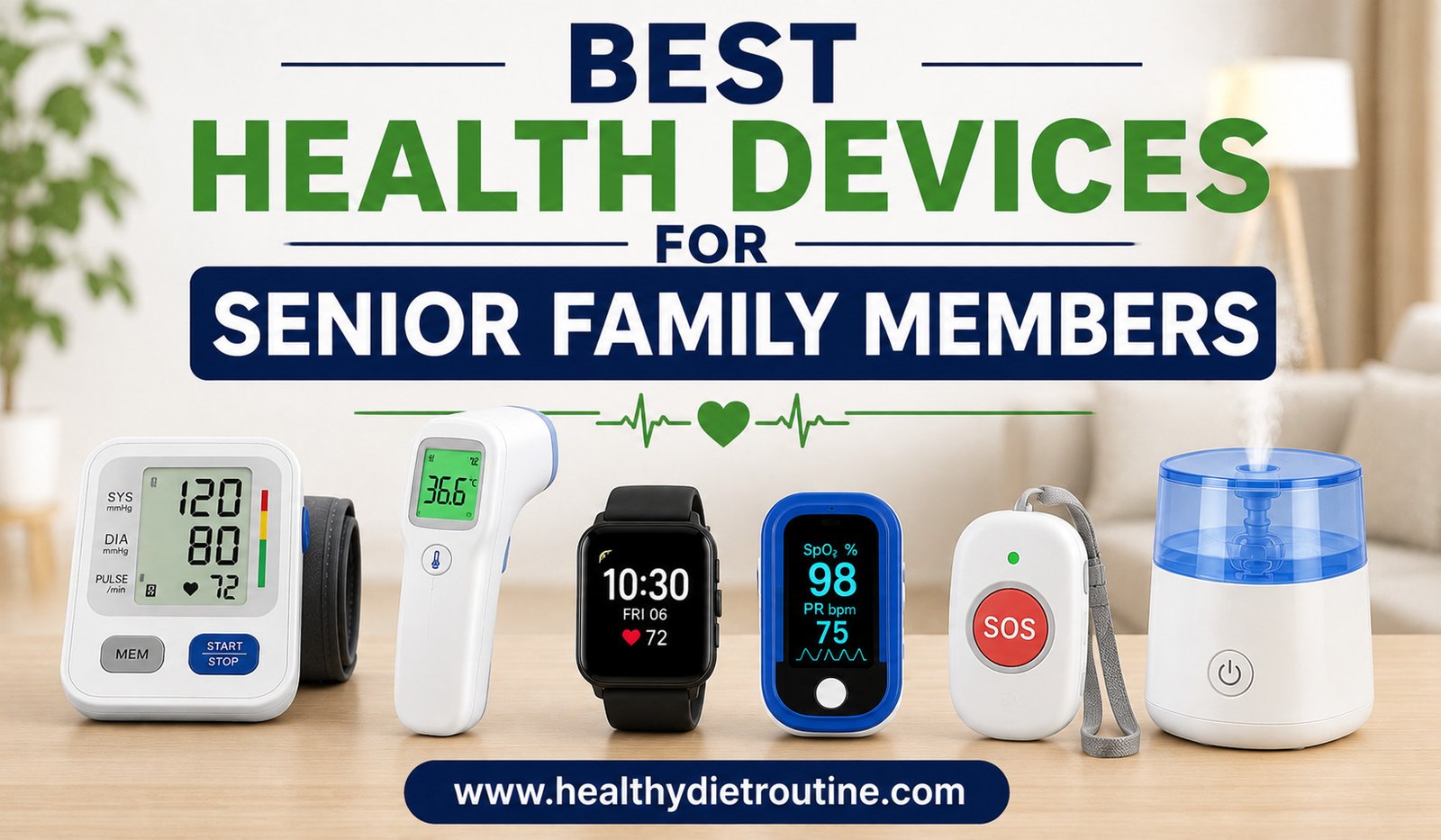
As family members get older, keeping track of basic health measurements at home can become an important part of everyday care. Regular monitoring can help families understand health trends, keep useful records for doctor visits, and respond appropriately when something appears unusual.
Fortunately, you do not need expensive medical equipment to create a useful home health setup for senior family members. Simple devices such as an automatic blood pressure monitor, digital thermometer, pulse oximeter, glucometer, and weighing scale can provide valuable information when used correctly.
For seniors, however, choosing a device involves more than looking at features. A gadget should be easy to operate, easy to read, comfortable to use, and dependable. Complicated controls or tiny displays can make an otherwise useful device frustrating.
Here are some of the best health devices for senior family members to consider for home use in India.
1. Automatic Blood Pressure Monitor
An automatic blood pressure monitor is one of the most useful devices for a senior’s home health kit. Blood pressure can change over time, and high blood pressure often does not produce obvious symptoms. Home monitoring can therefore provide useful information when recommended by a healthcare professional.
For seniors, look for an upper-arm automatic monitor with a large digital display, simple one-button operation, memory storage, and an appropriately sized cuff. Clinical validation is more important than having a long list of extra features. Medical guidance generally prefers validated upper-arm devices for home blood-pressure monitoring over wrist devices.
A memory function can be particularly useful because family members can review previous readings instead of relying on memory. Some Bluetooth-enabled models can also transfer readings to a smartphone, which may help family caregivers keep track of measurements.
However, seniors should be shown how to sit correctly, position the arm, place the cuff, and remain relaxed during measurement. Incorrect technique can affect the reading.
2. Digital Thermometer
A digital thermometer is a small and inexpensive device that can be extremely useful for older family members.
When a senior feels feverish or unwell, checking their temperature can provide more useful information than simply judging whether they feel warm. Digital thermometers are generally easy to operate and provide a clear numerical reading.
For seniors, choose a model with a large display and straightforward controls. Some infrared thermometers provide contactless measurements, which can be convenient when the person is resting.
A thermometer should be kept somewhere that is easy to access rather than hidden away in a medicine cabinet. This makes it easier for family members to use when needed.
3. Pulse Oximeter
A fingertip pulse oximeter is another useful device for a home health kit. It estimates blood oxygen saturation and displays the person’s pulse rate.
Its small size and simple operation make it convenient for occasional monitoring when a healthcare professional recommends it. Current Indian health-device resources also include pulse oximeters among the basic devices families may consider keeping at home.
When choosing one for a senior, prioritise a large, bright display and an easy-to-use finger clip. A device that shows the numbers clearly can be more useful than one with a complicated interface.
Readings can be affected by movement, cold fingers, positioning, and other factors. Therefore, an unexpected result should be checked properly rather than immediately interpreted as a serious medical condition.
4. Glucometer
A glucometer can be particularly useful for seniors who have been advised to monitor blood glucose at home.
Modern glucometers are small and can provide readings quickly. Some models use colour indicators or smartphone connectivity to make results easier to understand and record.
For older users, a glucometer with a large display, simple controls, minimal setup, and an easy-to-use lancing device can be preferable.
When choosing one, also consider the ongoing price and availability of test strips and lancets. The cheapest meter is not necessarily the most economical option if replacement supplies are expensive or difficult to find.
If a senior has diabetes, the testing schedule should follow their healthcare professional’s advice. A glucometer should support their care plan rather than replace professional guidance.
5. Digital Weighing Scale
A digital weighing scale can help seniors and their families keep track of changes in body weight over time.
A sudden or unexplained change in weight may be worth discussing with a healthcare professional, particularly when it occurs alongside other symptoms. Regular weight measurements can also be useful for people following a nutrition or fitness plan.
For senior users, choose a scale with a wide, stable platform and a large display. The scale should be placed on a firm, level surface to reduce the risk of slipping or unstable measurements.
Smart scales that connect to smartphones can automatically record weight history, but they are not essential. A simple, reliable digital scale may be easier for an older family member to use independently.
6. Easy-to-Use Fitness Band
A fitness band can help seniors stay aware of everyday activity without requiring complicated exercise equipment.
Depending on the model, a fitness band may count steps, monitor heart rate, record sleep patterns, and track different forms of activity. Some models also provide reminders to move after periods of inactivity.
For older users, simplicity should be the priority. Look for a lightweight device with a readable screen, comfortable strap, long battery life, and straightforward controls.
A fitness band should encourage gentle, appropriate activity rather than push seniors toward unrealistic fitness targets. The goal is to support healthy movement and consistency.
Some wearables advertise health-monitoring functions such as blood oxygen or heart-rate measurements. These should generally be treated as wellness information unless the specific device and feature are medically validated for the intended use.
7. Smartwatch With Emergency Features
A smartwatch can provide more functionality than a basic fitness band. Depending on the model, features may include activity tracking, heart-rate monitoring, emergency alerts, GPS, fall-related assistance, and the ability to contact family members.
This can be particularly useful for seniors who spend some time alone. Technology designed for older adults is increasingly focusing on accessibility, safety, emergency assistance, and independent living.
However, not every smartwatch is equally suitable for seniors. A large screen, simple interface, reliable battery life, comfortable strap, and easy charging are important.
Before buying one, check whether emergency and location features work with the user’s smartphone, network, and region.
8. Medication Reminder Device
For seniors who take multiple medicines, a medication reminder can be a useful addition to the home.
These devices range from simple pill organisers with labelled compartments to electronic reminders that provide alerts at scheduled times.
The main purpose is to make medication routines easier to manage. Some smart systems can also notify family members if a scheduled reminder is missed.
However, medication reminder gadgets should not be used to change doses or treatment schedules. Any changes to medication should come from the prescribing healthcare professional.
9. Digital Room Thermometer and Humidity Monitor
A small indoor temperature and humidity monitor can help families understand the conditions inside a senior’s room.
This can be useful during very hot, cold, or humid weather. Older adults may be more vulnerable to discomfort from environmental conditions, so keeping their living space comfortable can be a practical part of home care.
Choose a monitor with a large display showing temperature and humidity clearly. Some smart versions can send information to a smartphone, but a basic screen-based model may be sufficient.
10. Electric Heating Pad
An electric heating pad can provide temporary warmth and comfort for tired or stiff muscles. It can be convenient for seniors because it does not require preparing hot water or using a traditional hot-water bottle.
Choose a model with adjustable heat settings, automatic shut-off, and clear safety instructions.
Older adults should be especially careful with heat-producing products. Avoid excessive temperatures and prolonged direct contact with the skin. If someone has reduced sensation or another condition that affects their ability to feel heat, ask a healthcare professional whether this type of product is appropriate.
What Should You Look for in a Senior-Friendly Health Device?
The best health device for a senior is not necessarily the most technologically advanced one. Simplicity is often more valuable than a long feature list.
Start with the display. Large numbers and good readability can make a major difference for someone with difficulty seeing small text.
Next, consider the controls. One-button operation is often preferable to navigating several menus. Devices should also have clear instructions that can be understood without technical knowledge.
Comfort is another important factor. Cuffs, straps, finger clips, and sensors should fit properly and not create unnecessary discomfort.
Battery life matters too. A device that needs to be charged every day may be inconvenient for someone who is not comfortable with technology.
Finally, look for dependable after-sales support. Replacement cuffs, batteries, charging cables, test strips, and other accessories should be reasonably easy to obtain.
How Family Members Can Help Seniors Use Health Devices
Buying a health gadget is only the first step. Family members should spend some time showing the senior how to use it correctly.
For blood pressure monitoring, demonstrate proper sitting position, cuff placement, and measurement technique. For a glucometer, explain how the testing process works and where supplies should be stored.
It can also be useful to maintain a simple record of important measurements. Digital apps can help, but a paper notebook may actually be easier for some seniors.
Most importantly, family members should avoid turning every number into a source of anxiety. Home devices are designed to provide information and help identify trends. They should be used alongside appropriate professional healthcare rather than as replacements for it.
Final Thoughts
The best health devices for senior family members are practical tools that make everyday monitoring safer, simpler, and more convenient.
For most homes, an automatic upper-arm blood pressure monitor, digital thermometer, pulse oximeter, and weighing scale are useful starting points. Seniors with specific healthcare needs may also benefit from a glucometer or other equipment recommended by their healthcare professional. Fitness bands, smartwatches, medication reminders, and environmental monitors can provide additional support.
When choosing these devices, focus on ease of use, readable displays, comfortable design, reliable measurements, appropriate validation, battery life, and after-sales support. Do not choose a product simply because it has the largest number of advertised features.
Home health gadgets can give families useful information and greater peace of mind, but they should never replace medical diagnosis or professional care. If a senior has persistent symptoms or repeatedly unusual readings, the appropriate next step is to contact a qualified healthcare professional rather than relying solely on the device.