
Fitness Tracker vs Smartwatch: Key Differences
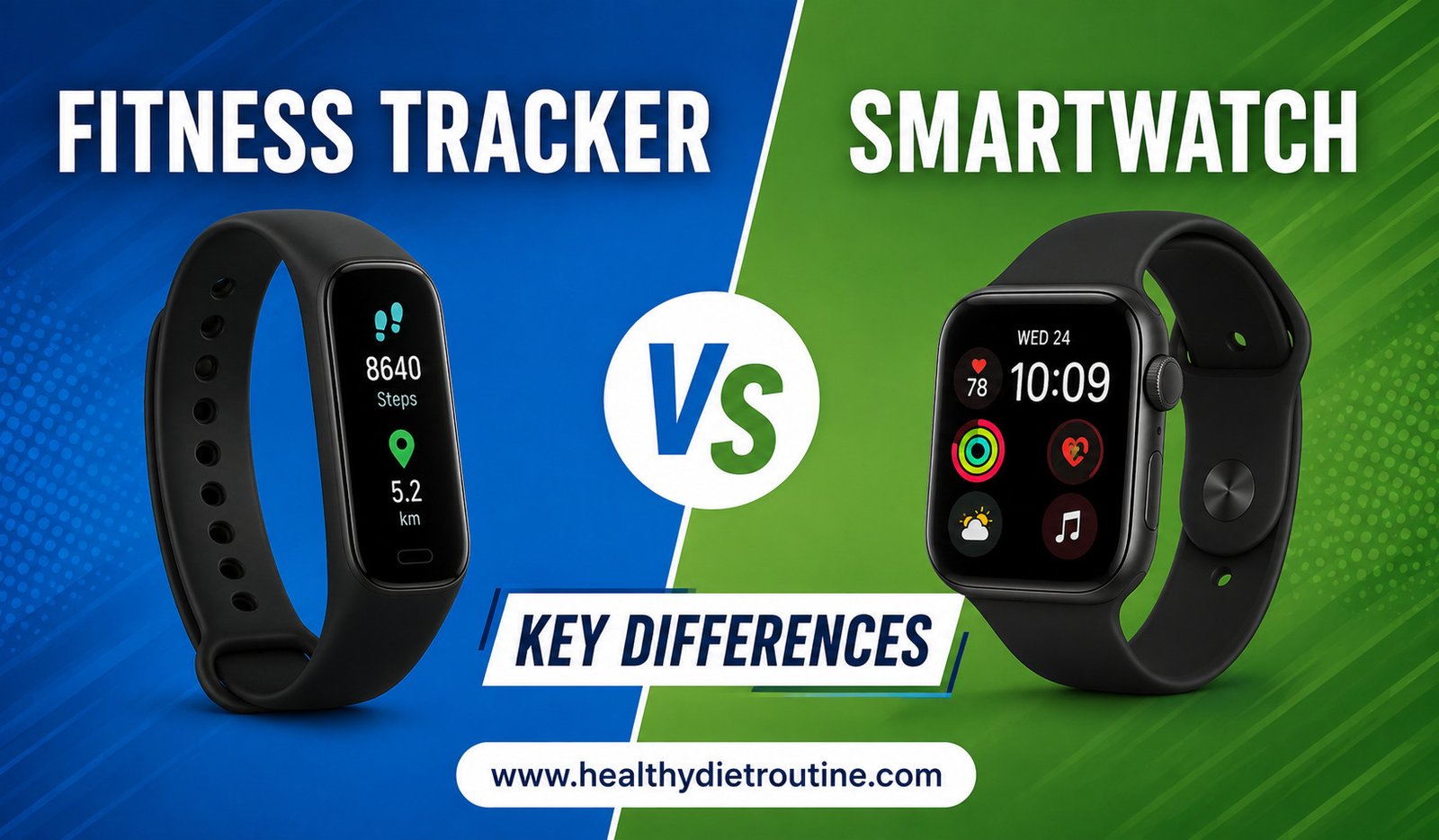
Wearable technology has changed the way people monitor fitness, health, and everyday activity. A simple device on your wrist can now count steps, track workouts, monitor sleep, display notifications, provide navigation, and even handle calls. However, with so many options available, it can be difficult to understand the difference between a fitness tracker and a smartwatch.
Although the two categories overlap, they are designed with different priorities. Fitness trackers generally focus on activity, exercise, and wellness data, while smartwatches combine those functions with broader smartphone-style features.
Understanding the key differences can help you choose a device that matches your lifestyle instead of paying for features you may never use.
What Is a Fitness Tracker?
A fitness tracker is primarily designed to monitor physical activity and health-related metrics. Typical features include step counting, heart-rate monitoring, sleep tracking, calories burned, workout tracking, and sometimes blood oxygen measurements.
Fitness trackers are usually smaller and lighter than smartwatches. Many models are designed to be worn continuously, including during sleep.
Modern fitness trackers have become considerably more advanced. Some include bright AMOLED displays, GPS, automatic workout detection, stress-related metrics, and extensive smartphone applications.
Their main objective remains simple: help users understand and improve their activity and fitness habits.
What Is a Smartwatch?
A smartwatch is essentially a small wearable computer designed to sit on your wrist.
Fitness tracking is an important part of most modern smartwatches, but it is only one component. Depending on the model and operating system, smartwatches can display notifications, answer calls, run applications, provide directions, control music, support contactless payments, and interact with smart-home devices.
Premium models may also include advanced health sensors and sports-tracking capabilities.
This broader functionality generally means smartwatches are larger, more powerful, and more expensive than basic fitness trackers.
Fitness Tracker vs Smartwatch: The Main Difference
The simplest distinction is fitness-first versus multifunctional.
A fitness tracker is primarily built around activity and wellness monitoring. A smartwatch is designed to provide fitness features alongside communication and everyday digital tools.
For example, someone who wants to count steps, track sleep, and monitor workouts may not need a smartwatch. A lightweight fitness tracker could provide everything they need.
Someone who wants to read messages, answer calls, use GPS navigation, control music, and access applications directly from their wrist will likely benefit more from a smartwatch.
Design and Comfort
Fitness trackers typically have slimmer profiles and lighter bodies.
This can be an important advantage if you plan to wear the device throughout the day and night. A smaller device may be less noticeable while sleeping and during everyday activities.
Smartwatches generally have larger displays and more substantial cases. The larger design makes them easier to interact with, but some users may find them less comfortable for continuous wear.
When choosing between the two, consider how often you intend to wear the device. A feature-packed smartwatch is not very useful if you regularly remove it because it feels uncomfortable.
Fitness and Health Tracking
Both categories can provide impressive fitness features.
Basic fitness trackers commonly measure steps, distance, heart rate, calories, sleep, and exercise sessions. More advanced models can offer GPS, blood oxygen estimates, recovery information, workout analysis, and other wellness features.
Smartwatches can offer similar capabilities, with premium models sometimes providing more advanced sensors and sports features.
However, more measurements do not necessarily mean better health tracking. Sensor quality, software algorithms, fit, and consistent use all influence the usefulness of wearable data.
Health features on consumer wearables should generally be treated as wellness and fitness information rather than a replacement for professional medical testing.
GPS: An Important Difference
Built-in GPS is increasingly available on both fitness trackers and smartwatches, but it is more common in higher-end devices.
GPS allows the wearable to record outdoor activities such as running, walking, hiking, and cycling without relying entirely on your smartphone.
If you regularly exercise outdoors, GPS can be a valuable feature.
For casual activity tracking, however, connected GPS using your phone may be sufficient. If you do not care about route maps or detailed outdoor workout tracking, there is little reason to pay extra for built-in GPS.
Notifications and Communication
This is one of the clearest advantages of smartwatches.
A smartwatch can typically provide richer smartphone notifications, allowing you to see incoming messages, calls, calendar reminders, emails, and application alerts.
Some models allow users to respond to messages, make calls, or speak to voice assistants directly from the watch.
Fitness trackers may show basic notifications, but their smaller screens and simpler software usually limit how much interaction is possible.
If you want your wearable to reduce how often you reach for your phone, a smartwatch is generally the stronger option.
Apps and Smart Features
Smartwatches have another major advantage: applications.
Depending on the platform, you may be able to download applications for navigation, music, productivity, fitness, transportation, weather, and other functions.
Fitness trackers generally rely more heavily on their companion smartphone applications. The tracker collects information, while the phone provides the more detailed interface.
This difference is important if you want to use the wearable independently. A smartwatch can perform many tasks directly from your wrist, while a fitness tracker is usually designed to work alongside a smartphone.
Battery Life
Fitness trackers often have an advantage when it comes to battery life.
Their smaller displays, simpler processors, and limited applications generally allow them to operate for several days or longer between charges. Some specialized trackers can last substantially longer.
Smartwatch battery life varies widely. Some models last only a day or two, while others can operate for several days depending on settings and usage.
Battery life becomes especially important if you want continuous sleep tracking. Frequent charging can create gaps in your sleep data.
Before buying, consider how often you are realistically willing to charge your wearable.
Display Size and Usability
A smartwatch generally has a larger screen, making it easier to read notifications, view workout statistics, interact with applications, and navigate menus.
Fitness trackers often have smaller displays, although modern AMOLED models can still be bright and easy to read.
If your priority is quick fitness information, a smaller screen is usually sufficient.
If you plan to read messages, follow navigation instructions, or control music from your wrist, a larger smartwatch display is more practical.
Smartwatch vs Fitness Tracker for Sleep
Both devices can be useful for sleep tracking.
Fitness trackers often have an advantage because their lightweight design makes them comfortable to wear overnight. Longer battery life can also mean fewer interruptions.
Smartwatches can offer detailed sleep information and additional health metrics, but their larger size may not suit everyone.
The best device for sleep tracking is therefore the one you can comfortably wear every night.
Which Is Better for Exercise?
For basic workouts, either option can work well.
A fitness tracker is sufficient for walking, gym sessions, general activity, and basic workout recording. If your goal is simply to become more active, there is no need to buy an expensive smartwatch.
A smartwatch becomes more attractive for people who participate in structured training or outdoor sports. Features such as GPS, larger workout screens, advanced activity profiles, and training metrics can make a smartwatch more useful.
Serious athletes may also want to consider dedicated sports watches, which can offer more specialized training features than general-purpose smartwatches.
Price and Value
Fitness trackers generally sit at the more affordable end of the wearable market.
Smartwatches can range from budget-friendly models to premium devices costing considerably more. The price difference often reflects the larger display, processor, apps, communication capabilities, materials, and additional sensors.
The most expensive wearable is not automatically the best value.
If you only want activity tracking, spending extra on smartwatch features may not make sense. On the other hand, buying a basic fitness tracker and later realizing you need GPS, calls, or advanced notifications could lead to another purchase.
Think about the features you will actually use rather than simply comparing specification lists.
Compatibility With Your Smartphone
Compatibility should be checked before buying any wearable.
Some smartwatches work best within specific smartphone ecosystems, while others offer broader Android or iPhone compatibility. Fitness trackers can also have platform-specific limitations.
Check whether the device supports your phone, whether important features work on your operating system, and whether the companion application is available.
A device with impressive hardware is not useful if key features are unavailable on your smartphone.
Privacy and Data
Fitness trackers and smartwatches collect personal activity information, so privacy is another consideration.
Depending on the manufacturer and device, your data may be stored on the wearable, transferred to a smartphone, or synchronized with cloud services.
Before purchasing, review the manufacturer’s privacy practices and understand what information the companion application collects.
If you prefer to minimize connected services, a simpler fitness tracker may be preferable to a fully connected smartwatch.
Who Should Buy a Fitness Tracker?
A fitness tracker is a good choice if you:
- Mainly want step and activity tracking
- Want basic workout monitoring
- Care about sleep tracking
- Prefer a lightweight design
- Want longer battery life
- Want to spend less
- Do not need many smartphone features
For beginners, a fitness tracker can provide enough information to build healthier activity habits without unnecessary complexity.
Who Should Buy a Smartwatch?
A smartwatch is better suited to users who:
- Want calls and notifications on their wrist
- Need GPS for outdoor workouts
- Want access to applications
- Prefer a larger display
- Want music and navigation controls
- Use contactless payments
- Want more advanced smartwatch features alongside fitness tracking
If you want your wrist device to function as an extension of your smartphone, a smartwatch is generally the better choice.
Final Verdict
The choice between a fitness tracker vs smartwatch comes down to what you want your wearable to do.
Choose a fitness tracker if your main priorities are activity tracking, sleep monitoring, comfort, battery life, and simplicity. It is an excellent choice for people who want useful fitness information without turning their wrist into another smartphone screen.
Choose a smartwatch if you want fitness tracking combined with calls, notifications, GPS, apps, music, navigation, payments, and other connected features.
For most beginners, starting with a fitness tracker can be a sensible approach. If you already know that you want extensive smartwatch functionality, investing in a smartwatch from the beginning may provide better long-term value.
Ultimately, the best wearable is not the one with the most features. It is the one that fits your lifestyle, feels comfortable on your wrist, works with your phone, and gives you information you will actually use.