
How to Build Better Posture Habits During the Day
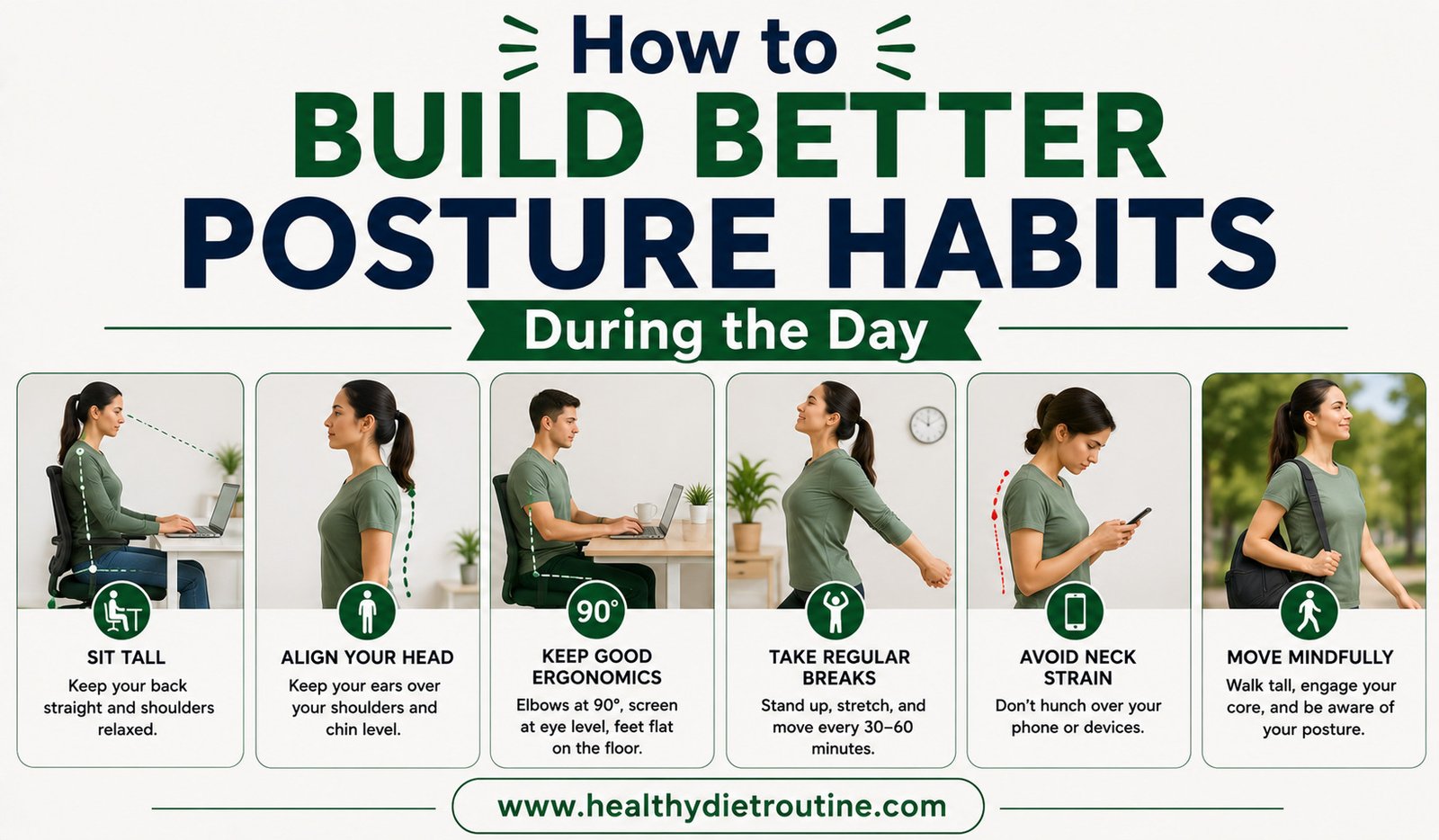
Good posture is not about sitting or standing perfectly still all day. It is about developing comfortable movement and positioning habits that allow your body to work efficiently throughout the day. Whether you spend hours at a desk, commute regularly, study, use your phone, or spend much of your time standing, small posture changes can make your daily routine more comfortable.
Many people only think about posture when they notice stiffness or discomfort. A better approach is to build simple habits into everyday activities. You do not need special equipment or a complicated exercise program. Awareness, regular movement, and a well-arranged workspace can all contribute to better posture habits.
Understand What Good Posture Really Means
There is no single position that everyone must maintain all day. Bodies are designed to move, and staying in exactly the same position for hours is generally not practical.
Instead of trying to hold a rigid “perfect posture,” aim for a comfortable position where your head, shoulders, spine, hips, and legs are reasonably supported and relaxed.
Your posture will naturally change while walking, sitting, standing, reaching, and working. The goal is to avoid spending excessive amounts of time in one uncomfortable position.
1. Check Your Sitting Position
If you spend much of your day sitting, start by paying attention to how you sit.
Keep your feet comfortably supported, allow your knees to remain relaxed, and avoid constantly leaning to one side. Your back should feel supported without requiring you to sit stiffly.
If your chair has adjustable features, experiment with the height and back support until you find a comfortable setup.
Remember that even a well-designed sitting position becomes less comfortable if you remain there for hours without moving.
2. Position Your Computer Screen Comfortably
Your computer monitor can influence how you position your head and neck.
If the screen is too low, you may spend a long time looking downward. If it is too far away, you may lean forward to see the content.
Position your monitor so you can view it comfortably without repeatedly bending your neck or moving your entire body toward the screen.
If you use a laptop for extended periods, consider a setup that allows the screen and keyboard to be positioned more comfortably. An external keyboard and mouse can provide greater flexibility when needed.
3. Keep Your Shoulders Relaxed
Shoulder tension is a common habit among people who work at computers or spend long periods using phones.
Notice whether you are constantly raising your shoulders toward your ears or tightening them while concentrating.
Every so often, take a moment to relax your shoulders. Let your arms rest naturally and gently roll your shoulders backward or downward.
You do not need to force your shoulders into a rigid position. Comfortable relaxation is more useful than constantly trying to pull them back.
4. Avoid Looking Down at Your Phone for Long Periods
Phones are convenient, but spending long periods with your head tilted downward can create an uncomfortable position for the neck.
When reading or watching something on your phone, consider bringing the device closer to eye level when practical rather than constantly bending your head down.
More importantly, avoid staying in one position for a long time. Put the phone down, stand up, look around, and change your position regularly.
5. Take Frequent Movement Breaks
One of the best posture habits is simply moving more often.
If you work at a desk, set natural reminders to stand up and walk around. You can refill your water bottle, walk during a phone call, stretch gently, or simply leave your workstation for a few minutes.
Movement breaks help prevent you from spending the entire day in the same position.
You do not have to wait until you feel stiff before moving. Make position changes a normal part of your routine.
6. Avoid Crossing Your Legs for Long Periods
Crossing your legs occasionally is not automatically a posture problem, but remaining in the same crossed-leg position for a long time can become uncomfortable.
Change your leg position regularly and keep both feet supported when that feels more comfortable.
Small adjustments can help prevent you from becoming locked into one position for extended periods.
7. Build Better Standing Habits
Good posture also matters when you are standing.
Try to distribute your weight comfortably between your feet rather than constantly leaning onto one leg. Keep your knees relaxed rather than locking them tightly.
Allow your shoulders and arms to remain natural, and avoid forcing your chest forward or pulling your shoulders excessively backward.
Standing should feel relaxed rather than like you are holding yourself in a military position.
8. Pay Attention While Walking
Walking provides a natural opportunity to practice comfortable posture.
Keep your head in a neutral position, look where you are going, and allow your arms to move naturally.
Avoid constantly looking down at your phone while walking. Apart from posture concerns, staying aware of your surroundings is also important for safety.
Regular walking can help you become more aware of how your body moves throughout the day.
9. Carry Bags More Carefully
Heavy bags can influence how you position your shoulders and upper body.
If you regularly carry a backpack, adjust the straps so it sits comfortably and does not hang excessively low. Avoid carrying more weight than necessary.
For shoulder bags, change sides periodically if doing so feels comfortable.
The goal is to distribute weight sensibly and avoid allowing a heavy bag to pull your body into an awkward position.
10. Strengthen Your Core and Back
Posture is not simply about remembering to sit upright. Your overall physical fitness can also influence how comfortably you maintain different positions.
Exercises that strengthen the core, back, hips, and legs can support everyday movement.
You do not need an advanced workout program. Basic exercises such as controlled squats, bridges, bird-dog movements, planks, and other appropriate strength exercises can be incorporated into a balanced routine.
Focus on proper technique rather than performing a large number of repetitions.
11. Improve Flexibility and Mobility
Limited mobility can sometimes make certain positions feel uncomfortable.
Gentle stretching and mobility exercises can help you regularly move your body through different ranges of motion.
Simple neck movements, shoulder circles, chest-opening movements, hip mobility exercises, and gentle leg stretches can be useful additions to a daily movement routine.
Never force a stretch or movement into pain. Comfortable, controlled motion is the priority.
12. Change Your Position While Working
You do not have to maintain exactly the same sitting position for your entire workday.
Shift your position occasionally, adjust your chair, stand for a while if your setup allows it, or move to a different workspace.
If you have access to a sit-stand desk, alternating between sitting and standing may provide additional opportunities to change position.
However, standing all day is not necessarily better than sitting all day. Regularly changing positions is the more useful principle.
13. Avoid Working From the Bed for Long Periods
Working or studying from bed may feel comfortable initially, but it can encourage awkward positions.
You may bend your neck toward a laptop, round your shoulders, or support your body with pillows in ways that become uncomfortable over time.
When possible, use a proper desk or table for extended work sessions.
Reserve your bed primarily for rest so that your work environment and sleeping environment remain separate.
14. Use Everyday Activities as Posture Reminders
You can connect posture habits to activities you already perform.
For example, whenever you make a cup of tea or coffee, use that moment to stand up and move around. When you finish a phone call, check whether you have been sitting in one position for too long.
You can also use regular events such as meals, bathroom breaks, or meetings as reminders to change position.
Connecting movement with existing habits makes it easier to remember without relying entirely on motivation.
15. Avoid Constantly Correcting Yourself
It is easy to become overly focused on posture and spend the entire day trying to hold your body in a specific position.
That approach can create unnecessary tension.
Instead, think of posture as a flexible skill. Notice when you are slouching or feeling uncomfortable, make a small adjustment, and then continue with your activity.
The goal is not perfection. It is becoming more aware of your body and developing the ability to change positions comfortably.
Create a Simple Daily Posture Routine
A practical routine could begin when you start work or study. Adjust your chair and screen, place your feet comfortably, and check that your shoulders feel relaxed.
During the day, take regular movement breaks. Stand, walk, stretch gently, and change your sitting position.
When using your phone, avoid staying bent forward for long periods. During the evening, spend a few minutes moving your neck, shoulders, hips, and legs if they feel stiff.
These habits are simple enough to become part of your normal day rather than another demanding task.
Pay Attention to Persistent Pain
Better posture habits can improve comfort, but they should not be used to ignore ongoing pain.
If you experience persistent back, neck, shoulder, or joint pain, particularly if it interferes with daily activities, consider seeking advice from an appropriate healthcare professional.
Numbness, weakness, significant swelling, severe pain, or other unusual symptoms should also be taken seriously.
Posture is only one possible factor behind discomfort, so persistent symptoms deserve proper evaluation.
Final Thoughts
Building better posture habits is less about finding one perfect position and more about creating a day filled with comfortable movement and regular position changes.
Adjust your workspace, relax your shoulders, keep your screen at a comfortable height, limit prolonged phone positions, strengthen your body, and take frequent movement breaks.
Most importantly, avoid trying to stay rigidly upright all day. Your body is designed to move. By becoming more aware of how you sit, stand, walk, work, and use everyday devices, you can gradually develop healthier and more comfortable posture habits that fit naturally into your daily routine.