
Simple Fitness Challenges to Try With Friends
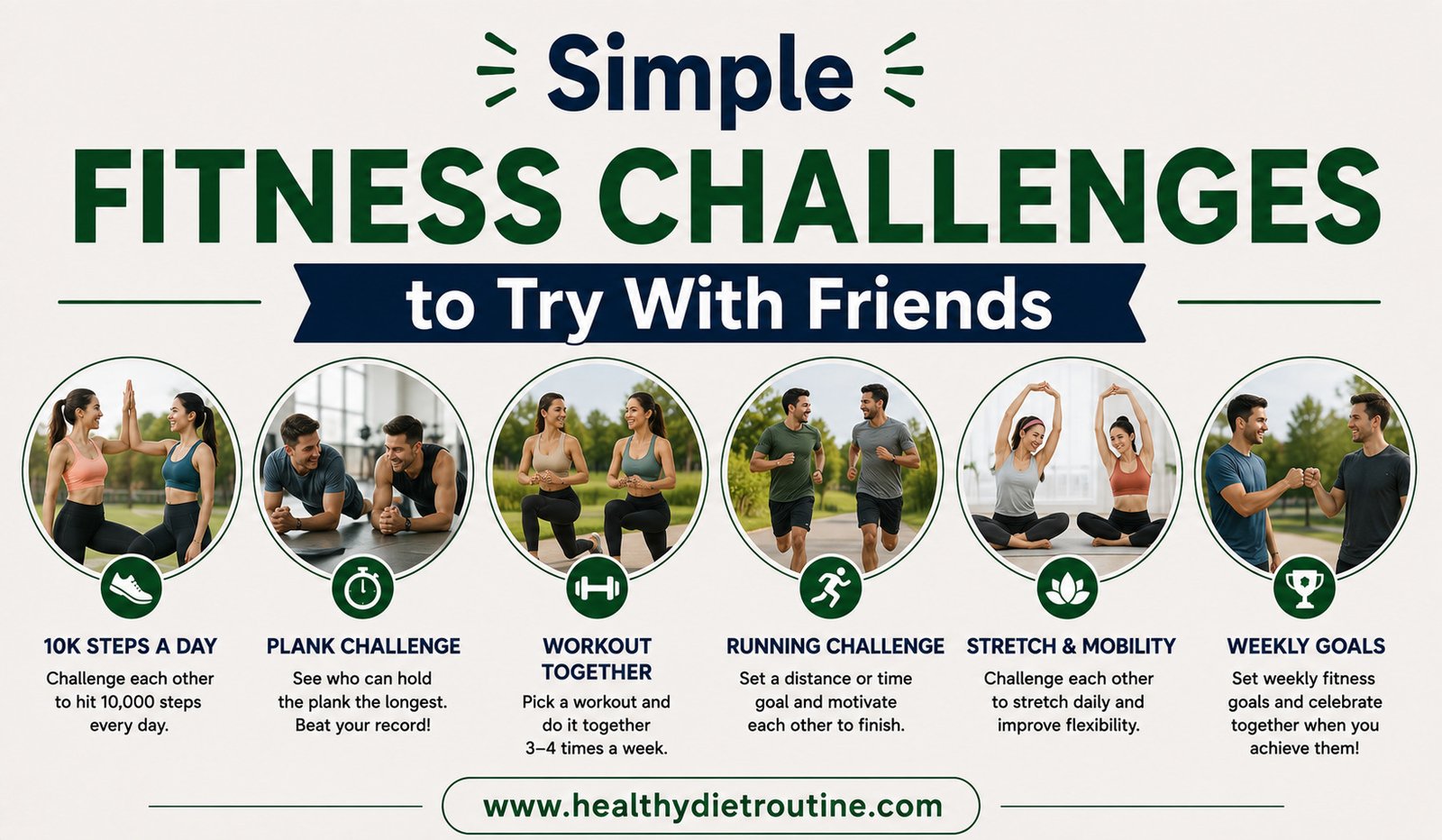
Staying active can be more enjoyable when you have friends involved. Instead of treating exercise as a routine task, you can turn it into a fun challenge that encourages everyone to move more, stay consistent, and support each other.
Fitness challenges do not have to involve intense workouts or expensive equipment. Simple activities such as walking, stretching, bodyweight exercises, or outdoor games can create friendly competition while helping you build healthier habits.
The key is to choose challenges that match everyone’s fitness levels and focus on participation rather than perfection. Here are some simple fitness challenges you can try with friends.
1. Daily Step Challenge
A daily step challenge is one of the easiest ways to get a group moving. Everyone can track their steps using a smartphone, smartwatch, or fitness tracker and compare progress at the end of the week.
You can set a realistic shared target, such as gradually increasing daily movement rather than demanding a very high number of steps immediately.
To make it more interesting, create weekly milestones or recognize different achievements. Someone might win for the most steps, while another person could be recognized for being the most consistent.
The goal should be encouraging more everyday movement, not making people feel bad about having a lower step count.
2. 30-Day Walking Challenge
Walking is accessible to many people and requires little equipment. A 30-day walking challenge can encourage friends to make movement part of their daily routine.
You could agree to walk for a certain amount of time each day. Some friends might walk outdoors, while others may use a treadmill or simply take additional walks during breaks.
Create a group chat where everyone can share their progress, interesting walking routes, or photos from outdoor walks. The social aspect can make the challenge easier to maintain.
3. Plank Challenge
A plank challenge can add a simple strength-focused activity to your routine. Instead of competing to hold a plank for an extreme amount of time, focus on gradual improvement.
Start with a comfortable duration and increase it carefully as participants become more familiar with the exercise. Maintaining proper form is more important than trying to hold the position for as long as possible.
Friends can encourage each other and share their best times, but anyone experiencing pain should stop rather than pushing through it.
4. Squat Challenge
Bodyweight squats require little space and no equipment, making them suitable for a simple group challenge.
You can choose a manageable number of repetitions and perform them regularly for several weeks. Another approach is to focus on consistency, such as completing a small number of quality repetitions each day.
Good technique should remain the priority. If someone is new to exercise, they can use a modified version or reduce the number of repetitions.
5. Weekend Outdoor Challenge
Turn your weekend into an opportunity to be active together. Choose an outdoor activity that everyone enjoys, such as walking, cycling, hiking, swimming, badminton, or playing a casual game.
The challenge could be as simple as completing one active outdoor session every weekend for a month.
This type of challenge provides more variety than repeating the same exercise every day. It can also turn fitness into a social experience rather than a solo activity.
6. Stretching Challenge
Fitness challenges do not always need to focus on strength or cardio. A daily stretching challenge can encourage friends to spend a few minutes paying attention to flexibility and mobility.
Choose a short routine that includes comfortable movements for major areas of the body. Everyone can complete the routine at home or join a group video call.
Avoid forcing stretches or bouncing aggressively into a position. The aim is to develop a consistent habit, not compete over who can stretch the furthest.
7. No-Equipment Workout Challenge
Create a simple circuit using exercises such as bodyweight squats, wall push-ups, lunges, glute bridges, marching in place, or modified exercises.
Friends can complete the same routine individually and report when they finish it. You can also change the exercises each week to keep things interesting.
The challenge can be adjusted for different fitness levels. Beginners may perform fewer repetitions or take longer rest periods, while more experienced participants can use a more demanding variation.
8. Fitness Streak Challenge
Sometimes consistency is more useful than competition. A fitness streak challenge can encourage everyone to complete some form of movement each day.
Set a simple rule, such as completing at least 15 or 20 minutes of intentional activity. Walking, stretching, cycling, dancing, or a home workout could all count.
If someone misses a day, avoid turning the challenge into a punishment. Simply restart the next day. The purpose is to develop a sustainable habit.
9. Active Break Challenge
For friends who spend long periods sitting at work or studying, an active-break challenge can be practical.
Agree to take short movement breaks throughout the day. These could involve walking around the room, stretching, climbing stairs, or performing a few gentle bodyweight movements.
You can send reminders in a group chat or encourage each other to stand up during particularly long periods of sitting.
Small movement breaks may feel insignificant individually, but they can make an otherwise inactive day more varied.
10. Dance Challenge
Exercise does not always have to look like traditional exercise. Choose a favorite song or create a short dance routine and challenge friends to participate.
Each person can record themselves performing the routine or join a group session. You can even choose a different song each week.
Dancing can provide an enjoyable way to move while reducing the feeling that you are completing a formal workout.
11. Hydration and Movement Challenge
You can combine physical activity with another healthy daily habit. For example, friends can encourage each other to stay active while also paying attention to regular hydration.
Rather than setting unrealistic water targets, focus on remembering to drink fluids regularly according to individual needs and circumstances.
The challenge can be a broader healthy-habits competition where participants track movement, hydration, sleep routines, or other non-medical lifestyle habits.
12. Try Something New Challenge
Doing the same workout repeatedly can become boring. A “try something new” challenge encourages friends to experiment with different activities.
Each week, choose a new form of movement. One week could involve cycling, another could involve yoga, and another could include a recreational sport or a beginner-friendly fitness class.
This approach is especially useful for people who have difficulty staying motivated with repetitive routines. You may discover activities you genuinely enjoy.
Make Fitness Challenges More Fun
The best group challenges are easy to understand and enjoyable enough to continue. Instead of focusing entirely on who finishes first, create different categories of achievement.
You could recognize the most consistent participant, the person who tried the most new activities, or the friend who encouraged others the most.
Avoid making body weight, appearance, or extreme physical performance the focus of the competition. Fitness should support well-being rather than create unnecessary pressure.
It is also important to remember that friends may have different fitness backgrounds. Someone who is new to exercise should not be expected to perform at the same level as someone who has trained regularly for years.
Set Realistic Rules
Before starting a challenge, agree on simple rules. Decide what activities count, how progress will be tracked, how long the challenge will last, and how everyone can participate safely.
A two- or four-week challenge may be easier to maintain than an overly ambitious six-month competition. Once the group develops the habit, you can create another challenge.
Technology can make tracking easier, but it is not essential. A shared spreadsheet, group chat, or simple personal record can be enough.
Keep the Focus on Consistency
A fitness challenge should motivate people rather than make them feel pressured. Missing one workout or having an inactive day does not erase previous progress.
Encourage friends to listen to their bodies, take rest days when needed, and modify exercises appropriately. Anyone with an injury, medical condition, or other concern should consider getting appropriate professional guidance before starting a new exercise program.
The strongest group challenges are those that people actually want to continue after the competition ends.
Conclusion
Simple fitness challenges can turn exercise into a fun social activity. Whether you choose a walking challenge, daily step competition, stretching streak, outdoor activity, dance challenge, or bodyweight workout, the most important ingredient is consistency.
Working out with friends can provide encouragement, accountability, and plenty of opportunities to have fun. You do not need expensive equipment or complicated routines. Start with an activity everyone can enjoy, set realistic goals, and celebrate progress along the way.
When fitness becomes something you share with friends rather than something you have to do alone, staying active can feel much easier and more enjoyable.