
Best Heart Rate Monitors for Home Workouts
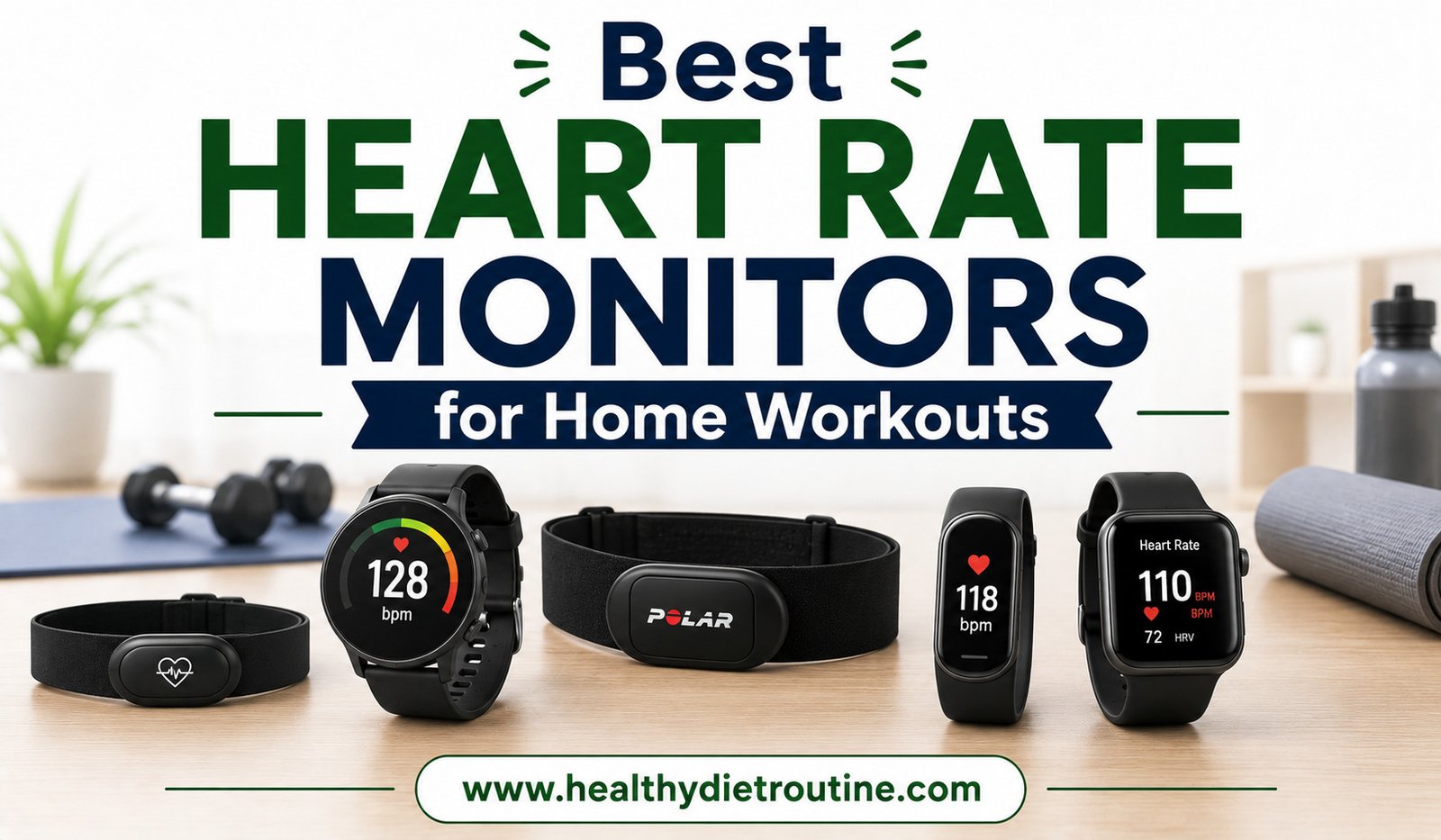
Heart rate monitoring can make home workouts more informative and structured. Whether you are walking on a treadmill, cycling indoors, following a HIIT routine, lifting weights, or doing cardio exercises, knowing your heart rate can help you understand how hard you are working.
Modern heart rate monitors come in several forms, including chest straps, armbands, smartwatches, and fitness trackers. For workouts where heart rate changes quickly, chest straps are generally considered a strong option because they measure the heart’s electrical activity closer to the source. Current 2026 comparisons continue to place chest straps such as the Polar H10 among the leading choices for exercise heart-rate tracking.
The best device for you depends on your workout style, preferred phone or fitness ecosystem, comfort preferences, and budget.
Polar H10: Best Overall for Accuracy
The Polar H10 is one of the most established choices for people who want dedicated heart-rate monitoring. It is a chest strap that uses electrical heart-rate sensing and supports Bluetooth and ANT+ connectivity.
Its biggest advantage is its focus on heart-rate accuracy. Independent reviews continue to rank it among the best heart-rate monitors in 2026, making it particularly suitable for people who want reliable data during intervals, cycling, cardio workouts, and strength sessions.
The H10 also offers long battery life and can store a workout, allowing it to be useful beyond a simple live connection to your phone or another device. Its broad compatibility makes it a practical choice if you use different fitness apps or equipment.
For someone who wants a dedicated heart-rate monitor rather than another smartwatch, the Polar H10 is an excellent starting point.
Garmin HRM-Pro Plus: Best for Garmin Users
The Garmin HRM-Pro Plus is designed for people who already use Garmin fitness watches and want additional training information.
Like other quality chest straps, it can provide responsive heart-rate information during workouts. Its advantage is the deeper integration with Garmin’s ecosystem. It can provide additional running-related information and supports Garmin-specific training features that may be valuable to runners.
For a basic home workout, many of these advanced functions may not be necessary. However, if you use a compatible Garmin watch and regularly run, cycle, or follow structured training sessions, the extra features can make the higher price easier to justify.
A 2026 comparison notes that the HRM-Pro Plus is particularly attractive within the Garmin ecosystem because of features such as running dynamics and Garmin-specific data storage workflows.
Garmin HRM 600: Best for Advanced Garmin Training
The Garmin HRM 600 is another premium chest-strap option for people invested in Garmin’s fitness ecosystem.
It is designed for users who want more than basic heart-rate readings. Its rechargeable design and Garmin Connect integration make it appealing to people who regularly train with compatible Garmin devices.
For home workouts, it can be particularly useful if you already use Garmin equipment to monitor training load, running sessions, or other structured workouts.
However, it is a premium purchase. If your main goal is simply to see your heart rate while exercising, a less expensive monitor may provide everything you need.
Wahoo TRACKR: Best Rechargeable Option
The Wahoo TRACKR is an appealing choice if you prefer a rechargeable heart-rate monitor instead of a traditional replaceable coin-cell battery.
It uses ECG-based sensing and supports Bluetooth and ANT+ connections. Reviews describe it as a straightforward option for athletes who want reliable heart-rate information without paying for a highly complicated device.
The rechargeable battery can be convenient for regular home workouts because you do not need to keep spare coin batteries available.
One limitation is that the TRACKR does not provide onboard memory for offline workout tracking, so it works best when connected to a compatible phone, watch, or fitness device during your session.
Polar H9: Best Simpler Polar Option
The Polar H9 is worth considering if you want a reliable chest strap without paying for every feature offered by the H10.
It focuses on the essentials: real-time heart-rate monitoring and broad connectivity. It can work well with compatible phones, fitness equipment, and apps.
For home users who simply want to monitor heart-rate zones during cycling, treadmill workouts, aerobic exercise, or other cardio sessions, a simpler monitor can make more sense than purchasing a premium model.
The main difference is that the H10 provides additional functionality, including onboard workout memory and broader simultaneous Bluetooth support.
Magene H603: Budget-Friendly Alternative
For beginners who want a chest strap without spending too much, the Magene H603 can be an interesting alternative.
It is designed around the core purpose of a heart-rate monitor: transmitting heart-rate information to compatible devices and apps. This can be enough for home workouts where you simply want to monitor intensity.
Budget models can be particularly useful for people who already have a smartphone or fitness app capable of receiving heart-rate data.
Before buying, check compatibility with the exact app, exercise equipment, or smartwatch you plan to use.
Decathlon HRM Belt: Another Affordable Choice
A basic heart-rate belt can be a practical option if your goal is straightforward workout monitoring.
Devices in this category are useful for people who want heart-rate data without paying for premium training features. If you already use compatible ANT+ or Bluetooth equipment at home, a simple heart-rate belt may be all you need.
The important thing is to check whether the monitor supports the connection standard used by your treadmill, cycling trainer, smartwatch, or fitness application.
Chest Strap vs Smartwatch for Home Workouts
Many people already have a smartwatch with heart-rate tracking, so why buy a separate monitor?
The main advantage of a chest strap is responsiveness during changing exercise intensity. Chest straps measure electrical signals from the heart, while most smartwatches use optical sensors that detect changes in blood flow at the wrist. During intervals and fast changes in intensity, chest straps can therefore be a useful choice for more responsive heart-rate data.
A smartwatch is more convenient if you want an all-in-one device that also tracks steps, sleep, workouts, notifications, GPS, and other features.
For casual home workouts, a smartwatch may be sufficient. For structured training or heart-rate-zone workouts, a chest strap can be a worthwhile upgrade.
What to Look for in a Home Workout Heart Rate Monitor
Before buying, consider how you plan to use the device.
Accuracy: If you perform HIIT, intervals, cycling, or other workouts where heart rate changes quickly, prioritize a reliable sensor.
Connectivity: Check whether the monitor supports Bluetooth, ANT+, or both. Your phone, smartwatch, or exercise equipment must support the same connection method.
Comfort: A heart-rate monitor is only useful if you are comfortable wearing it. Chest straps should fit securely without being excessively tight.
Battery: Consider whether you prefer replaceable batteries or rechargeable models. The Polar H10, for example, is rated for long battery life, while the Wahoo TRACKR uses a rechargeable design.
App compatibility: Make sure the monitor works with the fitness application you already use. This is particularly important if you train using indoor cycling platforms or workout apps.
Extra features: Beginners may only need heart-rate tracking. Advanced athletes may benefit from workout memory, running dynamics, HRV-related information, or deeper ecosystem integration.
Which Heart Rate Monitor Should You Choose?
For most people who want a dedicated monitor, the Polar H10 is the strongest all-round choice because of its accuracy, connectivity, and established reputation.
If you already own a Garmin watch, the Garmin HRM-Pro Plus or HRM 600 may make more sense because of their integration with Garmin’s training ecosystem.
If you prefer a rechargeable device, the Wahoo TRACKR offers a convenient alternative with Bluetooth and ANT+ connectivity.
For beginners who only need basic heart-rate monitoring, the Polar H9, Magene H603, or a compatible affordable HRM belt may be sufficient.
Final Thoughts
A heart-rate monitor can be a useful addition to a home workout setup, especially if you want to understand exercise intensity and train using heart-rate zones. You do not necessarily need the most expensive model to get useful information.
The right choice depends on your workout style and the devices you already own. A chest strap such as the Polar H10 is a strong choice when accuracy and responsiveness are priorities, while Garmin models are particularly appealing to users already invested in Garmin’s ecosystem.
Before buying, check compatibility, comfort, battery type, connectivity, and the features you genuinely need. Most importantly, remember that consumer heart-rate monitors are fitness tools rather than medical diagnostic devices. If you have concerns about your heart rate, symptoms during exercise, or an existing medical condition, seek appropriate medical advice rather than relying solely on wearable readings.