
Best Foam Rollers for Home Recovery
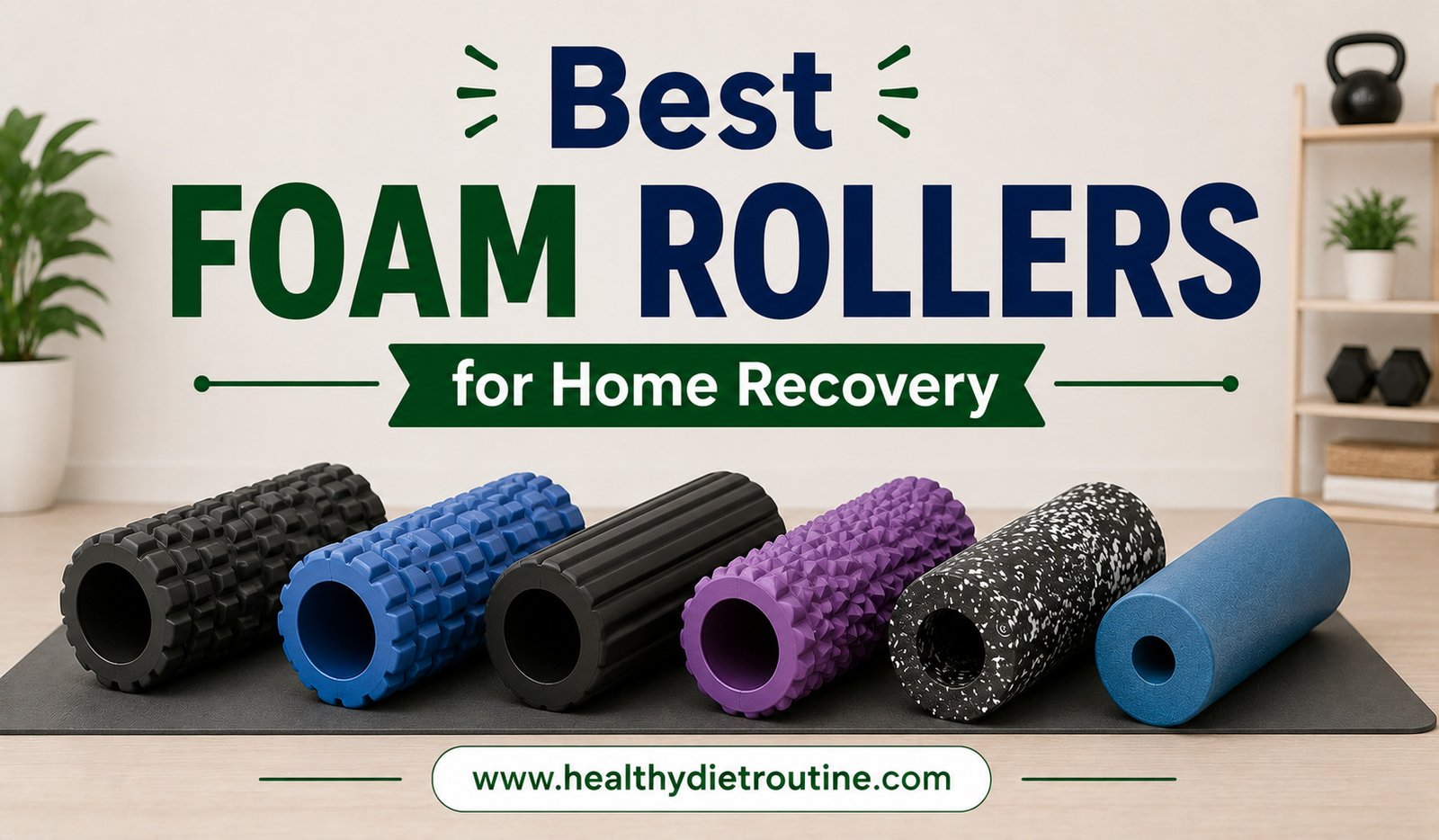
Recovery is an important part of any fitness routine. Whether you enjoy strength training, running, cycling, yoga, or simple home workouts, your muscles need time to recover between sessions. One affordable tool that many fitness enthusiasts use at home is a foam roller.
Foam rollers are cylindrical exercise accessories designed for self-massage and mobility work. By using your body weight to apply controlled pressure to different muscle groups, you can create a massage-like sensation that may help with temporary muscle soreness, stiffness, and range of motion.
Research suggests that foam rolling can provide short-term improvements in flexibility and may reduce the perception of muscle soreness, although its overall effects on athletic performance and recovery are generally modest.
With different sizes, densities, textures, and shapes available, choosing the best foam roller for home recovery can be confusing. Understanding the main types and features can help you select one that suits your fitness level and recovery needs.
What Is Foam Rolling?
Foam rolling is a form of self-myofascial release in which you use a roller to apply pressure to muscles and surrounding soft tissue. You typically place the roller underneath a muscle group and slowly move your body over it.
Common areas include the thighs, calves, hamstrings, glutes, and upper back.
The sensation can range from gentle pressure to significant discomfort depending on the firmness of the roller and how much body weight you place on it. The goal should be controlled pressure rather than forcing yourself through severe pain.
A systematic review found evidence that foam rolling may increase range of motion and help with recovery from exercise-induced muscle soreness, although results vary between studies.
Why Use a Foam Roller at Home?
One of the biggest advantages of foam rolling is convenience. A roller requires no batteries, electricity, or complicated setup. It can be kept in a bedroom, home gym, or living room and used whenever you have a few minutes available.
Foam rolling may be useful before exercise as part of a warm-up or after exercise as part of a recovery routine. Research has found small short-term improvements in flexibility and some reductions in perceived muscle pain following foam rolling.
For home users, another benefit is versatility. The same roller can be used for several muscle groups, making it a practical alternative to purchasing separate recovery equipment.
Types of Foam Rollers to Consider
1. Smooth Foam Rollers
Smooth rollers have an even surface without raised bumps or aggressive patterns. They are often a good starting point for beginners because pressure is distributed relatively evenly.
If you have never used a foam roller before, a softer or medium-density smooth model can make the learning process more comfortable.
These rollers can be useful for general recovery, warm-ups, and basic mobility exercises.
2. Textured Foam Rollers
Textured rollers feature ridges, grooves, or raised sections designed to create a more targeted massage sensation.
They may appeal to experienced users who prefer stronger pressure. However, more texture does not automatically mean better recovery. Comfort and appropriate pressure are more important than choosing the most aggressive design.
3. High-Density Foam Rollers
High-density rollers are firmer and tend to provide deeper pressure than softer models. They can be useful for people who regularly exercise and are already comfortable with foam rolling.
Because they provide more pressure, beginners may find them uncomfortable. Starting with a moderate-density roller can be a better option before moving to a firmer model.
4. Soft Foam Rollers
Soft rollers provide gentler pressure and can be suitable for beginners, people with sensitive muscles, or users who prefer a relaxing recovery session.
They may also be useful for light mobility work where aggressive pressure is unnecessary.
5. Travel-Friendly Foam Rollers
Compact foam rollers are designed for people who want to take their recovery equipment to the gym, office, or while traveling.
Smaller models are easier to store and transport, although they may provide less surface area than a full-length roller.
Features to Look for in the Best Foam Roller
Choosing a foam roller does not have to be complicated. Focus on the features that match how you plan to use it.
Firmness: A softer roller is generally more forgiving for beginners, while a firm roller can provide stronger pressure.
Surface texture: Smooth surfaces provide consistent pressure, whereas textured surfaces create a more targeted sensation.
Size: Longer rollers can be easier to use for large muscle groups, while compact rollers are more portable.
Weight: If you plan to travel with your roller, a lightweight model can be more convenient.
Durability: A good roller should maintain its shape under repeated body weight and regular use.
Stability: A roller should remain reasonably stable during exercises instead of unexpectedly shifting across the floor.
Easy-to-clean material: Sweat can accumulate on exercise equipment, so a surface that is easy to wipe clean is useful.
How to Use a Foam Roller for Recovery
The basic technique is simple. Place the roller underneath the muscle group you want to work on and slowly move your body back and forth.
The American College of Sports Medicine recommends gently rolling the affected body area for approximately 30 to 60 seconds, moving at about one inch per second. It also advises avoiding direct pressure on bones and joints and not spending excessive time on one area.
A practical home routine might include the calves, hamstrings, quadriceps, glutes, and upper back. You can spend a short period on each area rather than attempting to roll every muscle for a long time.
Pressure should remain manageable. Mild discomfort may occur, but severe pain is not a sign that the technique is working better.
Foam Rolling Before or After Exercise?
Foam rolling can be incorporated into both warm-up and recovery routines.
Before exercise, it may temporarily improve flexibility and range of motion without significantly reducing muscle performance. A systematic review found that foam rolling can reduce muscle stiffness and increase range of motion when combined with dynamic stretching and an active warm-up.
After exercise, some research suggests that foam rolling may reduce the perception of delayed-onset muscle soreness and help maintain certain aspects of physical performance. However, the overall effects are relatively small and research findings are not completely consistent.
This means foam rolling should be considered a recovery aid rather than a guaranteed solution for muscle soreness.
Benefits of Using a Foam Roller at Home
A foam roller can offer several practical benefits as part of a regular fitness routine.
It may help temporarily improve range of motion, reduce feelings of muscle tightness, and make post-workout soreness feel more manageable. It can also provide a convenient form of self-massage without requiring professional equipment.
A 2020 systematic review found that foam rolling increased range of motion across the studies included in its analysis and appeared useful for recovery from exercise-induced muscle damage.
At the same time, long-term evidence remains less certain. A later review of randomized controlled trials found conflicting results for long-term flexibility improvements and limited evidence of performance benefits.
Foam Rolling Safety Tips
Foam rolling should be performed gradually and with controlled movement. Avoid rolling directly over bones, joints, the front of the neck, or areas with unexplained or acute pain.
If a particular area is extremely painful, it is better to reduce pressure or work around the surrounding muscle rather than repeatedly applying strong pressure to the painful spot.
ACSM recommends gradually increasing pressure as tolerated and avoiding excessive time on one area.
People recovering from significant injuries, surgery, or certain medical conditions should check with an appropriate healthcare professional before adding foam rolling to their routine.
Foam rolling should also not be used as a substitute for professional assessment when pain is persistent, severe, or accompanied by other concerning symptoms.
Who Can Benefit From a Home Foam Roller?
A foam roller may be useful for:
- Beginners starting a home workout routine
- Regular gym users
- Runners and cyclists
- Strength-training enthusiasts
- People who want simple mobility exercises
- Individuals looking for an affordable recovery tool
- People who prefer equipment that requires no electricity
You do not need to be an athlete to use a foam roller. It can be a practical addition to a general mobility and exercise routine.
How to Choose the Best Foam Roller for Home Recovery
If you are new to foam rolling, consider starting with a medium or softer smooth foam roller. It can help you learn proper positioning and pressure without making the experience unnecessarily uncomfortable.
More experienced users may prefer a firm, textured roller for stronger pressure. If portability matters, choose a compact model that is easy to store and carry.
Rather than choosing a roller based solely on its appearance or firmness, consider how you actually plan to use it. A comfortable roller that you use consistently can be more useful than an aggressive model that feels too uncomfortable to use regularly.
Final Thoughts
The best foam rollers for home recovery are not necessarily the hardest or most heavily textured models. The right choice depends on your experience, preferred pressure, target muscle groups, and how often you plan to use the roller.
Evidence suggests that foam rolling can provide short-term improvements in range of motion and may reduce perceived muscle soreness, but its effects on overall athletic performance and long-term recovery are more limited.
For most home users, a durable medium-density roller with a comfortable surface is a practical starting point. Use it alongside proper warm-ups, cool-downs, hydration, sleep, nutrition, and regular movement for a balanced recovery routine.
When used sensibly, a foam roller is a simple, affordable, and convenient tool that can make mobility and post-workout recovery easier to incorporate into everyday life.