
Best Health Gadgets for Home Use in India
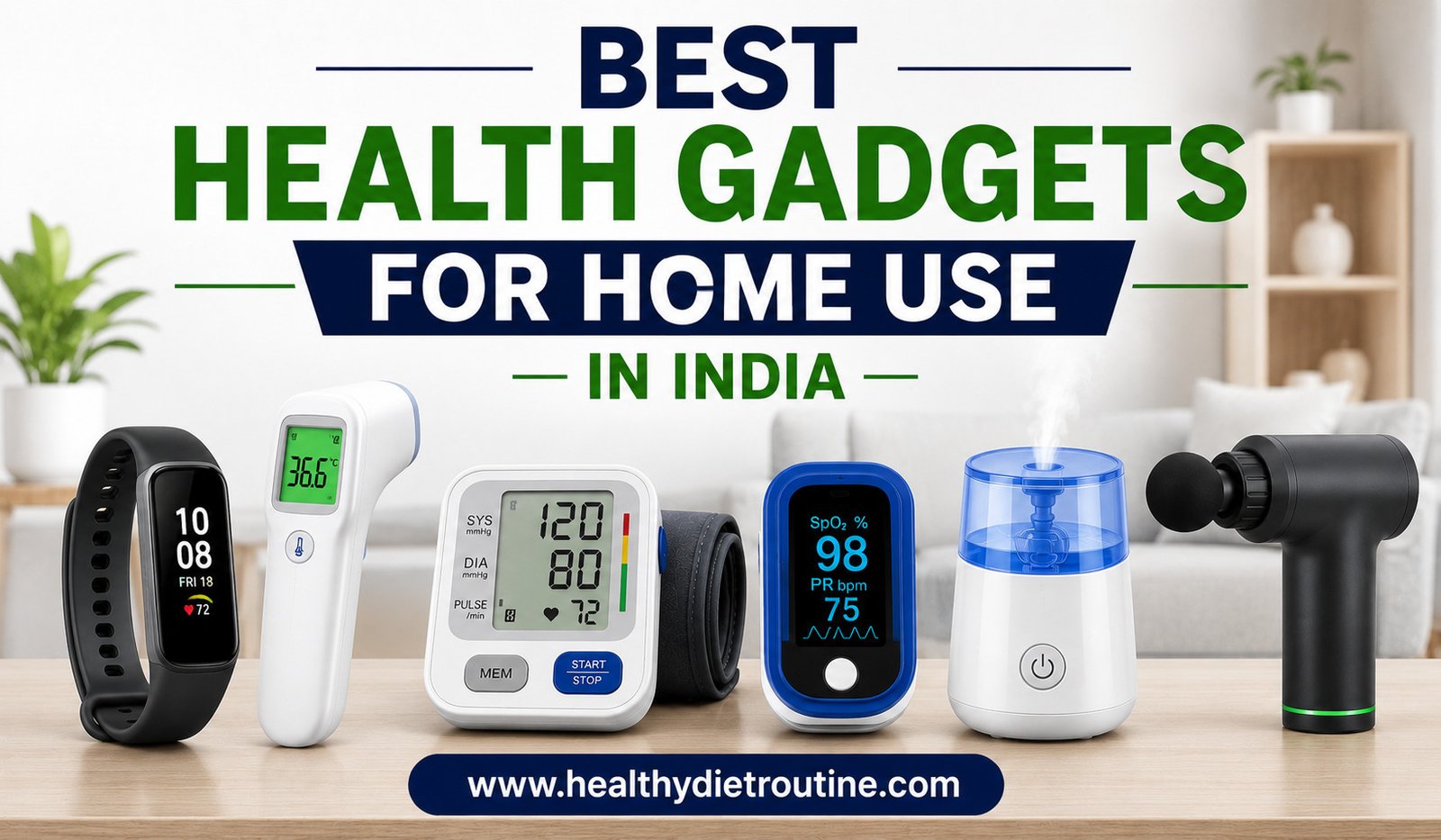
Taking care of your health at home has become much easier with the growing availability of affordable health gadgets. You no longer need to visit a clinic every time you want to check basic measurements such as temperature, blood pressure, blood oxygen, or body weight. A few practical devices can help you keep track of everyday health information and notice changes that may be worth discussing with a healthcare professional.
In India, home health gadgets are available across a wide range of prices. Some are simple devices designed for occasional use, while others connect to smartphones and store health information over time. The important thing is to choose gadgets based on your actual needs rather than buying products simply because they have more features.
According to recent Indian health guidance and buying resources, devices such as digital thermometers, blood pressure monitors, pulse oximeters, glucometers, and weighing scales are among the most useful tools for home health monitoring.
Here are some of the best health gadgets for home use in India to consider in 2026.
1. Digital Blood Pressure Monitor
A digital blood pressure monitor is one of the most useful health gadgets for a family home. It allows users to measure blood pressure without visiting a clinic for every reading.
Blood pressure can change throughout the day, and high blood pressure may not always cause noticeable symptoms. Regular home monitoring can therefore provide useful information when it is recommended by a healthcare professional.
For home use, an automatic upper-arm blood pressure monitor is generally a better choice than a wrist model. When selecting one, look for an appropriately sized cuff, clear display, easy operation, and preferably a device that has been clinically validated.
Features such as memory storage, irregular-heartbeat detection, multiple-user profiles, and smartphone connectivity can also be useful, but accuracy should be more important than the number of additional features.
2. Pulse Oximeter
A pulse oximeter is a small fingertip gadget that provides an estimate of blood oxygen saturation and pulse rate. Its compact size makes it convenient to keep in a home health kit.
The device is particularly useful when someone has been advised to monitor oxygen saturation or pulse. It can also be convenient for people who need occasional respiratory-health monitoring.
When buying a pulse oximeter, look for a clear display, comfortable finger clip, easy operation, and dependable construction. Avoid choosing a model solely because it is the cheapest available.
It is also important to understand that readings can be affected by movement, cold fingers, positioning, and other factors. A single unusual reading should not automatically be treated as a diagnosis.
3. Digital Thermometer
A digital thermometer is perhaps the simplest health gadget that every household should consider keeping available.
When someone feels feverish or unwell, a thermometer provides an actual temperature reading instead of relying on touch or guesswork. Modern digital thermometers are inexpensive, compact, and generally easy to operate.
Some models provide readings quickly and include features such as memory storage and automatic shut-off. Infrared thermometers offer another convenient option because they can provide contactless readings when used correctly.
For most households, there is little reason to spend a large amount on a thermometer. Focus instead on ease of use, clear readings, manufacturer information, and appropriate accuracy.
4. Digital Weighing Scale
A digital weighing scale can be useful for people who want to keep track of body weight as part of their fitness or wellness routine.
Regular weight tracking can help users understand long-term changes rather than relying on occasional measurements. Basic digital scales are affordable, while smart scales can connect to smartphone applications and record measurements automatically.
Some smart scales also estimate BMI, body fat, muscle mass, and other body-composition metrics. These figures can be useful for observing trends, but they should not be considered equivalent to professional medical measurements.
For everyday use, a stable platform, readable display, suitable weight capacity, and consistent measurements are more important than having dozens of extra features.
5. Glucometer
A glucometer can be an important home gadget for people who have been advised to monitor blood glucose levels.
Modern glucose meters are relatively compact and can provide results quickly. Starter kits may include the meter, testing strips, lancets, and a lancing device, making them convenient for home use.
However, the purchase price is only one part of the cost. Test strips and lancets need to be replaced, so check their availability and ongoing price before choosing a particular glucometer.
If you are monitoring diabetes or another condition, use the device according to the testing schedule recommended by your healthcare professional. Do not change medication or treatment based only on a gadget’s reading.
6. Smart Health Scale
A smart health scale combines traditional weight measurement with app-based tracking. It can be useful for people who enjoy monitoring their fitness progress digitally.
After connecting the scale to a smartphone, users may be able to view historical weight data and estimated body-composition information. This can make it easier to identify long-term trends.
The main benefit is convenience. Instead of writing down every measurement, the application can automatically maintain a record.
However, smart scales should not be treated as diagnostic medical devices. Their body-composition estimates can vary depending on hydration and other conditions, so use them mainly for general wellness tracking.
7. Fitness Band or Health Smartwatch
Fitness bands and smartwatches have evolved into popular health gadgets for everyday use. Depending on the model, they can track steps, heart rate, workouts, sleep, calories, and blood oxygen.
Some advanced wearables also offer features such as ECG-related monitoring or other specialised health functions. However, the availability and reliability of these features vary considerably between devices.
For someone mainly interested in daily activity, a budget fitness band may be sufficient. People who want notifications, calls, GPS, larger displays, and additional smart features may prefer a smartwatch.
Health wearables are best viewed as wellness tools. Their measurements should not automatically be treated as medical diagnoses.
8. Home Nebulizer
A nebulizer can be useful in households where a doctor has recommended nebulized medication. These devices turn liquid medicine into a fine mist that can be inhaled through a mask or mouthpiece.
Compact compressor nebulizers are available in India from several established healthcare brands. When choosing one, consider operating noise, cleaning requirements, accessories, portability, warranty, and availability of replacement parts.
A nebulizer should not be used simply because someone is experiencing breathing difficulties. The medication and treatment method should be recommended by an appropriate healthcare professional.
9. Electric Heating Pad
Not every useful health gadget needs to measure a health parameter. An electric heating pad can be useful for temporary comfort after a long day, particularly when muscles feel tired or stiff.
Modern heating pads often include multiple heat settings, automatic shut-off, washable covers, and flexible designs.
However, heating products need to be used carefully. Avoid excessive heat or prolonged direct contact with the skin, and follow the manufacturer’s safety instructions. People with certain health conditions or reduced sensitivity should seek professional advice before using heat therapy.
10. Massage Gun
A massage gun is another popular wellness gadget for home use. It uses rapid percussive movements to massage muscles and is commonly used after workouts or periods of physical activity.
Budget models can include multiple speed settings and interchangeable massage heads. The biggest advantage is convenience because users can perform short muscle-massage sessions at home without booking a professional massage.
A massage gun should be used on appropriate muscle areas and according to the manufacturer’s instructions. It should not be treated as a device for diagnosing or treating an underlying medical condition.
How to Choose the Right Health Gadget for Your Home
The best health gadget is not necessarily the one with the most features. Start by identifying what you actually need.
If your household needs regular blood pressure monitoring, prioritise a dependable upper-arm BP monitor. If temperature checks are the main requirement, a simple digital thermometer may be enough. For people who have been instructed to monitor blood glucose, a reliable glucometer and affordable replacement strips are more important than smart features.
You should also consider who will use the device. Older family members may benefit from large displays and simple controls. A smartphone-connected gadget may be more useful for younger users who enjoy tracking health information through an app.
After-sales service is another important factor. Health devices can become less useful if replacement parts, cuffs, batteries, test strips, or technical support are difficult to obtain.
Most importantly, learn how to use each device correctly. Incorrect positioning, poor technique, movement, or unsuitable accessories can affect measurements. Recent home-monitoring guidance also recommends focusing on consistent measurement conditions and recording trends rather than judging health from one isolated result.
Why Home Health Gadgets Are Becoming Popular in India
One major reason for the growing popularity of home health gadgets is convenience. People can collect basic health information without making a separate trip to a clinic for every routine measurement.
Home monitoring can also encourage people to pay greater attention to their health habits. A weighing scale may encourage more consistent weight tracking, while a fitness band can motivate users to walk more regularly.
The availability of affordable technology has made this trend more accessible. Indian retailers now offer everything from simple thermometers and oximeters to connected health scales and smartwatches.
However, convenience should not lead to unnecessary self-diagnosis. Health gadgets are most useful when their readings are interpreted appropriately and, when necessary, discussed with a qualified professional.
Final Thoughts
The best health gadgets for home use in India are the ones that solve a genuine need without making health monitoring unnecessarily complicated.
For most families, a basic setup can start with a digital thermometer, reliable blood pressure monitor, pulse oximeter, and weighing scale. Households with specific healthcare needs may also consider a glucometer or nebulizer when recommended by a professional. Fitness bands, smart scales, heating pads, and massage guns can complement these devices by supporting everyday wellness and activity tracking.
Before buying, compare accuracy, usability, warranty, replacement costs, app compatibility, and after-sales support rather than focusing only on price or the number of advertised features.
Finally, remember that home health gadgets are monitoring and wellness tools, not replacements for doctors. If readings are repeatedly abnormal or you experience concerning symptoms, seek appropriate medical attention rather than relying solely on a gadget.