
Best Fitness Gadgets for Beginners
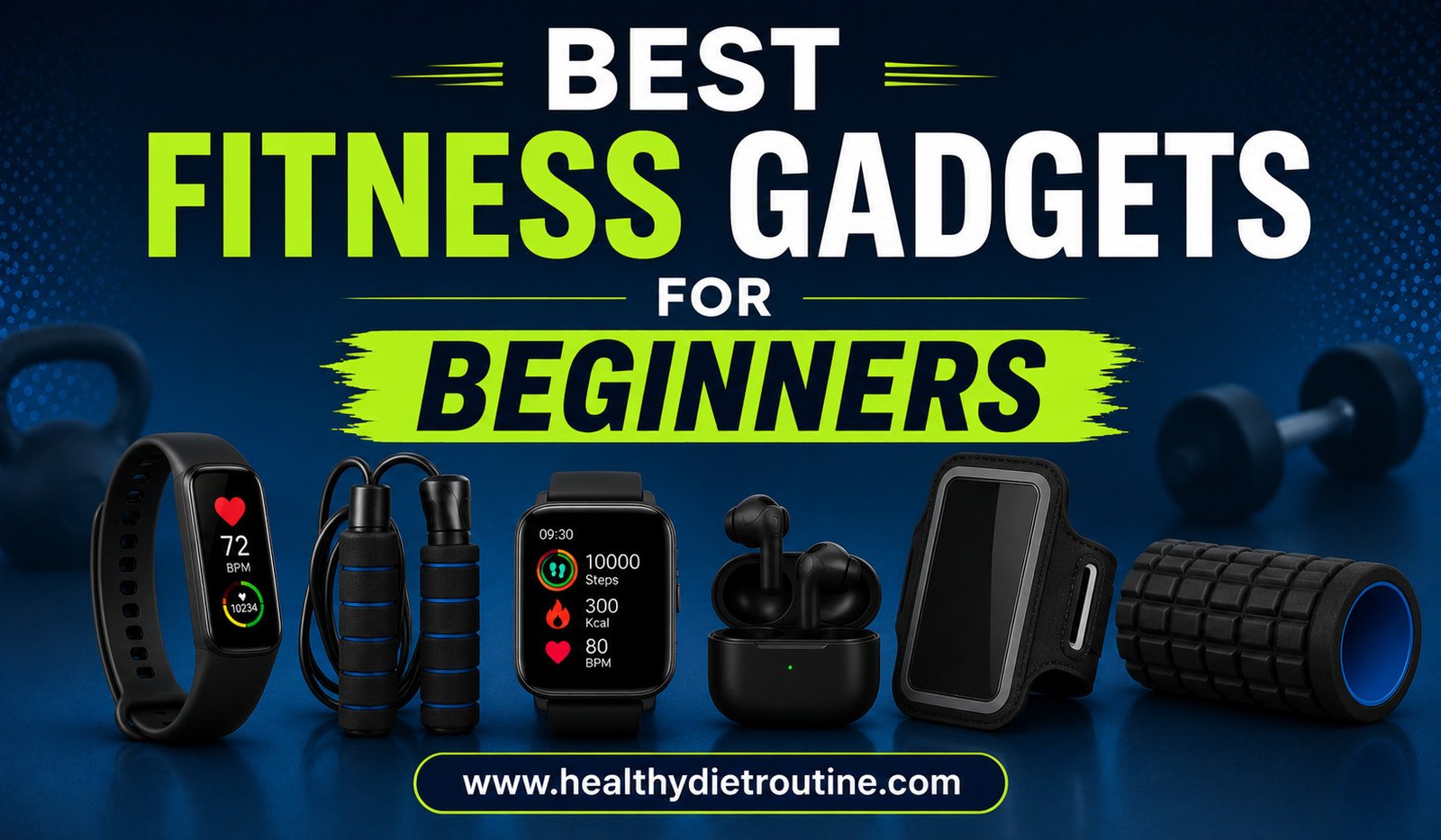
Starting a fitness journey can feel overwhelming. There are countless workout apps, smartwatches, fitness trackers, smart scales, massage devices, and other gadgets promising to improve your results. But beginners do not need an expensive collection of technology to become fitter.
The best fitness gadgets for beginners are usually the ones that make exercise easier to track, encourage consistency, and provide useful information without creating unnecessary complexity. A simple fitness band, digital weighing scale, skipping rope, resistance band, or basic workout timer can be enough to get started.
In 2026, budget-friendly fitness technology has become particularly capable. Affordable fitness trackers can monitor steps, heart rate, sleep, and workouts, while smartwatches add features such as notifications and GPS depending on the model. Current fitness-tracker guides also highlight the Xiaomi Smart Band and Samsung Galaxy Fit series as beginner-friendly options because of their straightforward tracking features and relatively long battery life.
Here are some of the best fitness gadgets for beginners to consider.
1. Fitness Band
A fitness band is one of the easiest gadgets for someone starting a fitness routine. It can automatically track daily steps and may also monitor heart rate, sleep, calories, and different types of workouts.
For beginners, the biggest benefit is accountability. Seeing how much you move during the day can encourage you to walk more, take regular breaks, or reach a realistic daily activity goal.
The Xiaomi Smart Band 10 is one example of a budget-friendly tracker that offers a bright AMOLED display, extensive activity tracking, and long battery life. The Samsung Galaxy Fit3 is another option aimed at users who want a lightweight fitness band with a simple interface.
You do not necessarily need the most expensive tracker. Focus on comfortable design, battery life, reliable basic tracking, and an easy-to-use companion app.
2. Smartwatch
A smartwatch can be useful if you want fitness tracking combined with everyday smartphone features. Depending on the model, it can track walking, running, cycling, workouts, heart rate, sleep, and other activities.
Many affordable smartwatches also provide notifications, alarms, music controls, and Bluetooth calling. This makes them useful beyond the gym.
However, beginners should avoid choosing a smartwatch simply because it advertises hundreds of sports modes. Many of those modes may not be relevant to your workouts. Instead, look for the activities you actually plan to do.
If running or outdoor cycling is a major goal, built-in GPS can be more valuable than having dozens of additional workout modes.
3. Digital Weighing Scale
A digital weighing scale is a simple but useful gadget for tracking fitness progress. It can help you observe changes in body weight over weeks or months.
You do not need an expensive smart scale to get started. A basic digital model with a clear display and stable platform can be perfectly adequate.
Smart scales are another option for people who enjoy technology. Some connect to smartphone apps and provide additional estimates such as BMI and body composition.
However, beginners should focus on trends rather than obsessing over daily numbers. Body weight naturally changes because of hydration, meals, activity, and other factors.
4. Resistance Bands
Resistance bands are among the most versatile pieces of fitness equipment for beginners. They are inexpensive, lightweight, and easy to store at home.
You can use them for exercises involving the arms, shoulders, back, chest, legs, and glutes. Different resistance levels allow beginners to gradually increase the difficulty as they become stronger.
They are also useful when travelling because they take up very little space compared with dumbbells or larger gym equipment.
If you are new to strength training, start with lighter resistance and learn the correct movement before progressing to stronger bands.
5. Skipping Rope
A skipping rope is a classic fitness tool that remains useful even in the age of smart fitness gadgets. It can provide an inexpensive way to add cardiovascular exercise to a home workout.
Skipping can help improve coordination, footwork, and cardiovascular fitness. It can also be incorporated into short interval workouts.
Beginners should start slowly rather than immediately attempting long sessions. A few short intervals with rest between them can be easier to manage when you are developing coordination and fitness.
Choose a rope with comfortable handles and a suitable length. If you have joint problems or have been advised to avoid high-impact exercise, consider a lower-impact activity instead.
6. Fitness Mat
A good exercise mat is one of the most practical purchases for a beginner. Unlike some electronic gadgets, it does not require charging, an app, or complicated setup.
A fitness mat provides a more comfortable surface for stretching, yoga, mobility exercises, bodyweight workouts, and core exercises.
Look for a mat with sufficient thickness, a non-slip surface, and a size that gives you enough room to move comfortably.
A mat can also make it easier to establish a dedicated workout space at home. Having a visible and ready-to-use exercise area can reduce the friction involved in starting a workout.
7. Smart Jump Rope
If you enjoy tracking workout data, a smart jump rope can add a technological element to traditional skipping. Depending on the model, it may count jumps, estimate workout duration, or connect with an application.
For a beginner, however, this should be considered an optional upgrade rather than a necessity. A standard skipping rope can provide the actual exercise without the extra cost.
The smart version may be useful for people who are motivated by tracking numbers and want to record their workouts digitally.
8. Workout Timer
A simple interval timer can be surprisingly useful when starting home workouts. It can help structure exercises into periods of activity and rest.
For example, a beginner might perform an exercise for 30 seconds followed by 30 seconds of recovery. A timer eliminates the need to constantly look at a phone clock.
You can buy a dedicated digital interval timer, but a smartphone fitness app can also perform the same basic function. Therefore, this is another gadget where you should only spend money if you genuinely prefer dedicated equipment.
9. Heart Rate Monitor
A heart-rate monitor can help beginners understand how their body responds to exercise. Many fitness bands and smartwatches already provide wrist-based heart-rate tracking, so a separate device may not be necessary.
Dedicated chest-strap monitors can provide more specialised workout information and may be particularly useful for people who progress into structured running or cycling training.
For someone just beginning, however, a basic wearable is usually enough for observing general heart-rate trends during exercise.
Remember that consumer wearables are not substitutes for medical equipment. If you have a medical condition or have been advised to monitor your heart rate, follow professional guidance.
10. Foam Roller
A foam roller is not a tracking gadget, but it can be a useful addition to a beginner’s fitness setup. It is commonly used for self-massage and mobility work before or after exercise.
Beginners can use a foam roller as part of a simple recovery routine. It may help make certain muscles feel less stiff after physical activity.
Choose a basic roller rather than immediately buying an expensive vibrating model. Learn how to use it properly and avoid putting excessive pressure on painful areas.
How to Choose Fitness Gadgets as a Beginner
The biggest mistake beginners make is buying too much equipment before establishing a workout habit.
You do not need a smartwatch, smart scale, massage gun, resistance machine, heart-rate monitor, and multiple recovery gadgets on your first day.
Start with the equipment that directly supports your goals. If you want to walk more, a fitness band can be useful. If you plan to work out at home, a mat and resistance bands may be more valuable. If you want to improve cardiovascular fitness, a skipping rope can be an inexpensive starting point.
Battery life is also worth considering when buying wearable technology. A tracker that requires frequent charging may become inconvenient, particularly if you want to monitor sleep as well as daytime activity.
Another important consideration is the companion app. The hardware is only part of the experience. A good app should make it easy to understand your activity history and identify useful trends. Current fitness-tracker comparisons continue to emphasise the importance of the software ecosystem alongside the physical device.
Do Beginners Really Need Fitness Gadgets?
Not necessarily. You can become fit without owning any technology.
Fitness gadgets are useful because they can make progress more visible and provide reminders to stay active. A step counter may encourage you to walk more, while a fitness band can show whether you are consistently exercising.
But gadgets cannot replace the fundamentals of fitness: regular physical activity, adequate recovery, nutritious food, and consistency.
Data can also become distracting if you constantly check calories, heart rate, or daily steps without understanding the bigger picture. Use technology as a tool rather than allowing it to become the main focus of your fitness journey.
Final Thoughts
The best fitness gadgets for beginners are simple, practical, and easy to use. A fitness band can encourage daily movement, a smartwatch can combine fitness and everyday features, while resistance bands, a skipping rope, and an exercise mat can help you build a basic home workout setup.
For most beginners, there is no reason to spend a large amount of money immediately. Start with one or two devices that match your goals and learn how to use them consistently.
As your fitness level improves, you can decide whether you actually need more advanced equipment such as GPS watches, specialised heart-rate monitors, smart recovery devices, or connected strength-training systems. The fitness technology market is becoming increasingly sophisticated, but the best gadget is still the one that helps you exercise regularly rather than simply sitting unused at home.
Ultimately, consistency matters more than technology. A simple ₹1,500 fitness band that motivates you to walk every day can be more valuable than a ₹20,000 smartwatch that you rarely use.