
Best Fitness Devices for People Working From Home
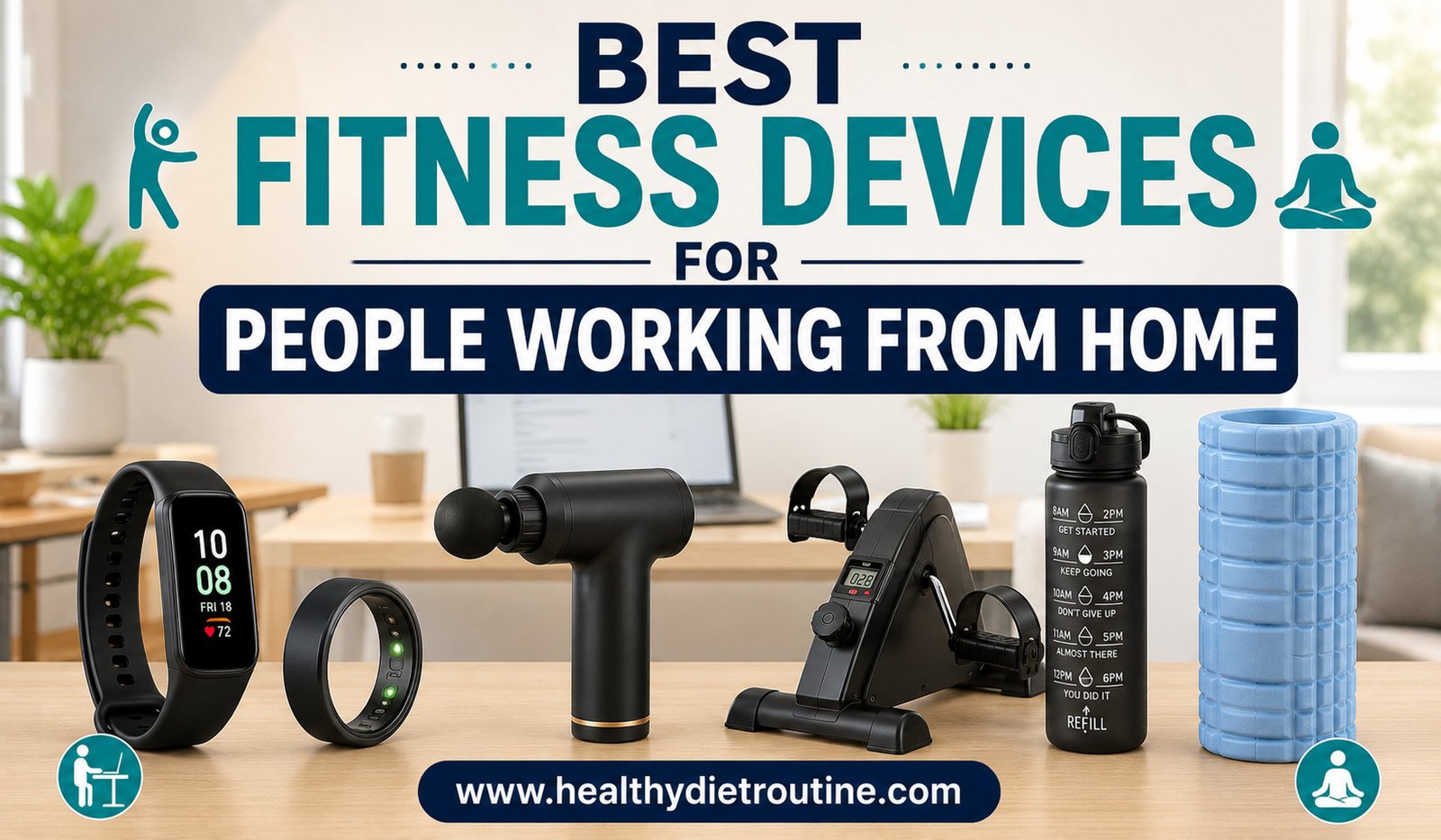
Working from home offers plenty of convenience, but it can also make staying active surprisingly difficult. A typical remote-work day can involve several hours of sitting, frequent video meetings, limited walking, and long periods spent in front of a computer. Even when work ends, the habit of staying at the desk can continue into the evening.
The good news is that you do not need a full home gym to become more active while working remotely. A few carefully chosen fitness devices can help you move throughout the day, track activity, take regular breaks, and make short workouts easier to fit into a busy schedule.
Fitness trackers, walking pads, resistance bands, exercise bikes, smartwatches, and recovery tools are increasingly being used to support home-based fitness routines. Walking pads, in particular, are gaining attention among remote workers because they can fit beneath or near a standing desk and make it easier to add movement during parts of the workday.
Here are some of the best fitness devices for people working from home in 2026.
1. Fitness Tracker
A fitness tracker is one of the simplest devices for remote workers who want to become more active.
When you work from home, it is easy to spend several hours without realising how little you have moved. A fitness band can track steps, activity, heart rate, sleep, and workouts, depending on the model.
The biggest benefit is awareness. Seeing a low step count during the afternoon can remind you to take a short walk or move around between meetings.
Modern fitness trackers are also becoming more focused on reducing distractions. Screen-free and minimal-display trackers are gaining popularity because they can collect health and activity information without constantly sending notifications to the wearer.
For remote workers, look for a comfortable design, good battery life, reliable step tracking, and useful inactivity reminders.
2. Walking Pad
A walking pad can be particularly useful for people who spend most of their working day at a desk.
These compact treadmills are designed for walking rather than intense running and can be placed in a home office. Depending on your setup, you can use one during appropriate meetings, while listening to presentations, or during dedicated movement breaks.
Walking pads are becoming popular because they provide a way to add more low-intensity movement without requiring a separate gym session. Recent Indian coverage has highlighted their space-saving design and suitability for people who want to stay active while working or relaxing at home.
However, you should not attempt to walk while performing tasks that require precise concentration, typing accuracy, or careful coordination. A walking pad is best used when the work activity allows it.
Before buying one, consider noise, belt size, maximum user weight, storage space, speed range, safety features, and warranty support.
3. Resistance Bands
Resistance bands are among the most practical fitness tools for home workers.
They require very little storage space and can be used for short strength sessions between work commitments. You can perform exercises for the shoulders, arms, back, chest, legs, and glutes without needing a large collection of weights.
Resistance bands are particularly useful when you only have 10 or 15 minutes available. Instead of waiting for a long free period to visit the gym, you can complete a few exercises during a work break.
Different resistance levels also make it possible to gradually increase the challenge as your strength improves.
For beginners, start with manageable resistance and focus on controlled movements rather than trying to use the strongest band immediately.
4. Smartwatch
A smartwatch combines fitness tracking with everyday digital features, making it useful for remote professionals who want everything on their wrist.
Depending on the model, a smartwatch can track steps, heart rate, sleep, workouts, calories, and other activity metrics. It may also provide calendar reminders, notifications, alarms, music controls, and calls.
For someone working from home, reminders to stand, stretch, or move can be particularly useful. Instead of relying entirely on willpower, the device can provide a gentle prompt during a long workday.
Budget smartwatches are widely available in India, while more advanced models offer GPS, detailed training analysis, recovery metrics, and specialised workout features. Current 2026 fitness-watch comparisons in India include budget-focused models such as the boAt Valour Watch 1R alongside more advanced options.
However, do not buy a smartwatch simply because it has hundreds of fitness modes. Choose features that match the activities you actually perform.
5. Exercise Bike
An exercise bike can be a good option for remote workers who want more structured indoor cardio.
Unlike a walking pad, an exercise bike does not require you to stand or walk while working. Instead, it can be used before work, during a longer break, or after finishing the workday.
Cycling can provide a convenient cardiovascular workout without requiring you to travel to a gym. An upright or compact exercise bike may also take less floor space than some larger home cardio machines.
When choosing one, consider resistance levels, seat adjustment, stability, noise, display features, and available floor space.
You do not need a highly advanced connected bike to get started. A reliable machine that you actually use regularly can be more valuable than an expensive model with features you never use.
6. Smart Weighing Scale
A smart weighing scale can help remote workers monitor changes in body weight over time.
Working from home can sometimes alter eating patterns and daily movement. A scale can provide a simple way to notice long-term changes and encourage greater awareness of your routine.
Smart models can connect with smartphone apps and automatically record measurements. Some also estimate body-fat percentage, BMI, muscle mass, and other metrics.
These additional measurements should be treated as estimates rather than medical assessments. The most useful feature for many users is simply the ability to observe weight trends over several weeks or months.
7. Under-Desk Pedal Exerciser
If a walking pad is too large for your home office, an under-desk pedal exerciser can be a smaller alternative.
It allows you to pedal while sitting and can add some light movement during suitable desk activities. It is particularly useful for people with limited space who want an easy way to reduce prolonged inactivity.
The resistance is generally much lower than what you would experience on a conventional exercise bike, so it should be considered a movement tool rather than a replacement for a proper cardio workout.
Before purchasing, check whether it fits comfortably beneath your desk and whether the pedals remain stable during use.
8. Compact Dumbbells
A pair of dumbbells can turn a small home-office corner into a basic strength-training area.
Dumbbells can be used for exercises such as curls, shoulder presses, rows, squats, lunges, and other movements. They are particularly useful for workers who prefer short strength sessions rather than long cardio workouts.
Adjustable dumbbells can be a good space-saving option because one pair can provide several resistance levels. However, beginners should first learn correct technique before increasing weight.
You can schedule a short dumbbell session before work, during lunch, or after finishing your workday.
9. Fitness Mat
A fitness mat is not a high-tech device, but it can be one of the most useful pieces of equipment for someone working from home.
A mat provides a dedicated surface for stretching, mobility exercises, yoga, bodyweight workouts, and short core sessions.
It also makes it easier to create a visible workout area. When your mat is already available beside your desk, doing a five-minute stretch or short workout can feel much easier than setting up equipment from scratch.
Choose a mat with enough cushioning for your preferred activities and a surface that provides good grip.
10. Massage Gun
A massage gun can be useful for remote workers who experience muscle tightness after sitting for long periods or after exercise.
It uses rapid percussive movements to massage muscles and is often used as part of a recovery routine. Different attachments and speed settings may allow you to target different muscle areas.
However, a massage gun should not be viewed as a treatment for unexplained pain or an underlying medical problem. Use it according to the manufacturer’s instructions and avoid sensitive or injured areas.
For many remote workers, a simple stretching and movement routine should come before purchasing a recovery gadget.
Why Fitness Devices Are Useful for Remote Workers
The biggest problem with working from home is often not the lack of fitness equipment. It is the lack of movement throughout the day.
A person may complete a 30-minute workout in the morning and still spend the next eight hours sitting. Fitness devices can help address this by encouraging movement beyond the main workout.
A fitness tracker can highlight a low activity level, a smartwatch can remind you to move, and a walking pad can make it easier to add light activity during suitable parts of the workday.
The goal is not to exercise constantly while working. Instead, fitness technology can help create a healthier balance between sitting, standing, walking, and dedicated exercise.
How to Choose the Right Fitness Device for Working From Home
Start with your biggest problem.
If you rarely leave your desk, a fitness tracker or walking pad may be useful. If you struggle to fit strength training into your schedule, resistance bands or dumbbells could be better.
Space is another major consideration. A walking pad or exercise bike requires considerably more room than a fitness band, resistance bands, or a yoga mat.
Noise also matters if you share your home with family members or attend frequent online meetings. Choose quieter equipment if it will be used during working hours.
You should also consider whether the device genuinely encourages you to exercise. A complicated gadget that requires constant charging, syncing, and maintenance may eventually become another unused item.
Current fitness research and buying guides increasingly emphasise that wearable data is most useful when it leads to behavioural changes, such as walking more regularly or paying attention to sleep and recovery.
Build a Simple Work-From-Home Fitness Setup
You do not need to purchase everything at once.
A simple setup could begin with a fitness tracker, resistance bands, and a fitness mat. If you have additional space and budget, you could add a walking pad or exercise bike.
The important thing is to create opportunities for movement throughout your workday. Take short walking breaks, stretch between meetings, use stairs when possible, and reserve time for a proper workout instead of depending entirely on gadgets.
Fitness devices should support your routine rather than become the routine themselves.
Final Thoughts
The best fitness devices for people working from home are those that make staying active easier without interfering with productivity.
A fitness tracker can provide daily accountability, while a smartwatch can combine activity tracking with work-related notifications. Resistance bands and dumbbells are excellent for quick strength sessions, while a fitness mat supports stretching and bodyweight exercises. For people with enough space, a walking pad or exercise bike can provide additional opportunities for indoor movement.
You do not need an expensive home gym to counteract a sedentary workday. Even a few affordable devices, combined with regular movement breaks, can make your daily routine more active.
The most important factor is consistency. Technology can remind you to move, track your progress, and make exercise more convenient, but the real benefit comes from using these tools regularly and building movement into your everyday work-from-home lifestyle.