
Best Smart Health Gadgets for Everyday Wellness
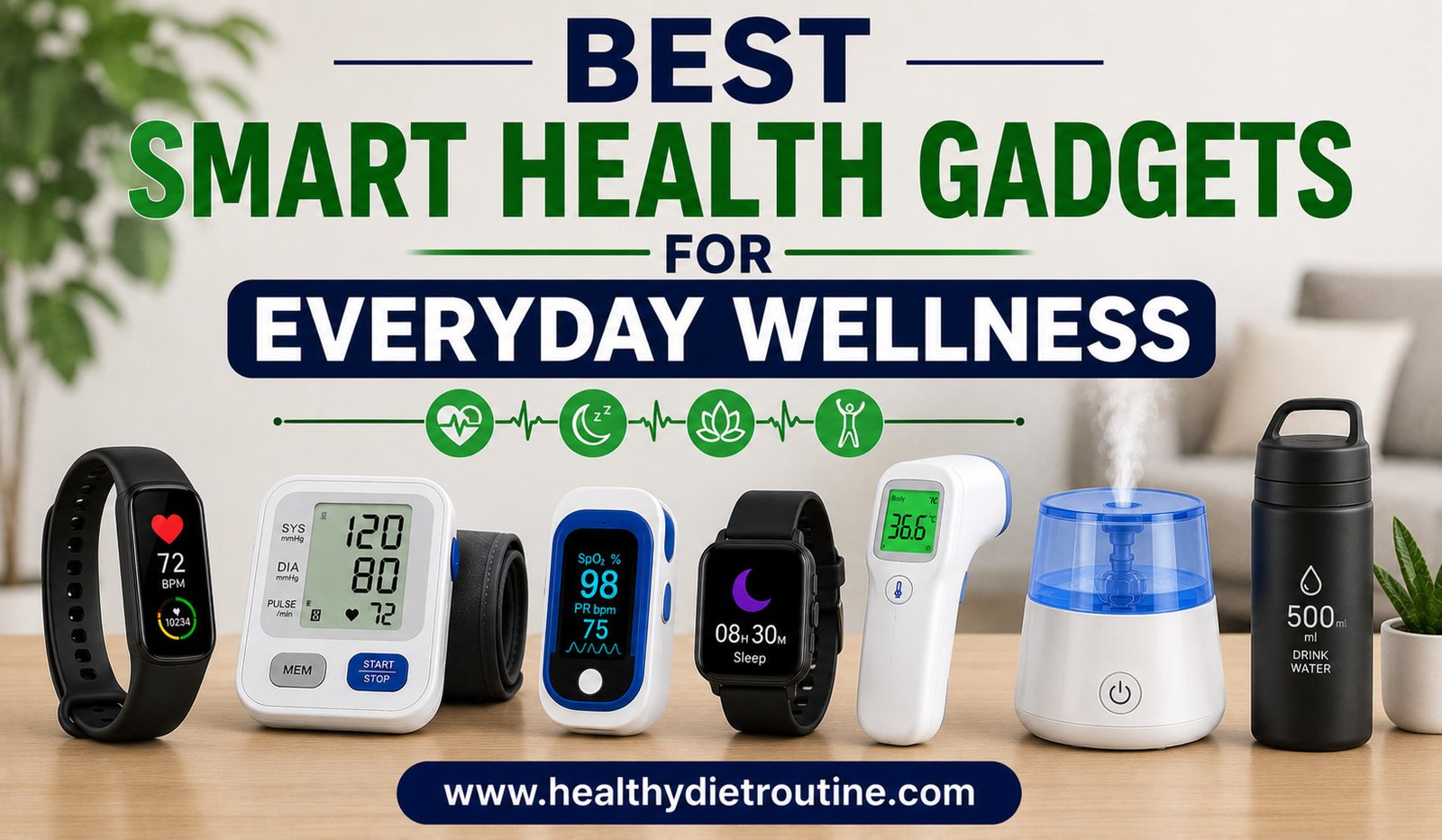
Technology is becoming an increasingly useful part of everyday wellness. From tracking daily steps and sleep to monitoring heart rate and keeping an eye on weight trends, smart health gadgets can make it easier to understand daily habits. You do not necessarily need expensive medical equipment or a complicated setup. Even a smartwatch, smart scale, or fitness band can provide useful information that encourages healthier routines.
In 2026, health-focused wearables have moved beyond simple step counting. Modern devices can track workouts, sleep, heart rate, stress, blood oxygen, and other wellness metrics. Some newer products are also adding AI-based insights and personalised recommendations.
However, the best smart health gadget is not necessarily the one with the longest feature list. The right device should fit your lifestyle, be comfortable enough to use consistently, and provide information that actually helps you make better everyday choices.
Here are some of the best smart health gadgets for everyday wellness to consider in India.
1. Smartwatch
A smartwatch is one of the most versatile health gadgets available today. It combines fitness tracking with smartphone features, allowing you to monitor your activity while also receiving calls, messages, reminders, and notifications.
Depending on the model, a smartwatch can track steps, heart rate, workouts, sleep, calories, blood oxygen, and other wellness information. Some models also include GPS, ECG-related features, stress monitoring, and recovery insights.
Recent 2026 smartwatch recommendations in India highlight devices such as the CMF Watch Pro 2 and other models for everyday health tracking because they combine features such as heart-rate monitoring, SpO₂ tracking, sleep monitoring, GPS, and long battery life.
For everyday wellness, you do not necessarily need a premium smartwatch. Prioritise the features you are actually going to use.
2. Fitness Band
If a smartwatch feels too large or distracting, a fitness band can be a better option.
Fitness bands are generally lightweight and designed primarily around activity and wellness tracking. They can monitor steps, heart rate, sleep, workouts, and sometimes blood oxygen and stress levels.
One advantage is battery life. Many fitness bands can operate for several days before needing a recharge, making them convenient for continuous tracking.
Fitness bands are particularly suitable for people who want to become more active without constantly interacting with a screen. Newer screen-free and minimal-display health trackers are also becoming more popular because they provide health data while reducing notifications and digital distractions.
3. Smart Weighing Scale
A smart weighing scale can make weight tracking more convenient than a traditional bathroom scale.
Once connected to a smartphone application, many smart scales can automatically record weight measurements and create a history. Depending on the model, they may also estimate BMI, body fat, muscle mass, water percentage, and other body-composition metrics.
The biggest benefit is the ability to observe trends over time. Instead of remembering your weight from one week to another, you can use the app to see whether your measurements are generally moving in the direction you want.
However, body-composition readings from consumer smart scales are estimates and can vary depending on hydration and other factors. They should not be treated as medical diagnoses.
4. Smart Sleep Tracker
Sleep is an important part of overall wellness, but it can be difficult to understand your sleeping habits without tracking them.
Smart sleep trackers can monitor sleep duration and may provide estimates of sleep stages, movement during the night, heart rate, and other information. These trackers are commonly integrated into smartwatches, fitness bands, smart rings, and dedicated sleep devices.
The real value comes from identifying patterns. For example, you may notice that your sleep becomes shorter on days when you use screens late at night or maintain an inconsistent bedtime.
The information should be used as a guide rather than a diagnosis. If you regularly experience serious sleep problems, professional medical advice is more appropriate than relying solely on a wearable.
5. Smart Ring
Smart rings have become an interesting alternative to watches and fitness bands. Their small size allows them to collect health and activity information without placing a screen on your wrist.
Depending on the model, a smart ring can monitor sleep, heart rate, activity, recovery, and other wellness metrics. Current 2026 wearable trends include products such as the Oura Ring 5 and RingConn Gen 3, showing how health tracking is moving into smaller and more discreet devices.
A smart ring can be especially appealing to people who do not like wearing a watch during sleep or exercise.
The main factors to consider are comfort, sizing, battery life, app quality, subscription requirements, and smartphone compatibility.
6. Smart Blood Pressure Monitor
A smart blood pressure monitor combines traditional blood pressure measurement with digital record keeping.
Some connected monitors can store readings or transfer them to a smartphone application. This can make it easier to keep a history of measurements and share information with a healthcare professional when appropriate.
For home use, choosing a properly validated upper-arm monitor is more important than simply choosing the model with the most smart features.
If you have been advised to monitor your blood pressure regularly, consistent measurement technique is essential. Sit quietly before measuring, position the cuff correctly, and follow the manufacturer’s instructions.
A smart BP monitor should be considered a monitoring tool rather than a replacement for professional medical care.
7. Smart Glucometer
For people who have been advised to monitor blood glucose, a connected glucometer can make record keeping easier.
Traditional glucose meters already provide quick readings, but smart versions may allow measurements to be stored digitally. This can help users identify patterns and maintain a more organised record.
Before buying one, look beyond the device price. Test strips and lancets are recurring expenses, so their availability and cost are important.
Smart connectivity is useful, but accuracy, ease of testing, and reliable availability of supplies should remain the priorities.
8. Smart Water Bottle
Staying hydrated is one of the simplest wellness habits, but busy schedules can make it easy to forget to drink enough water.
Smart water bottles attempt to solve this problem by providing reminders or tracking drinking habits. Some can connect with smartphone applications and notify users when it is time to drink.
For people who spend long hours at a desk, work from home, or travel frequently, a hydration reminder can be useful.
However, you do not necessarily need an electronic bottle. A regular reusable bottle combined with phone reminders can accomplish the same basic goal. The smart version is most useful for people who enjoy automated tracking.
9. Smart Body Composition Monitor
A smart body composition monitor goes beyond basic weight measurement by attempting to provide additional information about body composition.
Depending on the model, the accompanying application may estimate body fat, muscle mass, visceral fat, water percentage, BMI, and other metrics.
These measurements can make fitness tracking more engaging, but they should be interpreted carefully. Consumer devices use indirect methods and can produce different results under different conditions.
For everyday wellness, focus on long-term patterns rather than becoming overly concerned with small changes in individual measurements.
10. Smart Fitness Tracker With AI Features
Artificial intelligence is increasingly appearing in fitness technology. Some newer smartwatches use AI-based systems to recognise workouts, analyse health information, and provide personalised training suggestions.
For example, the boAt Valour Watch 1R is marketed in India with AI-focused fitness coaching, activity recognition, heart-rate tracking, sleep monitoring, and GPS.
AI features can make health data easier to understand by turning raw numbers into recommendations or summaries.
However, users should still treat these recommendations as general wellness guidance. AI-generated insights should not be confused with professional medical diagnosis.
How Smart Health Gadgets Can Improve Everyday Wellness
The biggest advantage of smart health gadgets is that they make invisible habits more visible.
You may not realise how little you move during a busy workday until your fitness tracker shows a very low step count. Similarly, a sleep tracker may reveal an inconsistent bedtime routine that you had not noticed.
This information can encourage small behavioural changes. You might start taking short walking breaks, going to bed at a more consistent time, or becoming more aware of your daily activity.
The technology works best when the information leads to practical action. Simply collecting hundreds of health statistics does not automatically make someone healthier.
What to Look for Before Buying
Start by identifying your main wellness goal.
If you want to become more active, a fitness band or smartwatch may be the best option. If weight management is your focus, a smart scale can be useful. If sleep is your priority, consider a wearable or smart ring with strong sleep-tracking features.
Battery life is another important consideration. A device that needs to be charged every day may become inconvenient, especially if you want to monitor sleep.
Comfort is equally important. A wearable should be comfortable enough to use consistently. If you dislike wearing it, even the most advanced health tracker will provide little value.
Also check smartphone compatibility and app quality. The device itself is only part of the experience. A good companion app should make your information easy to understand.
Finally, consider privacy. Smart health gadgets can collect sensitive personal information, so review the manufacturer’s privacy policies and understand what data is stored, shared, or synchronised with other services.
Smart Gadget or Traditional Device?
Smart technology is not always necessary.
A basic weighing scale can measure weight without an application. A standard thermometer can check temperature without Bluetooth. A traditional blood pressure monitor can provide readings without cloud storage.
Smart features are most useful when they solve a specific problem, such as automatically recording measurements, identifying long-term trends, or reminding you to stay active.
If you do not need these features, a simpler device may be cheaper, easier to maintain, and equally useful.
Are Smart Health Gadgets Accurate?
Smart health gadgets can provide useful information, but their measurements are not automatically equivalent to clinical medical equipment.
Steps, calories, sleep stages, heart rate, body composition, and other metrics may vary depending on the device and circumstances. Even highly advanced wearables can produce imperfect readings.
The best approach is to use these gadgets to observe general trends and support healthy habits. If you receive a concerning measurement or experience persistent symptoms, consult a healthcare professional rather than relying entirely on the gadget.
Final Thoughts
The best smart health gadgets for everyday wellness are the ones that make healthy habits easier to understand and maintain.
A smartwatch or fitness band can encourage daily movement, while a smart scale can make weight tracking more organised. Smart rings and sleep trackers offer more discreet ways to monitor rest and recovery, while connected blood pressure monitors and glucometers can simplify record keeping for people who have been advised to monitor specific health measurements.
The rapid development of wearable technology in 2026 means consumers have more choices than ever. Smart health gadgets are becoming smaller, more personalised, and increasingly capable of turning raw health information into useful insights.
However, technology should support your wellness routine rather than control it. You do not need to monitor every metric or buy the most expensive gadget. Choose a device that matches your goals, use it consistently, and focus on sustainable habits such as regular movement, adequate sleep, balanced nutrition, and recovery.
Ultimately, the smartest health gadget is the one that helps you make better everyday choices without making wellness unnecessarily complicated.