
How AI Calorie Tracking Can Simplify Food Logging
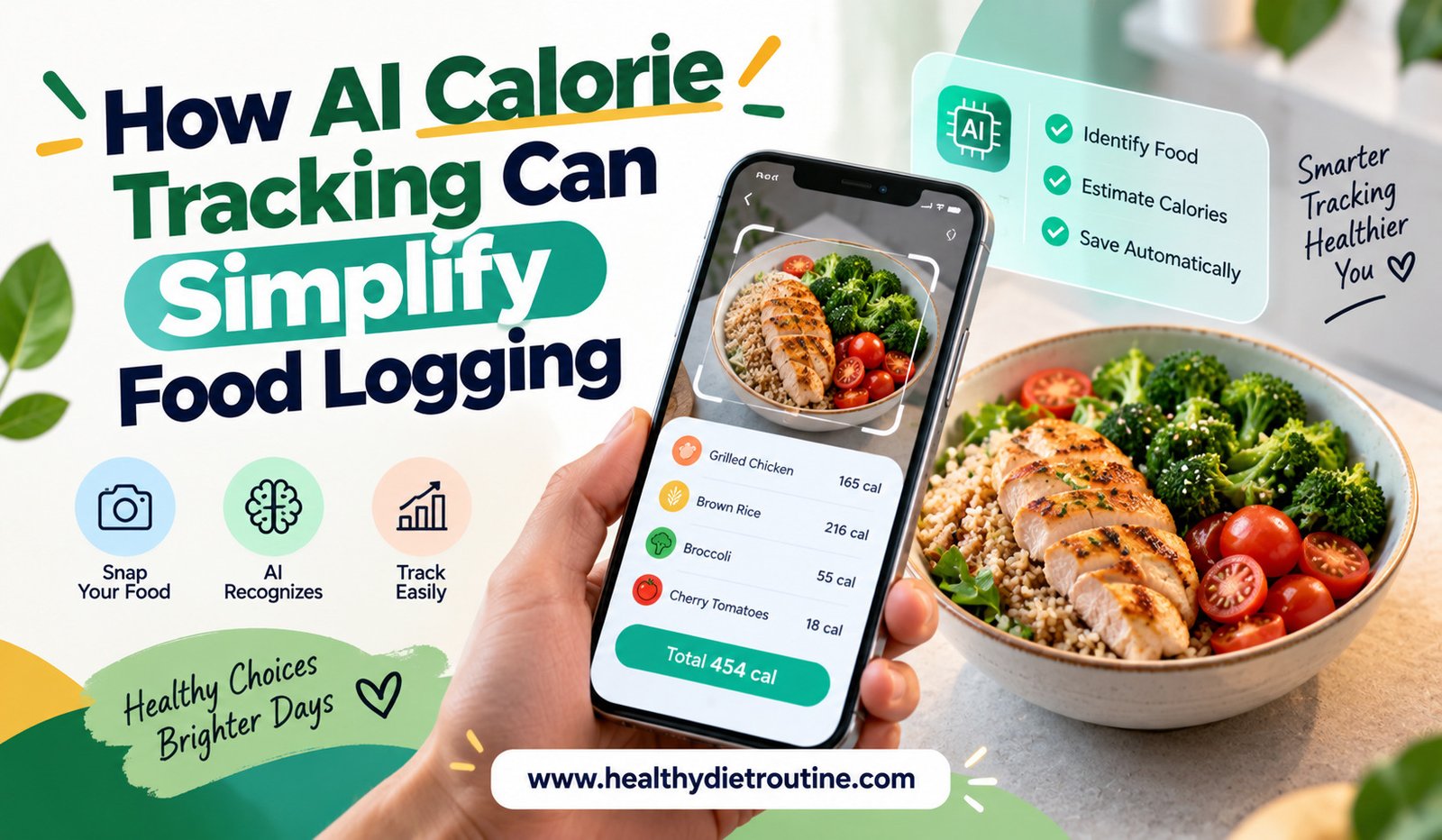
Keeping track of what you eat sounds simple until you actually try doing it every day. Measuring portions, checking nutrition labels, estimating ingredients, recording snacks, and calculating calories can quickly turn food logging into a time-consuming habit.
This is one reason AI calorie tracking is becoming increasingly popular. Instead of requiring users to manually enter every ingredient and portion, AI-powered nutrition tools can help recognize foods, estimate portions, organize meals, and provide nutritional information with less effort.
For people who want to become more aware of their eating habits, manage their calorie intake, or maintain a structured food journal, AI can make the process considerably more convenient. However, it is important to understand what these tools can and cannot do.
What Is AI Calorie Tracking?
AI calorie tracking uses artificial intelligence to assist with recording and analyzing food consumption.
Traditional calorie tracking usually requires users to search for each food in a database, select the correct serving size, and manually enter the quantity. This process can become repetitive, particularly when meals contain multiple ingredients.
AI-powered tools aim to reduce this manual work. Depending on the application, users may be able to describe a meal in natural language, scan a food label, or take a photograph of their plate. The system then analyzes the available information and estimates calories and nutrients.
For example, instead of manually entering every ingredient in a bowl of rice, vegetables, and paneer, a user may describe the meal or upload an image. The AI can attempt to identify the foods and provide an estimated nutritional breakdown.
The technology is designed to make food logging faster, although its results should be treated as estimates rather than exact measurements.
Why Traditional Food Logging Can Be Difficult
Manual food tracking can provide detailed information, but consistency is often the biggest challenge.
A person may carefully record breakfast and lunch but forget to log a handful of nuts in the afternoon or a spoonful of sauce at dinner. Small omissions can accumulate over time.
Portion estimation is another problem. A serving described as “one bowl” can mean very different quantities depending on the food and the size of the bowl.
Home-cooked meals can be particularly difficult to track because recipes often contain multiple ingredients and preparation methods.
AI calorie tracking attempts to make these everyday situations easier by reducing the number of steps required to record a meal.
Faster Food Logging
One of the main advantages of AI-based calorie tracking is speed.
Traditional logging might involve searching for a food, selecting a database entry, choosing a serving size, and entering the quantity. If a meal contains several foods, the process becomes even longer.
AI can simplify the interaction by allowing people to describe what they ate using ordinary language.
For example, a user could record something like “two chapatis with dal and a bowl of curd.” An AI system may interpret the description and generate an estimated calorie count.
The user can then review and adjust the information instead of building the entire entry from scratch.
This reduction in effort can make food tracking feel less like administrative work and more like a normal daily habit.
Food Recognition From Images
Some AI nutrition applications use computer vision to analyze photographs of meals.
A user can take a picture of their plate, and the system attempts to identify individual foods. It may recognize items such as rice, vegetables, bread, fruit, eggs, or other commonly photographed foods.
After identifying the food, the AI estimates portion sizes and nutritional values.
This approach can be particularly convenient for people who dislike manually entering meals.
However, image-based calorie estimation has important limitations. A photograph does not always reveal the exact ingredients, cooking oil, sauces, hidden calories, or precise portion weight.
For example, two visually identical vegetable dishes could contain very different amounts of oil. An AI system may not be able to determine that difference accurately from an image alone.
For this reason, photo-based tracking should generally be considered an estimate.
AI Can Help With Complex Meals
Meals containing multiple ingredients can be frustrating to record manually.
Consider a homemade vegetable pulao. A calorie database may contain several similar entries, but the actual recipe depends on the amount of rice, vegetables, oil, nuts, spices, and other ingredients used.
AI can help break down the meal into components and estimate the nutritional contribution of each one.
This can make food logging more practical for people who regularly eat homemade meals instead of standardized packaged foods.
The more information the user provides, the more useful the estimate may become.
Learning Personal Eating Patterns
AI calorie tracking can do more than calculate numbers.
When food data is collected consistently, an application may be able to identify patterns in eating habits. For example, users may discover that they frequently skip breakfast, consume most of their calories late in the day, or snack more often on certain days.
These patterns can provide useful insights into everyday eating behavior.
Instead of focusing only on individual meals, users can begin to understand their overall habits.
This is one of the more valuable aspects of digital food tracking because sustainable lifestyle changes often depend on recognizing patterns rather than worrying about a single meal.
Reducing the Mental Effort of Tracking
Food logging can become mentally tiring when every meal requires multiple calculations.
Users may have to remember what they ate, estimate portions, search databases, calculate calories, and record everything correctly.
AI can take over some of these repetitive tasks.
This does not mean users should stop paying attention to their food. Rather, the technology can handle some of the administrative work so people can focus on understanding their eating habits.
For someone who finds manual calorie counting overwhelming, a simpler tracking system may make consistency easier.
AI Can Make Food Journaling More Conversational
Another difference between AI-powered tracking and traditional apps is the ability to use natural language.
Instead of navigating through multiple menus, users may be able to interact with the system conversationally.
They could record a meal, ask for a summary of their day, or request an explanation of their nutritional intake.
This type of interaction can make food tracking feel more natural, particularly for people who are not comfortable with complicated nutrition applications.
The technology essentially turns a food diary into a more interactive experience.
The Importance of Accurate Portion Information
Despite its convenience, AI calorie tracking should not create a false sense of precision.
Calories depend heavily on portion size and preparation.
A small apple and a large apple do not contain exactly the same number of calories. Similarly, grilled chicken and chicken cooked with a significant amount of oil can have different calorie values.
When possible, users can improve the quality of their tracking by providing measurements or additional details.
For example, specifying “150 grams of cooked rice” is generally more useful than simply entering “rice.”
AI works best when it has good information to work with.
AI Calorie Tracking and Weight Management
Some people use calorie tracking as part of a weight-management strategy.
Tracking food intake can increase awareness of eating patterns and help people understand how different foods contribute to their overall energy intake.
AI can make this process easier by reducing the effort required to record meals.
However, calorie tracking is not the only factor involved in healthy weight management. Food quality, physical activity, sleep, individual nutritional needs, and other lifestyle factors also matter.
People should avoid treating an AI-generated calorie number as a medical recommendation. Anyone with specific dietary requirements or a medical condition should seek guidance from a qualified healthcare professional.
Privacy Is Another Consideration
Food logs can contain personal information about a person’s lifestyle and habits. AI nutrition applications may process meal descriptions, photographs, activity information, and other data.
Before using an AI calorie tracker, it is worth reviewing its privacy policy and understanding how your information is stored and used.
Users should also avoid assuming that an AI system is automatically accurate simply because it uses advanced technology.
Convenience and privacy should both be considered when selecting a tracking application.
How to Get Better Results From AI Food Tracking
The best approach is to treat AI as an assistant rather than an unquestionable source of truth.
Provide as much useful information as practical. Mention ingredients, quantities, cooking methods, and portion sizes when you know them.
Review automatically generated entries before saving them. If the system identifies a food incorrectly, correct it.
Consistency is also important. Logging most meals regularly can provide more useful information than tracking perfectly for a few days and then abandoning the habit.
The goal should be creating a sustainable food-awareness system rather than achieving perfect numbers.
Final Thoughts
AI calorie tracking can simplify food logging by reducing manual data entry, recognizing foods from images, interpreting natural-language meal descriptions, and helping users identify patterns in their eating habits.
Its biggest advantage is convenience. When recording a meal takes seconds instead of several minutes, people may find it easier to maintain a food journal consistently.
At the same time, AI-generated calorie estimates are not always exact. Portion sizes, cooking methods, hidden ingredients, and image limitations can affect accuracy.
The smartest approach is to use AI calorie tracking as a practical tool for awareness and organization while understanding its limitations. When combined with sensible nutrition habits and reliable professional guidance where needed, AI can make food logging simpler, faster, and more manageable for everyday users.