
How Workout Logging Apps Help Track Training Progress
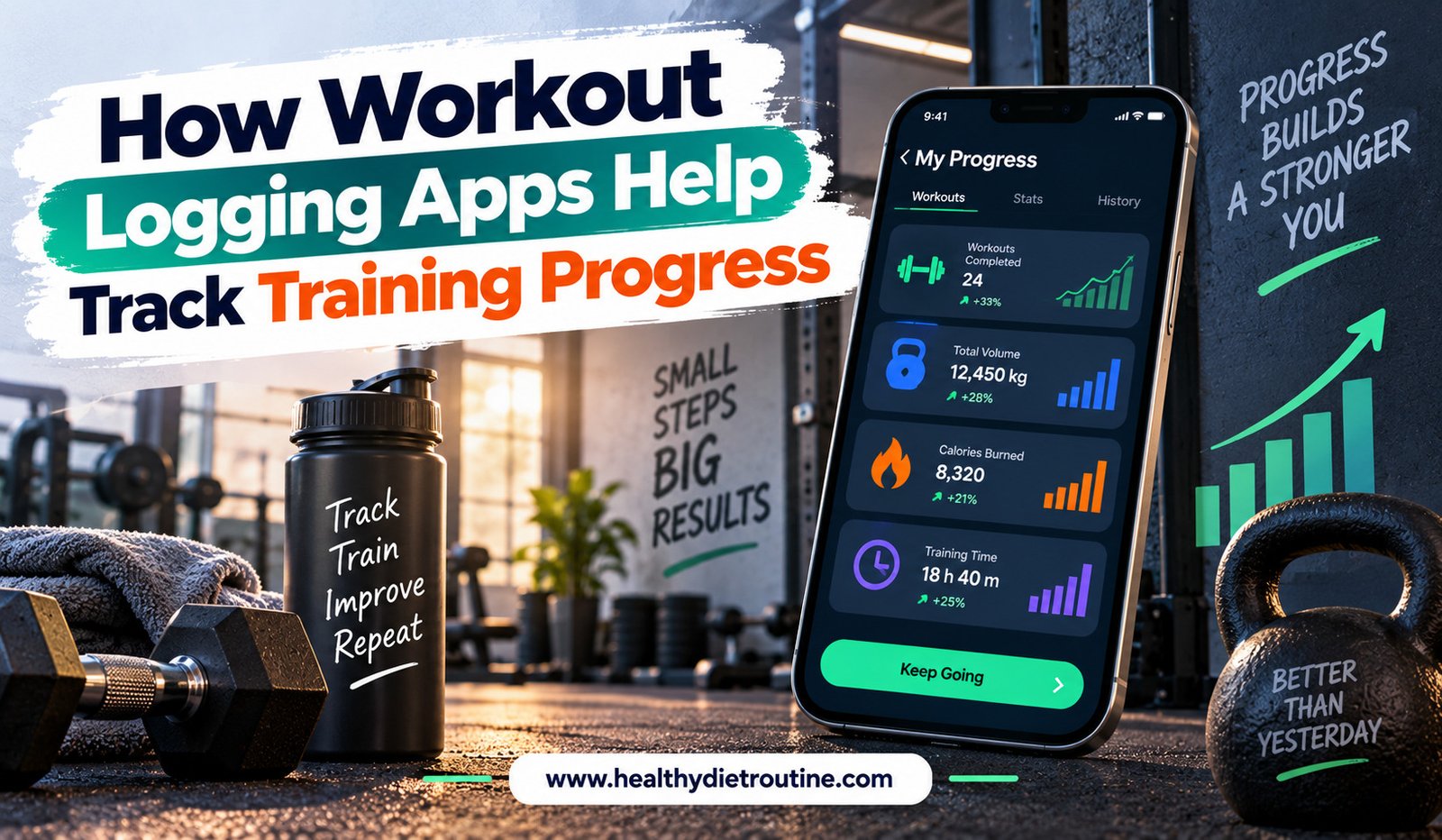
Making progress in fitness is not always easy to see. You may exercise regularly, complete challenging workouts, and feel stronger, yet it can be difficult to remember exactly what you did several weeks ago. Without a record, it is easy to repeat the same weights, forget previous achievements, or lose track of whether your training is actually improving.
This is where workout logging apps can make a difference. These apps provide a digital way to record exercises, sets, repetitions, weights, workout duration, and other training information. Over time, the collected data can reveal patterns that are difficult to notice from memory alone.
For beginners, experienced gym users, runners, and people training at home, workout logging can turn exercise into a more organized and measurable process.
What Is a Workout Logging App?
A workout logging app is a digital tool that helps users record and monitor their exercise sessions.
Depending on the app, users may be able to record strength exercises, cardio sessions, sets, repetitions, weights, duration, distance, rest periods, and other workout details.
Instead of writing everything in a notebook, the information is stored digitally and can be reviewed later.
Some modern workout apps go beyond basic record keeping. They may provide charts, progress summaries, exercise histories, reminders, workout plans, and recommendations based on previous sessions.
The main purpose, however, remains simple: create a record of training so progress can be measured over time.
Why Tracking Workouts Matters
It is easy to judge fitness progress based only on appearance or how you feel. While those things can be useful, they do not tell the whole story.
Progress can also mean lifting a heavier weight, completing more repetitions, running farther, improving workout consistency, or recovering better between sessions.
Without records, these improvements can be difficult to measure.
A workout log provides evidence of what you have actually accomplished. Instead of thinking, “I think I am getting stronger,” you can compare today’s performance with previous workouts.
That information can make training more purposeful.
Recording Every Workout in One Place
One of the biggest benefits of a workout logging app is organization.
A traditional notebook can work well, but finding an old workout may require turning through pages. Digital apps can organize training history automatically.
For example, you may be able to open an exercise and see previous weights and repetitions immediately.
This makes it easier to answer practical questions such as how much you lifted last week or when you last performed a particular exercise.
Having this information readily available can make the next workout easier to plan.
Measuring Strength Progress
Strength training is one area where workout logging can be particularly useful.
Suppose you perform a bench press with 40 kg for eight repetitions during one workout. Several weeks later, you complete the same exercise with 50 kg for eight repetitions.
That difference provides a clear indication of improved performance.
Even when the increase is smaller, such as adding one repetition or a small amount of weight, a training log helps you recognize gradual improvements.
This is important because fitness progress is often incremental rather than dramatic.
Tracking Repetitions and Sets
Weight is not the only measurement that matters.
A person may improve by completing additional repetitions with the same weight or by performing more sets while maintaining good technique.
Workout apps make it easier to record these changes.
Over time, users can compare their sets and repetitions to understand how their training capacity has developed.
This can also help prevent accidentally reducing training volume because you cannot remember what you did during the previous session.
Monitoring Workout Consistency
Progress is influenced not only by what happens during individual workouts but also by how consistently you train.
A workout logging app can provide a history of your exercise sessions, making it easier to identify gaps in your routine.
For example, someone who believes they train five days a week may discover that they actually average three workouts because of missed sessions.
Seeing the data can create greater awareness.
Consistency tracking can also provide motivation. Completing workouts regularly and watching a training history grow can reinforce the habit of exercising.
Identifying Training Patterns
Workout data becomes more useful when collected over time.
After several weeks or months, you may notice patterns in your performance.
Perhaps your strength improves when you allow more recovery between sessions. Maybe your running performance is better when you sleep well. You might also discover that training a particular muscle group too frequently affects your performance.
A workout log cannot automatically explain every reason behind a change, but it gives you information that can help you evaluate your routine.
Instead of relying entirely on memory, you have a record to examine.
Understanding Personal Records
Many workout apps can help users identify personal records.
A personal record might be the heaviest weight lifted, the highest number of repetitions completed, the fastest running time, or the longest distance covered.
Tracking these achievements can make progress more visible.
For beginners especially, personal records can provide motivation because improvements may happen quickly during the early stages of training.
More experienced athletes can use records to monitor smaller improvements and establish realistic performance targets.
Using Charts to See Progress
Numbers in a workout history can sometimes be difficult to interpret.
Charts and visual summaries can make trends easier to understand.
For example, a graph showing the weight used for a particular exercise over several months can reveal a gradual upward trend. A running chart might show improvements in distance or pace.
Visual progress can be motivating because it transforms individual workouts into a larger picture.
Instead of focusing on whether today’s workout felt good or bad, you can see how your performance has changed across an extended period.
Helping With Progressive Overload
Progressive overload is a common principle in strength training. It involves gradually increasing the challenge placed on the body rather than performing exactly the same workload indefinitely.
A workout log can help users apply this principle more systematically.
By reviewing previous sessions, you can see what weight, repetitions, and sets you completed. This information can help you decide whether it is appropriate to increase the workload in a future session.
Progression should still be sensible. Increasing weight too quickly can negatively affect technique and increase injury risk.
A workout logging app provides information for decision-making; it does not replace proper training judgment.
Making Workouts More Personalized
Workout history can help users understand what works for them.
Two people can follow the same exercise program and experience different results. Factors such as experience, recovery, schedule, exercise selection, and individual response can affect performance.
Recording workouts provides personal data that can eventually help users understand their own training preferences and responses.
For example, you may discover that you perform better with certain exercises or need additional recovery after particularly demanding sessions.
This information can help make future workouts more practical.
Tracking More Than Strength
Workout logging is not limited to weightlifting.
Runners can track distance, duration, pace, and frequency. Cyclists can record rides and mileage. People doing bodyweight workouts can track repetitions and session duration.
Even activities such as yoga, walking, mobility exercises, or home workouts can be recorded.
This makes workout logging useful for many different fitness goals.
The measurements may change depending on the activity, but the principle remains the same: record what you do so you can evaluate progress later.
Motivation Through Visible Progress
Motivation naturally fluctuates.
There may be days when a workout feels difficult or performance does not improve. Looking at a longer training history can provide useful perspective.
You may realize that although today’s session was challenging, you have made significant progress compared with where you started.
This can help shift attention away from short-term results and toward long-term improvement.
However, users should avoid becoming overly focused on numbers. Rest, recovery, technique, enjoyment, and overall wellbeing are also important parts of a sustainable fitness routine.
Choosing a Workout Logging App
When choosing a workout logging app, consider how you prefer to train.
Someone focused on strength training may want detailed tracking for exercises, sets, repetitions, and weights. A runner may care more about distance, pace, and duration.
Ease of use is also important. If entering information takes too long, you may stop using the app.
Look for an app that allows you to record the information that actually matters to your goals without making every workout unnecessarily complicated.
Final Thoughts
Workout logging apps can make training progress easier to understand by turning individual exercise sessions into measurable information.
They can help users record weights and repetitions, monitor consistency, identify personal records, analyze trends, and understand how their performance changes over time. For people following structured training programs, this information can also help with gradual progression and future workout planning.
The biggest benefit is not simply having more numbers. It is having a reliable record that shows where you started, what you have accomplished, and how your training has developed.
Fitness progress rarely happens overnight. Small improvements accumulated over weeks and months can produce meaningful results. A workout logging app provides a simple way to capture those improvements and keep your training focused on long-term progress.