Beginner Home Workouts That Need No Equipment
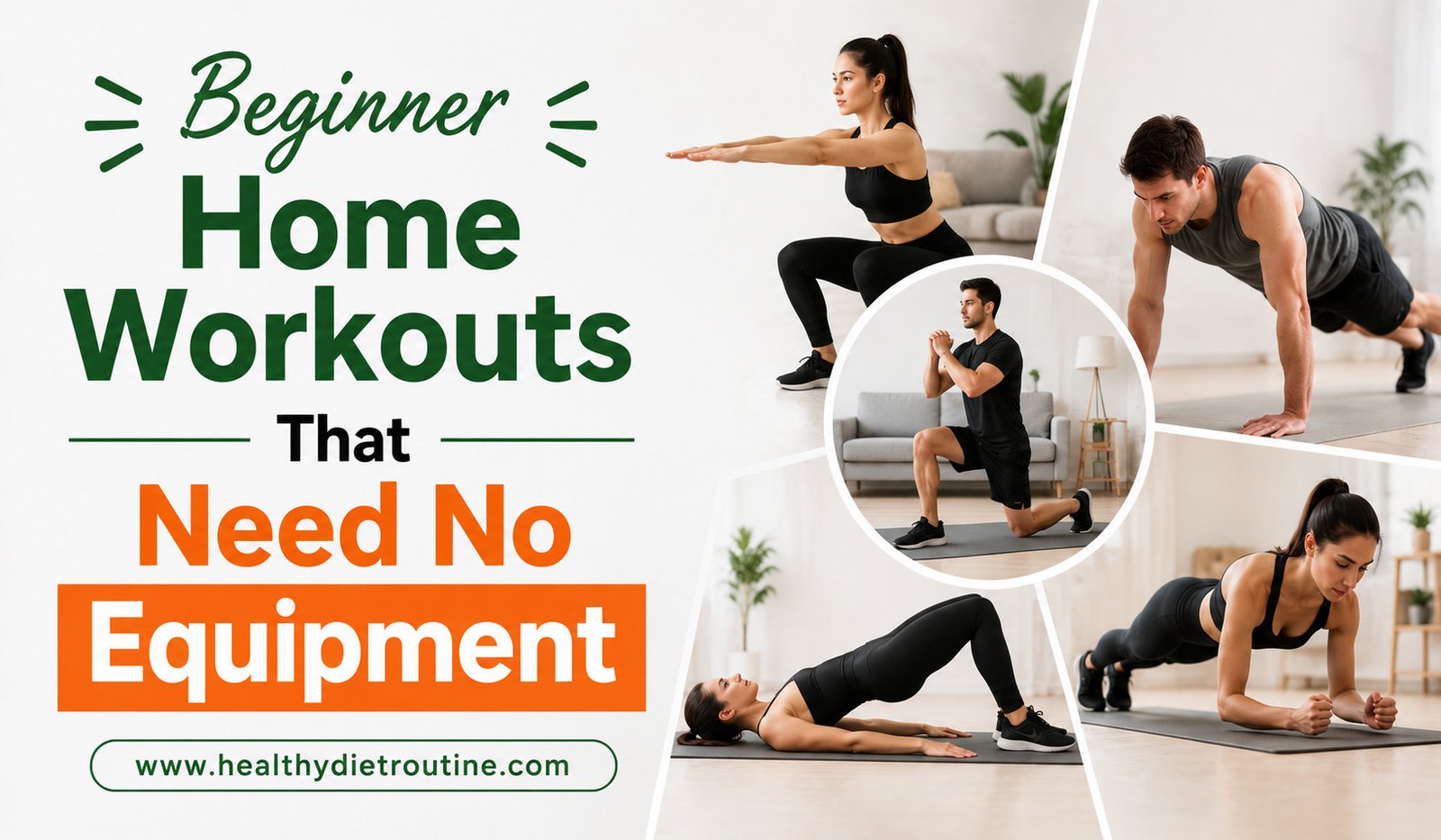
Starting a workout routine can feel difficult when you think you need a gym membership, expensive equipment, or a complicated training plan. In reality, beginners can build a simple exercise routine at home using nothing more than their own body weight and a small amount of open space.
No-equipment home workouts can include movements that train major muscle groups, improve mobility, develop balance, and increase general fitness. They can also be adjusted according to your current ability, making them suitable for people who are just beginning to exercise.
The key is to start gradually, focus on proper technique, and choose exercises that you can perform comfortably and consistently.
Why Try No-Equipment Workouts at Home?
One of the biggest advantages of home workouts is convenience. You do not have to travel to a gym or wait for a machine to become available. You can exercise in your bedroom, living room, balcony, or another safe open area.
Bodyweight exercises can also be modified easily. A beginner can perform a movement slowly or use a supported version, while someone with more experience can increase repetitions, range of motion, or difficulty.
However, exercise does not need to be extreme to be useful. A consistent routine that you can maintain is often more practical than an intense program that you quickly abandon.
1. Bodyweight Squats
Squats are a simple exercise for working the muscles of the lower body.
Stand with your feet approximately shoulder-width apart. Keep your chest comfortably upright, bend your knees, and lower your hips as far as feels comfortable. Then push through your feet to return to the starting position.
Beginners can start with a small range of motion and gradually increase it as they become more comfortable.
Try 8–12 repetitions for one set, focusing on controlled movement rather than speed.
If balance is difficult, perform the exercise near a sturdy surface that you can use for support when necessary.
2. Wall Push-Ups
Traditional floor push-ups can be challenging for beginners. Wall push-ups provide an easier way to practice the movement.
Stand facing a wall and place your hands against it at approximately chest height. Bend your elbows to bring your body closer to the wall, then push back to the starting position.
Keep your body controlled throughout the movement.
Start with 8–12 repetitions and gradually progress to a lower, more challenging surface as your strength improves.
3. Glute Bridges
Glute bridges can be performed on the floor and target the muscles around the hips and lower body.
Lie on your back with your knees bent and your feet placed comfortably on the floor. Keep your arms beside you and gently lift your hips. Pause briefly at the top before lowering them in a controlled manner.
Avoid rushing through the movement.
Beginners can start with 10–15 repetitions and focus on maintaining comfortable alignment.
4. Standing Marches
Standing marches are an easy way to introduce movement and raise your activity level without jumping.
Stand upright and alternately lift your knees while moving your arms naturally. You can perform the movement slowly or increase the pace according to your fitness level.
This exercise is particularly useful as a warm-up or for people who want a lower-impact alternative to jumping exercises.
Try marching for 30–60 seconds.
5. Bird-Dog
The bird-dog exercise can challenge balance and coordination while working the core and supporting muscles.
Start on your hands and knees. Slowly extend one arm and the opposite leg while keeping your body stable. Return to the starting position and repeat on the other side.
Move slowly rather than trying to extend your limbs as far as possible.
Begin with 6–10 repetitions per side and focus on maintaining control.
6. Modified Lunges
Lunges can strengthen the legs and challenge balance. Beginners can start with a supported version.
Stand near a sturdy chair or wall if you need assistance. Step one foot forward and bend both knees comfortably before returning to the starting position. Repeat on the other side.
Keep the movement controlled and avoid forcing your knees or hips into an uncomfortable position.
If regular lunges are too difficult, practice stepping backward and returning to the starting position without lowering deeply.
7. Incline Push-Ups
Once wall push-ups become comfortable, you can progress to incline push-ups using a stable elevated surface.
Place your hands on a sturdy table or another secure surface and extend your body behind you. Bend your elbows to lower your chest toward the surface, then push yourself back up.
The higher the surface, the easier the movement generally becomes.
Start with 6–12 repetitions depending on your current strength.
8. Dead Bug
The dead bug is a beginner-friendly core exercise that focuses on controlled movement.
Lie on your back with your knees bent and lifted. Keep your lower back in a comfortable position while slowly extending one leg and the opposite arm. Return them to the starting position and switch sides.
Move slowly and avoid holding your breath.
If coordinating both limbs is difficult, practice moving only one leg at a time before progressing.
9. Calf Raises
Calf raises are simple and can be performed almost anywhere.
Stand upright with your feet comfortably positioned. Slowly raise your heels so that you are standing on the balls of your feet, then lower them back down.
You can hold onto a wall or sturdy surface for balance.
Try 10–15 repetitions and gradually increase the number as the exercise becomes easier.
10. Step-Back Taps
Step-back taps are an accessible lower-body movement that also encourages coordination.
Stand upright and step one foot backward, lightly tapping the floor before bringing it forward again. Alternate legs.
Keep the movement controlled and use a wall for support if necessary.
This can be a useful low-impact movement during a beginner workout or warm-up.
11. Forearm Plank Modification
Planks can strengthen the core, but beginners do not need to hold a full plank for a long time.
Start with a modified version by keeping your knees on the floor while supporting your upper body on your forearms. Keep your body aligned and engage your core gently.
Hold for 10–20 seconds, rest, and repeat.
As your strength improves, you can gradually increase the duration or move toward a full plank.
12. Gentle Step Jacks
If you want to add a little more movement without jumping, try step jacks.
Step one foot outward while raising your arms, return to the center, and repeat on the other side. Continue alternating sides at a comfortable pace.
This provides a lower-impact alternative to traditional jumping jacks.
Perform the movement for 20–40 seconds and rest as needed.
A Simple Beginner Home Workout
You do not need to perform all these exercises in one session. A simple beginner routine could include:
- Standing marches for 1 minute
- Bodyweight squats for 8–12 repetitions
- Wall or incline push-ups for 8–12 repetitions
- Glute bridges for 10–15 repetitions
- Bird-dogs for 6–10 repetitions per side
- Calf raises for 10–15 repetitions
- A gentle stretch for several minutes
Rest between exercises whenever necessary. Beginners can start with one round and gradually work toward two or more rounds as their fitness improves.
How Often Should Beginners Exercise?
The ideal schedule depends on your current fitness level, goals, age, and overall health.
If you are new to exercise, starting with a few short sessions each week can be more realistic than trying to work out every day. You can gradually increase the duration, frequency, or intensity as your body adapts.
It is also useful to include general movement throughout the day. Walking, taking the stairs when appropriate, stretching, and breaking up long periods of sitting can complement structured workouts.
Tips for Exercising Safely at Home
Before exercising, make sure you have enough clear space to move safely. Wear comfortable clothing and footwear appropriate for the surface.
Start with a few minutes of gentle movement to warm up. During exercises, prioritize controlled technique rather than completing as many repetitions as possible.
You should expect some effort, but sharp or severe pain is not something to push through. Stop an exercise if it causes concerning pain, dizziness, unusual shortness of breath, or other worrying symptoms.
People with existing health conditions, recent injuries, or specific exercise restrictions should consider speaking with a qualified healthcare or fitness professional before beginning a new exercise program.
How to Make Home Workouts More Challenging
Once basic exercises become easy, you can increase the challenge without buying equipment.
You might perform additional repetitions, add another round, slow down the lowering portion of an exercise, increase the range of motion, or progress from an easier variation to a harder one.
For example, move from wall push-ups to incline push-ups and eventually toward floor push-ups if appropriate.
Progress gradually rather than trying to advance too quickly.
Final Thoughts
Beginner home workouts without equipment can be an effective way to make exercise part of your routine. Squats, wall push-ups, glute bridges, marches, bird-dogs, modified lunges, calf raises, and simple core exercises require little space and can be adapted to different fitness levels.
You do not need a perfect workout or expensive equipment to get started. Begin with manageable sessions, learn the basic movements, listen to your body, and gradually increase the challenge.
Consistency is more important than complexity. Even a short home workout can be a useful step toward becoming more active and building a sustainable exercise habit.