
Best Air Purifiers for Bedrooms
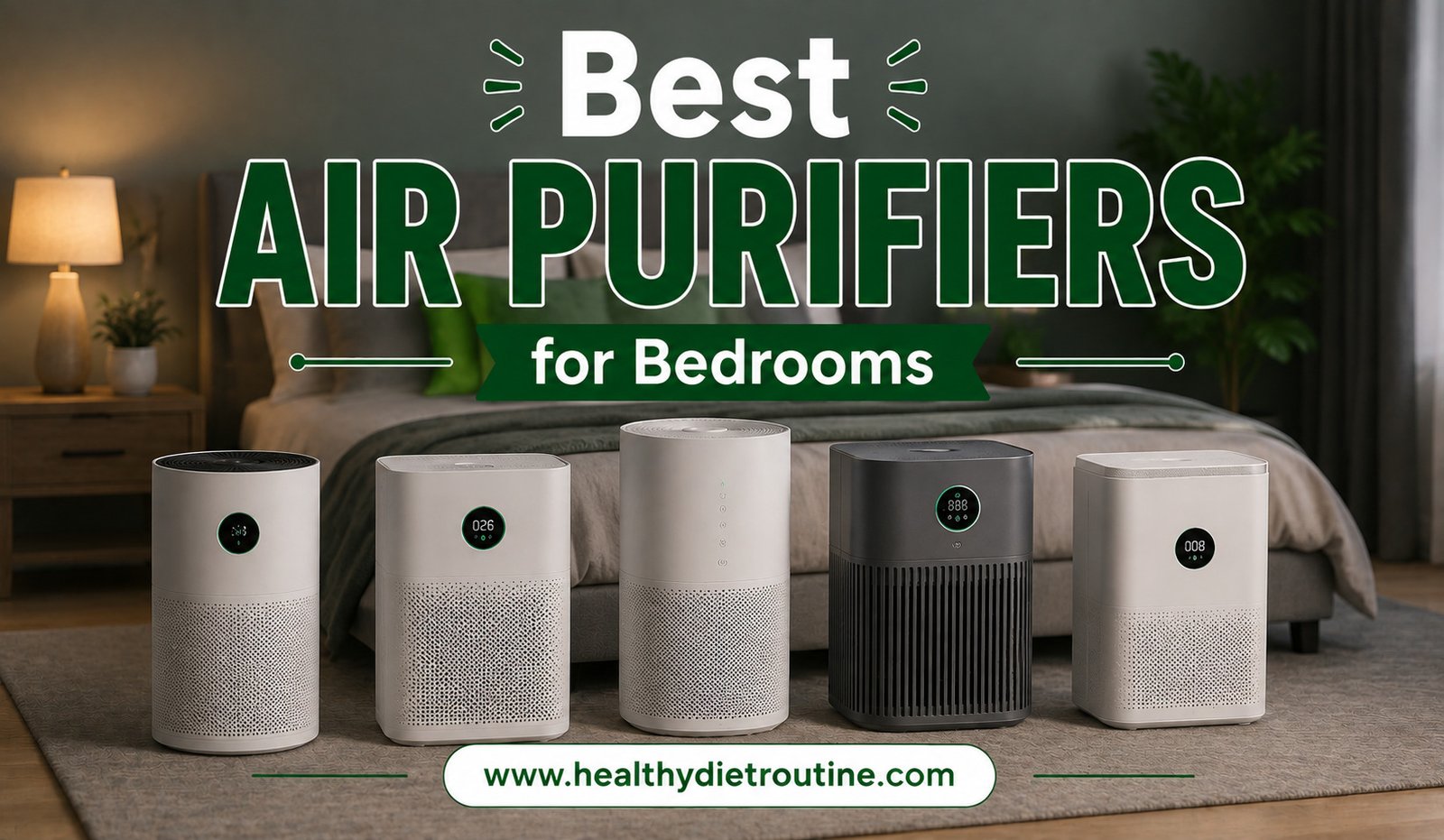
Indoor air quality can have a major impact on how comfortable your bedroom feels. Dust, pollen, pet dander, smoke, fine particles, and other airborne pollutants can enter a home through windows, doors, ventilation systems, and everyday activities. For people who want cleaner indoor air, an air purifier for the bedroom can be a useful addition to their home environment.
Portable air cleaners are designed to filter air within a particular room rather than clean an entire house. The U.S. Environmental Protection Agency notes that air filtration can be an effective supplement to source control and ventilation, although no portable air cleaner can remove every pollutant from indoor air.
With options ranging from compact bedroom purifiers to larger HEPA-based systems, choosing the right model depends on room size, filtration technology, noise, energy use, and maintenance requirements.
Why Use an Air Purifier in the Bedroom?
The bedroom is an important place to consider air quality because people typically spend several continuous hours there every night.
An air purifier can help reduce airborne particles such as dust, pollen, and fine particulate matter when it is appropriately sized for the room. This can be particularly useful in homes where outdoor pollution, nearby traffic, dust, or indoor activities contribute to particle levels.
The effectiveness of a purifier depends heavily on its airflow and filtration system. The EPA recommends choosing a portable air cleaner with a Clean Air Delivery Rate (CADR) appropriate for the size of the room. Higher CADR means the unit can filter a greater volume of air and is generally suitable for a larger space.
Types of Air Purifiers for Bedrooms
1. HEPA Air Purifiers
HEPA-based air purifiers are among the most popular choices for bedroom use. They use a high-efficiency particle filter to capture airborne particles.
A HEPA filter can be particularly useful when your primary concern is particulate pollution, including fine particles and allergens. However, filtration performance also depends on the purifier’s airflow, filter design, and how well the unit is sized for the room.
Simply seeing the word “HEPA” on a product does not tell you everything about its real-world cleaning performance. CADR and appropriate room sizing are also important considerations.
2. Air Purifiers With Activated Carbon
Some air purifiers combine a particle filter with an activated carbon filter.
Carbon is intended to help reduce certain gases and odors. The EPA notes that activated carbon can be useful for gas removal, but effectiveness depends partly on having a sufficiently large amount of carbon material in the filter.
If cooking smells, tobacco smoke odors, or other gaseous pollutants are a concern, a purifier with both particle filtration and an appropriately designed carbon filter may be worth considering.
3. Compact Bedroom Air Purifiers
Compact models are designed for smaller rooms and are often easier to place on or beside furniture.
They can be useful for bedrooms with limited floor space, but buyers should check the manufacturer’s recommended room size and CADR rather than choosing solely based on the purifier’s physical size.
A tiny purifier may not provide enough clean airflow for a larger bedroom.
4. Smart Air Purifiers
Smart models can include air-quality sensors, automatic fan modes, smartphone controls, scheduling, and filter-life indicators.
An automatic mode can adjust fan operation based on detected air-quality changes. Smartphone controls can also be convenient when you want to check or change settings without getting out of bed.
However, smart features are optional. If your primary goal is particle filtration, filtration performance, CADR, noise, and replacement-filter availability should generally receive more attention than app features.
5. Air Purifiers for Larger Bedrooms
Large bedrooms may require a purifier with a higher CADR and greater airflow capacity.
Using a purifier designed for a room smaller than the actual bedroom can reduce its effectiveness. The EPA recommends matching the cleaner’s CADR and recommended coverage to the size of the space.
If you have a particularly large or open bedroom area, selecting a more powerful unit or considering multiple appropriately sized units may be more practical.
Features to Look for in the Best Bedroom Air Purifier
Choosing the right air purifier involves more than looking at the number of filters.
HEPA or high-efficiency particle filtration: Look for a clearly specified particle-filtration system if dust and fine particles are your primary concern.
CADR: This is one of the most useful specifications for comparing air-cleaning performance. Higher CADR generally means more filtered air delivered per unit of time.
Room-size rating: Make sure the purifier is intended for your bedroom’s size.
Activated carbon: Consider this feature if odors or certain gases are an important concern.
Low-noise operation: A bedroom purifier should be quiet enough to operate while you sleep.
Sleep mode: A sleep mode can reduce fan speed, display brightness, and operating noise.
Filter replacement indicator: This makes it easier to know when maintenance is required.
Energy efficiency: If you plan to operate the purifier for many hours every day, energy consumption matters.
Air-quality sensor: A built-in sensor can provide useful information about changes in indoor particle levels and may enable automatic operation.
Understanding CADR for Bedroom Air Purifiers
CADR stands for Clean Air Delivery Rate. It measures the volume of filtered air delivered by an air cleaner for specific types of particles.
The EPA provides estimated minimum CADR values based on room area. For example, its guidance lists approximately 65 cfm for a 100-square-foot room, 130 cfm for 200 square feet, 195 cfm for 300 square feet, and 260 cfm for 400 square feet.
These figures are useful as general guidance rather than exact requirements for every bedroom. Ceiling height, room layout, doors, windows, indoor pollution sources, and operating speed can all affect actual performance.
When comparing products, avoid choosing a purifier based only on a manufacturer’s impressive maximum coverage claim. Check the underlying CADR and understand how the room-size rating was determined.
Noise Matters When Choosing a Bedroom Purifier
Noise is especially important when purchasing an air purifier for nighttime use.
A purifier may have excellent filtration performance at its highest fan speed but become too loud for comfortable sleeping. If you regularly turn the purifier off because of noise, its filtration benefits are obviously reduced.
The EPA identifies noise as an important consideration because people may turn air cleaners down or off when the sound becomes uncomfortable.
Look for a model that offers a low-speed or sleep setting. It can also be useful to check whether the manufacturer publishes noise levels for different fan speeds rather than providing only one general figure.
Where Should You Place an Air Purifier?
Placement can affect how effectively a bedroom purifier circulates air.
Keep the air purifier where its intake and outlet are not blocked by walls, curtains, furniture, bedding, or other objects. The EPA recommends positioning portable air cleaners so that cleaned air can reach the breathing zone without obstruction.
Avoid placing the purifier directly behind furniture or squeezing it into a narrow corner.
If possible, leave adequate space around the unit according to the manufacturer’s instructions. The goal is to allow air to circulate freely through the filter.
How Often Should You Run a Bedroom Air Purifier?
Air purification generally works best when the device is operated consistently rather than only for a few minutes before bedtime.
The EPA notes that higher fan speeds and longer operating times generally increase the amount of air filtered.
For people who are sensitive to noise, running the purifier at a moderate setting during the day and using a quieter setting at night may be a practical compromise.
An automatic mode can also help balance air cleaning with noise and energy consumption.
Why Filter Maintenance Is Important
Even a high-quality air purifier cannot work effectively if its filter is heavily loaded with dust.
The EPA advises that filters require regular replacement and that an overloaded or dirty filter will not work as well.
Replacement intervals vary according to the purifier, filter type, operating hours, and indoor air conditions. Homes with substantial dust, smoke, pets, or high outdoor pollution may require more frequent replacement.
Before purchasing a purifier, check whether replacement filters are easily available and how much they cost. A reasonably priced purifier with expensive or difficult-to-find filters may become costly over time.
Air Purifier vs Air Conditioner
An air conditioner and an air purifier serve different purposes.
An air conditioner primarily controls temperature and, depending on the system, may also provide some air filtration. A portable air purifier is specifically designed to circulate room air through dedicated filtration.
If your bedroom is already air-conditioned, you may still benefit from a separate air purifier if you want additional particle filtration. However, the two appliances should not be considered interchangeable.
Avoid Purifiers That Produce Ozone
Some air-cleaning technologies, including certain ionizers, electrostatic systems, and ozone generators, can potentially produce ozone.
The EPA warns that ozone is a lung irritant and recommends choosing air-cleaning equipment that does not produce harmful byproducts.
For bedroom use, especially when the device will operate for many hours, it is sensible to prioritize established particle-filtration methods and check the manufacturer’s information about ozone emissions.
Who Can Benefit From a Bedroom Air Purifier?
An air purifier may be useful for people who:
- Live in areas with significant outdoor air pollution
- Experience frequent indoor dust
- Have pets that contribute dander to indoor air
- Want to reduce airborne particles in the bedroom
- Live near busy roads
- Regularly experience smoke or odor indoors
- Want additional air filtration while sleeping
An air purifier should not be viewed as a substitute for removing pollution sources. The EPA emphasizes that reducing or eliminating sources and bringing in clean outdoor air when appropriate are important parts of improving indoor air quality.
How to Choose the Best Air Purifier for Your Bedroom
Start by measuring your bedroom. Once you know the room size, compare it with the purifier’s recommended coverage and CADR.
For most people primarily concerned about dust and fine particles, a well-sized purifier with efficient particle filtration is a sensible starting point. If odors or gases are also important, look for a model that includes a substantial activated carbon filter.
Next, consider noise. A powerful purifier that is too loud to run at night may not be the most practical bedroom choice.
Finally, check filter costs, replacement availability, energy consumption, warranty coverage, and ease of maintenance.
Final Thoughts
The best air purifiers for bedrooms combine effective particle filtration with appropriate CADR, quiet operation, reliable construction, and manageable filter-maintenance costs.
For a bedroom, size matters just as much as filtration technology. The EPA recommends choosing a portable air cleaner with a CADR appropriate for the room, while recognizing that no single purifier can remove every indoor pollutant.
A HEPA-based purifier can be a strong option when airborne particles are the main concern, while adding activated carbon can make sense when certain odors or gases are also present. Smart controls, air-quality sensors, timers, and sleep modes can add convenience, but they should not distract from the fundamentals of filtration and airflow.
Regular filter replacement is equally important. A purifier with a good filter is only useful when that filter is maintained properly.
For anyone looking to improve bedroom air quality, the most practical approach is to choose a purifier that matches the room size, operate it consistently, maintain its filters, and also address pollution sources whenever possible. Used this way, an air purifier can become a useful part of a cleaner and more comfortable bedroom environment.