
Best Air Quality Monitors for Home
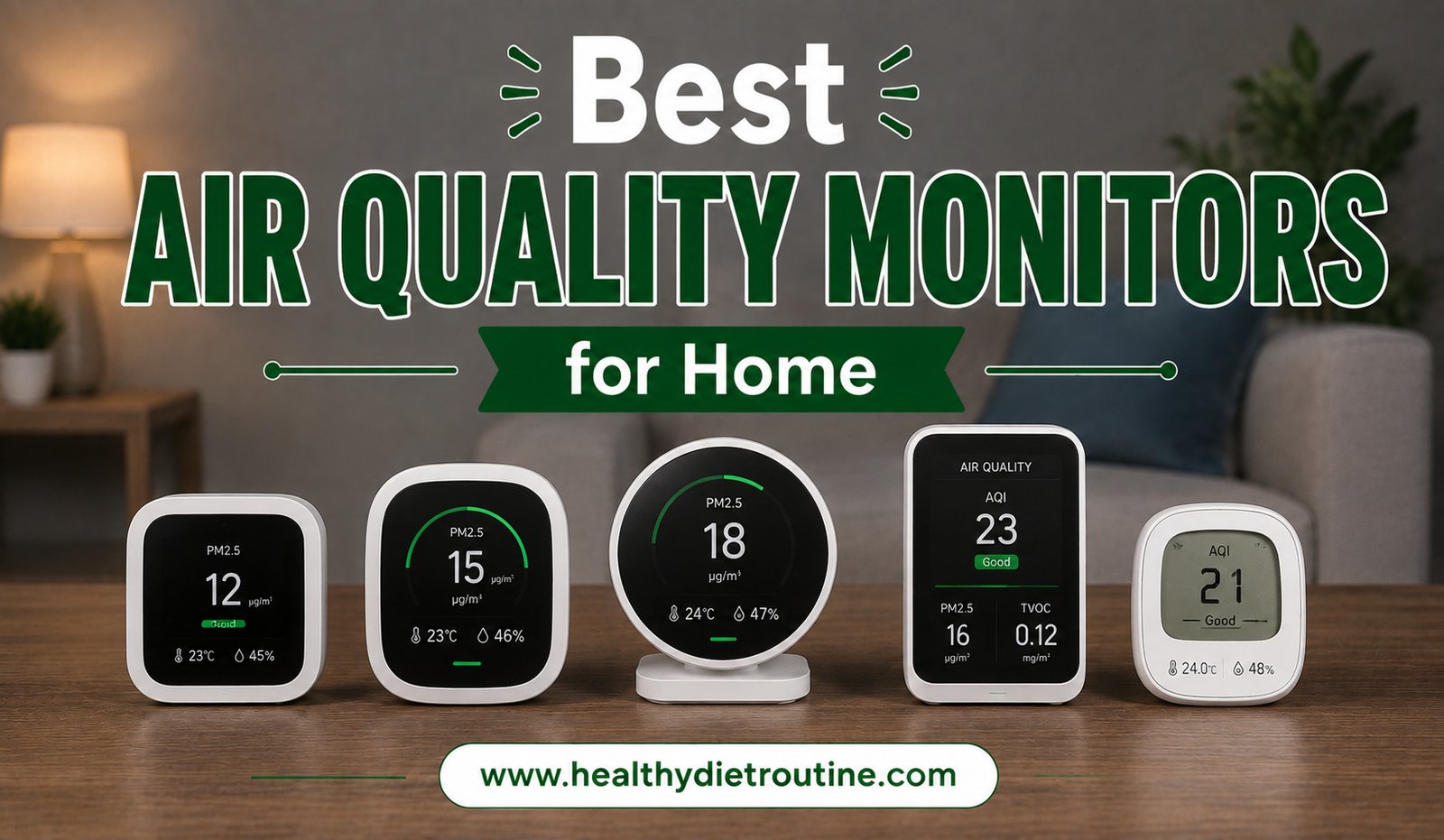
Indoor air quality is easy to overlook. We often think about outdoor pollution when discussing air quality, but the air inside a home can also contain dust, fine particles, smoke, volatile organic compounds, carbon dioxide, and other pollutants. Cooking, cleaning products, furniture, building materials, pets, candles, and outdoor pollution entering through windows can all affect indoor air quality.
This is where an air quality monitor for home use can be helpful. Unlike an air purifier, which is designed to clean the air, an air quality monitor measures selected pollutants or environmental conditions and shows you what is happening inside your home.
Modern monitors can track PM2.5, PM10, carbon dioxide (CO2), volatile organic compounds (VOCs), temperature, humidity, and other indicators. Some models also provide smartphone notifications, historical charts, color-coded displays, and automatic alerts.
However, choosing the best air quality monitor is not simply about finding the device with the largest number of sensors. Understanding what you actually need to measure is much more important.
What Is a Home Air Quality Monitor?
A home air quality monitor is an electronic device that uses one or more sensors to measure specific pollutants or environmental factors.
Depending on the model, it may detect particulate matter such as PM2.5, gases such as VOCs or carbon dioxide, and environmental conditions including temperature and relative humidity.
Some monitors display measurements directly on the device, while others connect to a smartphone app through Wi-Fi or Bluetooth. Advanced models may store historical information, helping you identify changes throughout the day.
For example, you might notice that PM2.5 rises while cooking, CO2 increases when several people are in a closed room, or humidity changes significantly when an air conditioner or humidifier is operating.
Why Use an Air Quality Monitor at Home?
The biggest benefit is awareness.
Indoor air quality can change considerably depending on what is happening inside and outside the home. Cooking, cleaning, opening windows, using certain products, or operating an air purifier can all affect measurements.
An air quality monitor can help identify patterns that are otherwise difficult to notice. The EPA says low-cost air pollution monitors can provide information about specific pollutants and may help users identify activities or sources that cause pollutant levels to change.
This information can help you decide when to ventilate a room, reduce a pollution source, use an air purifier, or change another indoor-air habit.
The monitor itself does not improve air quality. It simply gives you information that can support better decisions.
What Should an Air Quality Monitor Measure?
PM2.5
PM2.5 refers to fine particles that are 2.5 micrometers or smaller in diameter. These particles can come from outdoor pollution, smoke, cooking, combustion, and other sources.
If particulate pollution is your primary concern, choosing a monitor with PM2.5 measurement should be a priority.
PM10
PM10 includes larger airborne particles. Dust and other coarse particles can contribute to PM10 levels.
A monitor that measures both PM2.5 and PM10 can provide a broader picture of particulate pollution inside the home.
Carbon Dioxide
CO2 is often used as an indicator of ventilation. Levels can increase when people spend time in a room with limited fresh-air exchange.
A monitor with a CO2 sensor can therefore be useful in bedrooms, home offices, classrooms, and other occupied spaces.
It is important to remember that CO2 monitoring is different from carbon monoxide monitoring. A general air quality monitor should not be treated as a replacement for a certified carbon monoxide alarm.
VOCs
Volatile organic compounds can be released by various household products, furnishings, paints, cleaning products, and other materials.
Some consumer monitors include VOC sensors, although interpreting VOC readings can be more complicated than interpreting a simple particulate measurement.
Temperature and Humidity
Temperature and relative humidity are useful environmental measurements. They can help you understand whether a room is too dry or excessively humid.
Humidity measurements can also provide useful context when interpreting certain sensor readings because temperature and relative humidity can affect the performance of some low-cost air sensors.
Types of Air Quality Monitors for Home
1. Basic Air Quality Monitors
Basic models generally measure one or a few parameters, such as PM2.5, temperature, and humidity.
They can be a good choice if you want a straightforward device without complicated apps or advanced features.
These monitors are often suitable for users who mainly want to know whether particulate levels are changing throughout the day.
2. Multi-Sensor Air Quality Monitors
Multi-sensor models measure several indoor air indicators in one device.
A typical advanced monitor may combine PM2.5, CO2, VOCs, temperature, and humidity. This can provide a broader picture of indoor conditions.
The downside is that more sensors can increase price and complexity. Not every household needs every measurement.
3. Smart Air Quality Monitors
Smart monitors connect to mobile apps or smart-home systems. They can provide historical charts, notifications, remote monitoring, and automated actions.
For example, a compatible smart-home setup could potentially use air-quality readings to trigger ventilation or an air-cleaning device when certain conditions are detected. Air sensors are increasingly being incorporated into systems that can trigger equipment when predefined conditions are reached.
4. Portable Air Quality Monitors
Portable models are useful when you want to compare conditions in different rooms.
You can move one between the bedroom, living room, kitchen, or home office to identify differences in air quality.
Battery-powered designs are particularly convenient for this purpose.
5. Display-Based Monitors
Some devices include a large screen showing real-time measurements. These are useful if you want to check air quality at a glance without opening an app.
A clear display can be especially helpful for older users or anyone who prefers simple visual information.
Features to Look for in the Best Home Air Quality Monitor
PM2.5 sensor: Important if fine particulate pollution is your main concern.
CO2 measurement: Useful for understanding ventilation and occupancy-related changes.
VOC monitoring: Helpful if you want additional information about certain indoor gases, although readings can be more difficult to interpret.
Temperature and humidity: Useful for understanding overall indoor conditions.
Real-time display: Lets you check measurements without using a smartphone.
Mobile app: Helpful for viewing historical trends and receiving notifications.
Data history: Allows you to identify patterns instead of relying on one reading.
Alerts: Notifications can tell you when measurements exceed a selected or manufacturer-defined threshold.
Battery operation: Useful if you want to move the monitor between rooms.
Wi-Fi or Bluetooth: Provides connectivity to smartphones or compatible smart-home systems.
Accuracy Matters More Than the Number of Sensors
One of the biggest mistakes buyers can make is assuming that a monitor with more sensors is automatically better.
The EPA points out that information about the accuracy and precision of many low-cost air quality monitors is limited. Readings can be affected by factors such as placement, temperature, humidity, operating time, data processing, and the presence of other contaminants.
Different manufacturers can also produce different results, even when their products appear to measure similar pollutants.
For this reason, look for information about sensor technology, testing, calibration, and performance rather than simply counting the number of measurements shown on the display.
A higher price also does not automatically guarantee better accuracy. The EPA notes that monitor prices can vary because of features such as displays, connectivity, sensor combinations, and data processing—not necessarily because one device is more accurate.
Where Should You Place an Air Quality Monitor?
Placement can significantly influence readings.
The EPA recommends placing indoor sensors around the typical breathing-zone height, generally about 3 to 6 feet above the floor for adults. The sensor should have unobstructed airflow and should not be hidden behind furniture.
Avoid placing the monitor directly beside an air purifier because the purified air may not represent the average conditions of the room.
Similarly, placing a monitor directly next to a stove, open window, air conditioner, heater vent, or other strong source can produce readings that are highly localized rather than representative of the room as a whole.
For everyday monitoring, a central location in the room at an appropriate height is generally more useful.
How to Use an Air Quality Monitor Effectively
Do not panic over a single unusual reading.
Instead, look for patterns. For example, if PM2.5 rises every time you cook, that information may suggest a need for better kitchen ventilation or improved use of an exhaust fan.
If CO2 rises steadily overnight in a closed bedroom, it may indicate that ventilation needs attention.
You can also compare readings before and after turning on an air purifier to understand whether particle levels change.
The EPA emphasizes that low-cost monitors can help identify trends and potential sources, but a reading does not automatically prove that an indoor air quality problem exists.
Air Quality Monitor vs Air Purifier
These two devices perform completely different jobs.
An air quality monitor measures indoor conditions. An air purifier cleans the air by filtering or otherwise treating certain pollutants.
A monitor can tell you that particulate levels are elevated, while an air purifier may help reduce those particles.
Using both can therefore be useful. The monitor provides information, while the purifier can be one possible response to elevated particle levels.
However, filtration is only one part of indoor air-quality management. The EPA identifies source control and ventilation as important strategies alongside supplemental filtration and air cleaning.
Important Safety Consideration
A consumer air quality monitor should not replace dedicated safety equipment.
For example, a general-purpose monitor that measures PM2.5 and VOCs should not automatically be considered a certified carbon monoxide alarm.
The EPA specifically distinguishes low-cost air pollution monitors from emergency devices such as certified carbon monoxide alarms and smoke detectors. Low-cost monitors are generally intended to provide information rather than serve as immediate life-safety warning systems.
If your home uses gas appliances, fireplaces, generators, or other potential carbon monoxide sources, use appropriate certified CO alarms separately.
Who Should Consider an Air Quality Monitor?
A home air quality monitor can be useful for:
- People living in areas with significant outdoor pollution
- Homes near busy roads or construction
- Families concerned about indoor dust and particles
- People who cook frequently
- Pet owners
- People using air purifiers or ventilation systems
- Home-office workers
- Anyone interested in tracking indoor environmental conditions
It can also be useful for people who want to understand how different activities affect the air inside their home.
How to Choose the Best Air Quality Monitor for Home
Start with the problem you want to understand.
If fine particles are your primary concern, choose a monitor with PM2.5 measurement. If you want to understand ventilation, CO2 measurement can be particularly useful. For a broader overview, a multi-sensor model covering PM2.5, CO2, VOCs, temperature, and humidity may be more appropriate.
Next, consider how you want to view the information. A built-in display is convenient for quick checks, while an app is better for historical data and remote monitoring.
Finally, investigate sensor performance, calibration information, replacement requirements, connectivity, and long-term software support.
Avoid choosing a monitor solely because its screen displays a colorful “good” or “poor” air-quality score. The EPA notes that there are no widely accepted indoor performance criteria or universal indoor thresholds for many low-cost air pollution monitors, and manufacturers may establish their own alert levels.
Final Thoughts
The best air quality monitors for home are the ones that measure the pollutants and environmental conditions you actually care about while providing information that is easy to understand.
For many households, PM2.5, CO2, temperature, and humidity provide a useful starting point. More advanced users may also want VOC measurements, app connectivity, historical charts, and automated alerts.
Accuracy and sensible placement are just as important as the number of sensors. Low-cost air monitors have limitations, and their readings should generally be viewed as useful information about trends rather than perfect measurements of every pollutant in your home.
An air quality monitor does not clean your home or eliminate pollution sources. Its value comes from helping you understand what is happening so you can take appropriate action—such as improving ventilation, reducing pollution sources, or using an air purifier when necessary.
For anyone interested in creating a healthier and more comfortable indoor environment, a reliable air quality monitor can be a practical addition to a modern home.