
Best Blood Pressure Monitors for Home
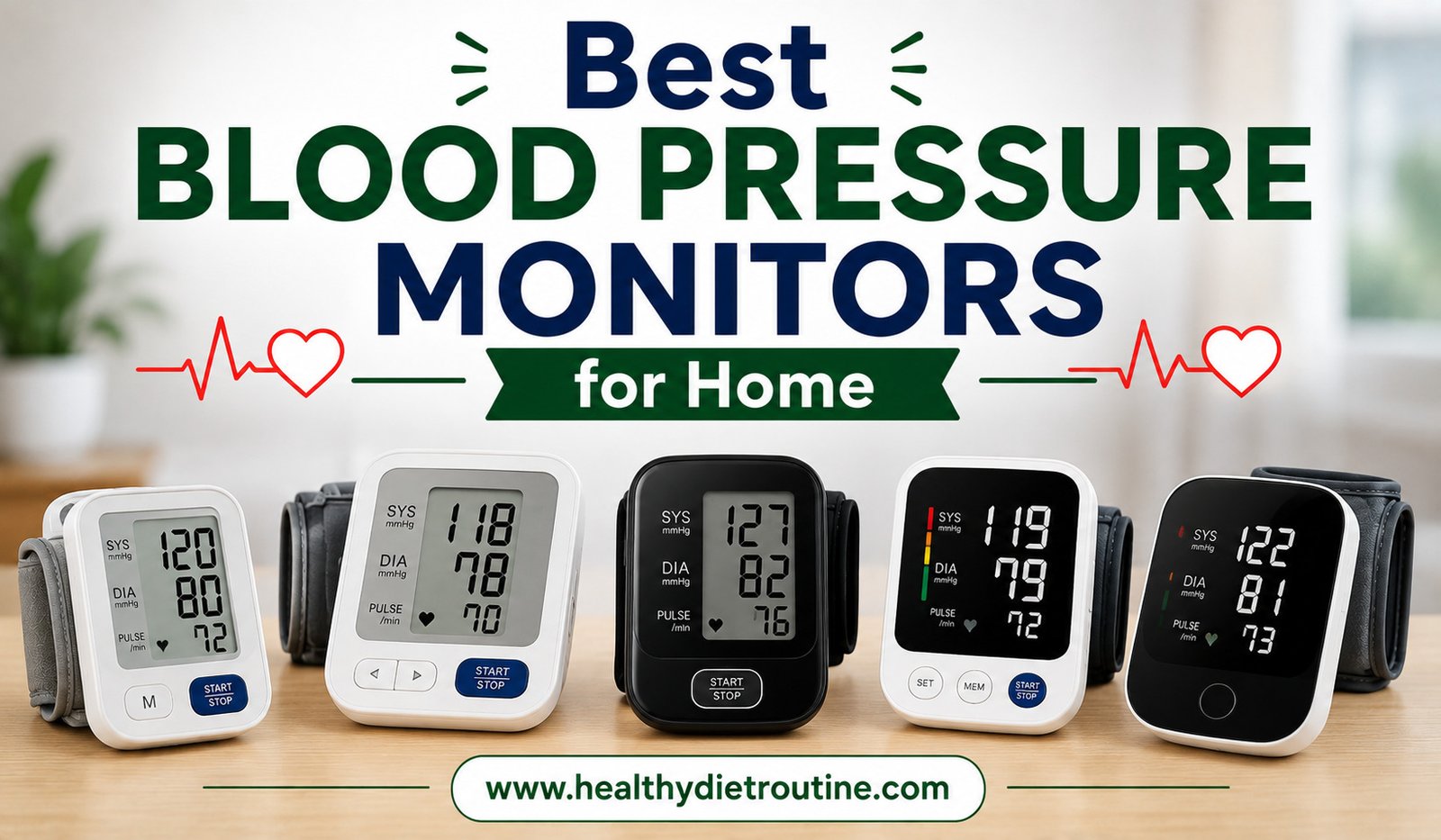
Keeping track of blood pressure at home has become a simple way to understand your health between regular medical checkups. A home blood pressure monitor can help you record readings consistently, notice changes over time, and provide useful information to your doctor. However, choosing the right device is important because not every monitor offers the same level of accuracy, cuff fit, or ease of use.
The American Heart Association recommends using an automatic, upper-arm cuff-style blood pressure monitor that has been validated for accuracy. Wrist and finger monitors are generally less reliable, while cuffless wearable devices are not currently recommended for diagnosing or managing high blood pressure.
If you are looking for the best blood pressure monitor for home use, here is what to consider before buying one.
Why Use a Blood Pressure Monitor at Home?
Blood pressure can change throughout the day because of activity, stress, caffeine, sleep, medication, and other factors. A single reading at a clinic may not show your usual blood pressure.
Home monitoring allows you to build a record of readings under familiar conditions. It can be particularly useful for people who have already been diagnosed with high blood pressure, those starting or changing treatment, or people whose doctor wants more information about their blood pressure outside the clinic.
Regular home measurements can also help identify situations such as white-coat hypertension, where blood pressure is higher in a medical setting than at home.
What Makes a Good Home Blood Pressure Monitor?
Before choosing a device, look beyond the display and price. The most important feature is validated accuracy. Validation means the device has undergone testing against accepted standards rather than simply being marketed as accurate.
The ValidateBP device list provides information about monitors that have undergone an independent validation process. The list includes details such as model numbers and approved cuff sizes.
Cuff size is equally important. A monitor with a cuff that is too small or too large for your arm may produce inaccurate readings. Measure your upper-arm circumference and check the manufacturer’s recommended cuff range before purchasing.
An easy-to-read display, simple controls, memory storage, multiple-user profiles, and optional smartphone connectivity can also make regular monitoring more convenient.
Best Types of Blood Pressure Monitors for Home
1. Automatic Upper-Arm Monitors
For most people, an automatic upper-arm monitor is the best choice for home use. These devices use an inflatable cuff placed around the upper arm and automatically calculate systolic and diastolic blood pressure along with pulse rate.
They are generally straightforward to operate and require less technique than traditional manual equipment. The American Heart Association specifically recommends automatic upper-arm monitors for home blood pressure monitoring.
When comparing models, look for a validated device with a cuff that fits your arm correctly.
2. Monitors With Memory Storage
If you need to monitor your blood pressure regularly, built-in memory can be extremely useful. Instead of writing down every measurement manually, the monitor can store previous readings.
Some models can save readings for more than one person, making them practical for households where multiple family members monitor their blood pressure.
Memory features can also help you show a history of readings to your healthcare professional during appointments.
3. Bluetooth-Connected Blood Pressure Monitors
Bluetooth-enabled monitors are designed for people who prefer using a smartphone to manage health information. Depending on the model and accompanying app, readings may be transferred to a phone where users can review measurements and trends.
These features can make record keeping easier, but connectivity should not be the main reason to choose a device. Accuracy, validation, and correct cuff size remain more important.
4. Wrist Blood Pressure Monitors
Wrist monitors are compact and convenient, but they are generally not the first choice for routine home monitoring. The American Heart Association notes that wrist and finger monitors can provide less reliable readings than upper-arm devices.
However, validated wrist devices may be appropriate in certain situations, such as when an upper-arm cuff cannot be used because of a specific medical need or unsuitable arm circumference. In such cases, proper positioning becomes especially important.
Features to Look for When Buying a Blood Pressure Monitor
The best blood pressure monitor is not necessarily the one with the most features. Instead, prioritize features that support accurate and consistent measurements.
Look for:
- Validated accuracy: Check whether the exact model appears on a recognized validated-device list.
- Correct cuff range: Make sure the cuff fits your upper-arm circumference.
- Large, clear display: Helpful for older adults and people with limited vision.
- Memory function: Useful for tracking readings over several days or weeks.
- Multiple-user support: Convenient when two people share one device.
- Irregular-heartbeat indication: Some monitors provide alerts that may prompt further discussion with a healthcare professional.
- Battery and power options: Consider whether you prefer batteries, an adapter, or both.
- App connectivity: Useful if you want digital records and trend tracking.
Do not choose a monitor solely because it is advertised as “smart” or because it connects to a smartwatch. The 2025 American Heart Association/American College of Cardiology guideline does not recommend cuffless devices for diagnosing or managing high blood pressure.
How to Get More Accurate Home Readings
Even a validated monitor can produce a misleading result if it is used incorrectly.
Before measuring your blood pressure, avoid smoking, caffeine, and exercise for about 30 minutes. Empty your bladder and sit quietly for at least five minutes.
Sit upright with your back supported and keep both feet flat on the floor. Place the cuff directly against your bare upper arm rather than over clothing. Support your arm on a flat surface so the cuff is positioned around heart level.
Remain still and avoid talking during the measurement. The American Heart Association recommends taking at least two readings about one minute apart and recording the results.
Consistency also matters. If your healthcare professional has asked you to monitor your blood pressure regularly, try to take measurements at the recommended times and under similar conditions.
Should You Buy a Cheap Blood Pressure Monitor?
Price should not be the only deciding factor. A low-cost monitor can be useful if the exact device has appropriate validation and comes with a cuff that fits correctly. On the other hand, an expensive device is not automatically more accurate.
Instead of selecting a monitor based purely on brand reputation, check its model number against a validated-device database. ValidateBP allows consumers and healthcare professionals to review devices and their validation information.
This approach can help you avoid spending extra money on unnecessary features while making accuracy the priority.
How Often Should You Check Your Blood Pressure?
There is no single schedule that works for everyone. Your healthcare professional can recommend how frequently you should monitor your blood pressure based on your individual circumstances.
For people who are asked to collect home readings for evaluation, healthcare professionals may recommend taking multiple measurements over several days. The important point is to follow the schedule provided by your doctor rather than repeatedly checking your blood pressure throughout the day without a reason.
Keep your readings organized so they can be reviewed during medical appointments.
Bring Your Monitor to Your Doctor’s Appointment
Buying a good monitor is only the first step. The American Heart Association recommends taking your home monitor to a healthcare appointment so that a professional can check whether you are using it correctly and compare its readings with office equipment.
This can help identify problems with cuff placement, technique, or the device itself.
It is also worth checking the manufacturer’s instructions regarding maintenance and accuracy checks. Your healthcare professional can advise you about how frequently your particular monitor should be assessed.
Final Thoughts
The best blood pressure monitor for home use is one that combines validated accuracy, a correctly fitting cuff, simple operation, and features that make regular monitoring easier. For most adults, an automatic upper-arm monitor is the preferred option.
Smart features such as Bluetooth, memory storage, multiple-user profiles, and health apps can be helpful, but they should come after accuracy and proper cuff fit when choosing a device.
Most importantly, a home blood pressure monitor should support—not replace—professional medical care. If your readings are consistently higher or lower than expected, share them with your healthcare professional rather than making medication changes on your own. Proper equipment, consistent technique, and reliable record keeping can make home blood pressure monitoring much more useful for long-term health management.