
Best Health Devices Under ₹2,000 in India
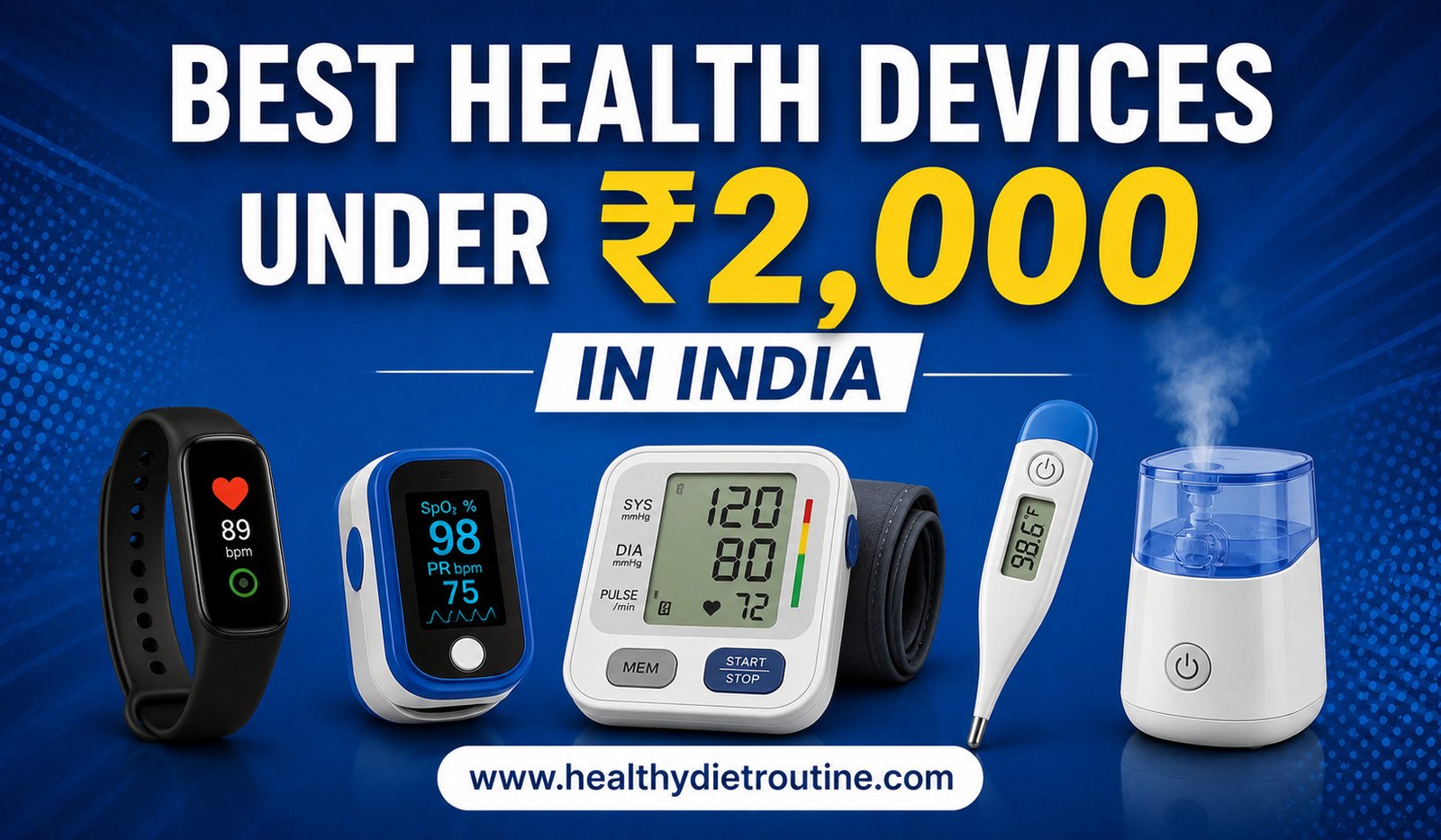
Keeping track of basic health measurements at home has become easier than ever. You no longer need to spend a large amount of money on medical equipment to monitor everyday health indicators. In India, several useful health devices are available for under ₹2,000, making them accessible to families, senior citizens, fitness enthusiasts, and people who want to become more aware of their daily health habits.
From digital thermometers and blood pressure monitors to pulse oximeters and weighing scales, affordable devices can help you keep track of important measurements from the comfort of your home. However, choosing the right product is important because accuracy, ease of use, durability, and after-sales support can vary significantly between devices.
If you are looking for the best health devices under ₹2,000 in India, here are some practical options worth considering in 2026.
1. Digital Blood Pressure Monitor
A digital blood pressure monitor is one of the most useful health devices for a household. Regular blood pressure monitoring can be helpful for people who have been advised by a healthcare professional to check their readings at home.
Automatic monitors are particularly convenient because they usually require only the press of a button. Many affordable models include features such as a digital display, memory storage, irregular heartbeat detection, and automatic inflation.
When shopping within a ₹2,000 budget, an upper-arm blood pressure monitor can be a good choice. Pay attention to the cuff size because an incorrectly fitted cuff may affect the reading. It is also worth choosing a product from a recognised manufacturer with clear warranty and customer support information.
For the most consistent results, sit quietly for a few minutes before taking a reading and follow the manufacturer’s instructions carefully.
2. Pulse Oximeter
A pulse oximeter is a small device designed to measure blood oxygen saturation and pulse rate. Its compact size makes it convenient for keeping at home or carrying while travelling.
Most fingertip pulse oximeters are simple to operate. You generally place a finger inside the device and wait for the measurement to appear on the screen. Many models can display SpO₂ and pulse rate simultaneously.
Several pulse oximeters from established brands are available below ₹2,000 in India. When selecting one, look for a clear display, comfortable finger clip, quick readings, and reliable construction.
It is important to remember that pulse oximeter readings can sometimes be affected by movement, cold hands, nail products, poor positioning, or other factors. Therefore, an unusual reading should not automatically be treated as a diagnosis.
3. Digital Thermometer
A digital thermometer is one of the most affordable and useful health devices you can keep at home. It can help you quickly check body temperature when someone feels unwell.
Modern digital thermometers are generally compact, easy to operate, and simple to read. Many provide results within a short period and include features such as automatic shut-off and memory functions.
Since basic models are often available for only a few hundred rupees, you do not need to use your entire ₹2,000 budget for this device. Look for a thermometer with a clear display, easy controls, dependable construction, and instructions for proper use.
A thermometer is particularly useful because it provides an actual temperature reading instead of relying only on whether someone feels warm or cold.
4. Digital Weighing Scale
A digital weighing scale can be a practical addition to a home, especially for people who are working on fitness, nutrition, or general wellness goals.
Unlike traditional mechanical scales, digital models usually have a large electronic display that makes the reading easier to see. Affordable options can also include automatic shut-off, low-battery alerts, and different measurement units.
If your primary goal is tracking body weight, a basic digital scale is usually sufficient. More advanced smart scales can connect to mobile applications and may estimate measurements such as BMI and body fat percentage.
However, these additional body-composition figures are estimates and should not be treated as medical measurements. For everyday weight tracking, consistency is more important than having a large number of features.
5. Glucometer
A glucometer can be an important home health device for people who have been instructed to monitor their blood glucose levels. Many entry-level glucose meters are available within a ₹2,000 budget.
Before purchasing a glucometer, look beyond the initial price. Test strips and lancets need to be replaced regularly, so their availability and cost can make a significant difference over time.
A good glucometer should be straightforward to operate, have a readable display, require a manageable blood sample, and provide clear instructions. Some kits include a meter, test strips, lancets, and a lancing device, which can make them convenient for first-time users.
If you have been prescribed a particular testing schedule, follow the instructions provided by your healthcare professional rather than changing your testing routine based only on the device.
6. Home Nebulizer
A nebulizer may be useful for households where a healthcare professional has recommended nebulized medication. Several basic compressor nebulizers are available in India for around or below ₹2,000.
These devices convert liquid medication into a fine mist that can be inhaled through a mask or mouthpiece. Their usefulness depends on the medical situation and the medication being used.
When purchasing a nebulizer, consider factors such as operating noise, cleaning requirements, portability, accessories, replacement parts, and warranty support.
It is important not to use medication in a nebulizer simply because the device is available at home. Medicines should be used according to professional medical advice.
7. Smart Weighing Scale
A smart weighing scale can be an interesting option for people who want technology-based health tracking without spending too much. Many affordable models can connect with smartphones through an app and record weight measurements over time.
Depending on the model, these scales may also provide estimated readings for BMI, body fat, muscle mass, water percentage, and other metrics.
The main advantage is convenience. Instead of manually writing down your weight, the accompanying application can help maintain a history of measurements.
However, smart-scale body composition readings can vary depending on hydration and other factors. They are best used for observing general trends rather than making medical decisions.
8. Basic Health Monitor for Families
If you are buying health equipment for an entire family, you may want to prioritise devices that have broad everyday usefulness. A thermometer is inexpensive and useful for almost every household. A blood pressure monitor can be valuable for families that need regular BP checks, while a pulse oximeter can provide another basic measurement when required.
Rather than purchasing several devices simply because they are inexpensive, consider the specific needs of the people in your household. This can help you spend your ₹2,000 budget more effectively.
How to Choose Health Devices Under ₹2,000
Price should not be the only factor when purchasing a health device. A product that costs slightly more but offers better usability, warranty support, and dependable construction may be a better long-term choice.
First, decide what you actually need to monitor. Someone interested in general fitness may benefit more from a weighing scale, while a person who has been asked to monitor blood pressure may need a reliable BP monitor.
Next, check whether the device is easy to operate. Large displays, simple buttons, readable instructions, and comfortable sensors can make a major difference, particularly for older users.
You should also check replacement costs. This is especially important for glucometers, where the long-term cost of test strips can exceed the initial purchase price.
Finally, purchase from a reliable retailer and check warranty information before placing an order. Avoid choosing a product solely because it has the lowest price.
Are Budget Health Devices Reliable?
Affordable health devices can be useful for routine monitoring, but their performance depends on the individual product, correct usage, and measurement conditions. Buying a device from a recognised manufacturer and following the instructions can help improve the usefulness of the readings.
It is also important not to become overly dependent on individual measurements. Health readings can naturally change throughout the day. If a measurement appears unusual, repeat it correctly and consider the broader context.
For people monitoring an existing medical condition, home devices should complement professional care rather than replace it.
Final Thoughts
The growing availability of affordable health technology means you can build a useful home health setup without spending thousands of rupees. Digital thermometers, blood pressure monitors, pulse oximeters, weighing scales, glucometers, and basic nebulizers can all be found within or around the ₹2,000 price range in India, depending on the brand and model.
The best health device for you ultimately depends on what you actually need to monitor. Instead of buying a gadget because it has numerous features, focus on accuracy, ease of use, durability, warranty, and ongoing costs.
A small investment in the right device can make everyday health tracking more convenient. At the same time, remember that these gadgets are monitoring tools. They cannot replace professional diagnosis or medical advice, particularly when readings remain abnormal or symptoms are concerning.
For Indian households looking for affordable ways to become more organised about everyday health monitoring, choosing one or two genuinely useful devices can be a smarter approach than filling the home with unnecessary technology.