
Best Massage Guns for Post-Workout Recovery
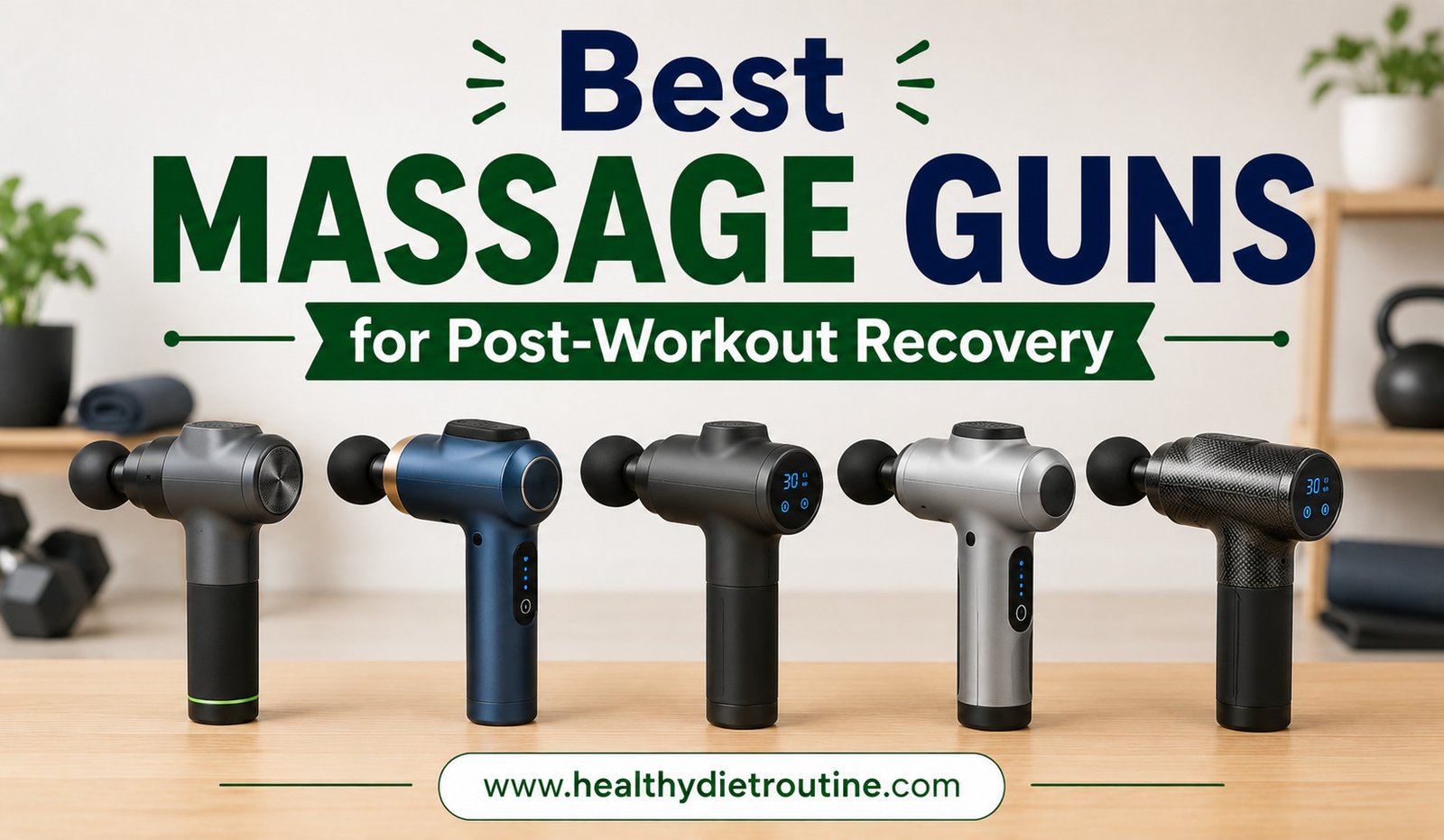
Post-workout recovery is an important part of any fitness routine. After strength training, running, cycling, sports, or other demanding activities, muscles can feel tight, stiff, and tired. While rest, sleep, hydration, nutrition, and appropriate movement remain the foundation of recovery, massage guns have become a popular tool for adding short-term muscle relief at home.
A massage gun, also known as a percussive therapy device, uses rapid pulses to apply pressure to muscles and surrounding soft tissues. Research suggests that percussive therapy may help improve short-term range of motion and flexibility and may provide some recovery-related benefits, although the evidence is still developing and results are not the same for everyone.
If you are considering buying one, the best massage gun for post-workout recovery should be comfortable to use, easy to control, suitable for the muscles you normally train, and supported by sensible safety instructions.
What Is a Massage Gun?
A massage gun is a handheld electronic device that delivers repeated percussive movements through a small attachment head. When the head is placed against a muscle, it creates a rapid tapping or pressing sensation.
Different devices offer different speed and intensity settings. Many also come with several attachment heads designed for larger muscle groups, smaller areas, or more targeted pressure.
The goal is not to press as hard as possible. A massage gun should generally feel comfortable and controlled. Using excessive pressure does not necessarily produce better recovery and may leave already tired muscles feeling more irritated.
Can Massage Guns Actually Help With Recovery?
The evidence is promising but should be interpreted realistically.
A 2023 systematic review found that massage guns could improve short-term flexibility, range of motion, and some recovery-related outcomes such as stiffness reduction after fatigue. However, the researchers also highlighted limitations in the available studies and noted that protocols varied considerably.
More recent research provides a similarly cautious picture. A 2026 systematic review and meta-analysis of 12 randomized controlled trials found that percussive therapy improved recovery of countermovement-jump performance, but the certainty of that evidence was low. It did not clearly improve maximum voluntary contraction recovery or delayed-onset muscle soreness, and the authors said dosage findings were preliminary.
In simple terms, a massage gun may help you feel less stiff and move more comfortably after exercise, but it should not be marketed as a guaranteed way to eliminate soreness or dramatically speed muscle repair.
What Makes the Best Massage Gun?
1. Adjustable Speed and Intensity
Different muscles may respond better to different levels of pressure and speed.
A good home massage gun should provide several intensity levels so beginners can start gently and gradually find a comfortable setting.
You do not need to use the highest setting to get a useful session. Start at a low or moderate intensity and increase it only if the sensation remains comfortable.
2. Comfortable Attachments
Massage guns commonly come with several interchangeable heads. A larger, softer attachment may be useful for broad muscle groups such as the thighs and glutes, while smaller heads can provide more focused pressure.
The number of attachments is less important than whether they are comfortable and suitable for the areas you plan to treat.
Choose a device with attachments that are easy to remove, clean, and replace.
3. Good Battery Life
Battery life matters if you plan to use your massage gun regularly.
A rechargeable model can be convenient because you can charge it between workouts. Check how long the device operates on a full charge and how long it takes to recharge.
If you travel with the device, a compact design and USB charging can also be useful.
4. Manageable Weight
Massage guns can become surprisingly tiring to hold, particularly when you are trying to reach your back, shoulders, or legs.
A lightweight device can make longer sessions more comfortable. Ergonomic handles are also useful because they can provide a secure grip without requiring excessive hand pressure.
For home recovery, comfort and usability are often more important than choosing the largest or most powerful model.
5. Reasonable Noise Levels
Some massage guns can be loud enough to become annoying during regular use.
If you plan to use yours while watching television, working, or relaxing, consider a model designed for quieter operation.
Noise should not be your primary buying criterion, but it can make a noticeable difference in everyday convenience.
Different Types of Massage Guns
There is no single massage gun design that is best for everyone.
Compact Massage Guns
Compact models are smaller and easier to carry. They can be a good option for people who travel frequently or want something that takes up little storage space.
The trade-off may be a smaller battery or less powerful motor compared with larger models.
Full-Size Massage Guns
Full-size models usually offer larger handles, more attachment options, and stronger motors.
They can be useful for people who train frequently and want to work on larger muscle groups such as the quadriceps, hamstrings, glutes, and calves.
However, their larger size can make them less convenient to carry.
Premium Massage Guns
Premium models often add features such as digital controls, more speed settings, improved ergonomics, carrying cases, multiple attachments, and quieter motors.
These features can be useful for frequent users, but they do not guarantee better recovery results. The scientific evidence does not establish that the most expensive massage gun is necessarily the most effective.
How to Use a Massage Gun After a Workout
Using the device correctly is more important than simply choosing a powerful model.
Start with a low intensity and move the massage gun slowly across the muscle. Avoid staying in one spot for an excessively long period.
For example, after a leg workout, you might gently work across the quadriceps, hamstrings, calves, and glutes. The goal should be comfortable pressure rather than intense pain.
Do not use the massage gun directly over bones, joints, the front of the neck, or other sensitive areas. Avoid applying it directly to injured tissue unless a qualified healthcare professional has specifically recommended that approach.
If the sensation becomes painful, numb, or unusually uncomfortable, stop using the device.
Should You Use a Massage Gun Immediately After Exercise?
A massage gun can be used as part of a post-workout recovery routine, but there is no universally established ideal timing or dosage.
The 2026 systematic review found that studies used different treatment durations, frequencies, and application protocols, and the authors emphasized that dose-related findings remain preliminary.
This means you should avoid assuming that longer or more intense sessions are automatically better.
A short, comfortable session may be enough for many people. Your overall recovery routine should still include appropriate rest, hydration, nutrition, sleep, and gradual training progression.
Massage Gun vs Foam Roller
Both massage guns and foam rollers are commonly used for self-myofascial or recovery routines, but they feel different.
A foam roller uses body weight and controlled movement to apply pressure across larger areas. A massage gun delivers rapid mechanical pulses to a more localized area.
A massage gun can be easier to use on certain muscles without getting onto the floor, while a foam roller is inexpensive and requires no batteries.
You do not necessarily need to choose one over the other. Some people may prefer a combination of gentle mobility work, foam rolling, and percussive therapy depending on their training routine.
Massage Gun vs Traditional Massage
A professional massage provides hands-on treatment from a trained practitioner and can be tailored to the individual. A massage gun is a portable self-care tool that allows you to apply mechanical stimulation whenever convenient.
The main advantage of a massage gun is accessibility. You can use it at home without booking an appointment.
However, it cannot replace professional assessment when pain is caused by an injury or another underlying medical problem.
Common Mistakes to Avoid
One of the biggest mistakes is assuming that more pressure produces better results. Aggressive treatment can be uncomfortable and may be inappropriate for already irritated or injured tissues.
Other common mistakes include using the gun directly on bones or joints, spending too long on one area, ignoring pain, and using it on an injury without professional advice.
It is also important not to confuse temporary relief with actual healing. A massage gun may make a muscle feel looser or more comfortable without treating the underlying cause of persistent pain.
Who Should Be Careful With Massage Guns?
Massage guns are not appropriate for every situation.
If you have a significant injury, unexplained swelling, severe pain, a suspected fracture, a blood-clotting condition, or another medical concern, consult a healthcare professional before using percussive therapy.
People recovering from surgery or dealing with a diagnosed musculoskeletal condition should also ask their doctor or physiotherapist whether massage-gun use is appropriate.
Do not use a massage gun as a substitute for medical evaluation when pain is severe, persistent, or getting worse.
Features Worth Comparing Before Buying
Before purchasing a massage gun, compare the features that affect everyday use rather than focusing only on marketing claims.
Look at:
- Adjustable intensity levels
- Comfortable attachment heads
- Battery life
- Charging method
- Device weight
- Handle design
- Noise level
- Carrying case
- Replacement attachment availability
- Warranty and customer support
- Clear safety instructions
If you are a beginner, a simple model with several intensity settings may be more useful than a complicated device with numerous modes you are unlikely to use.
Is a Massage Gun Worth Buying for Home Recovery?
For people who exercise regularly, a massage gun can be a convenient recovery accessory. It may help reduce the feeling of stiffness and temporarily improve range of motion or flexibility.
However, the scientific evidence does not support treating massage guns as a miracle recovery device. The latest evidence suggests that some performance-recovery benefits are possible, but effects on soreness and maximum strength recovery remain uncertain.
The best approach is to use a massage gun as one small part of a broader recovery routine.
Final Thoughts
The best massage guns for post-workout recovery combine comfortable attachments, adjustable intensity, good battery life, manageable weight, and simple controls. You do not necessarily need the most expensive or powerful model to benefit from percussive therapy.
Current research suggests that massage guns may help with short-term flexibility, range of motion, stiffness, and certain recovery outcomes, but evidence for reducing delayed-onset muscle soreness or improving every aspect of recovery remains limited.
Use a massage gun gently, avoid sensitive or injured areas, and stop if it causes pain or unusual symptoms. Most importantly, remember that effective recovery starts with the basics: adequate sleep, appropriate nutrition, hydration, rest, and a sensible training program. A massage gun can complement those habits, but it should not replace them.