
Pulse Oximeter vs Smartwatch Health Tracking: Which Is Better?
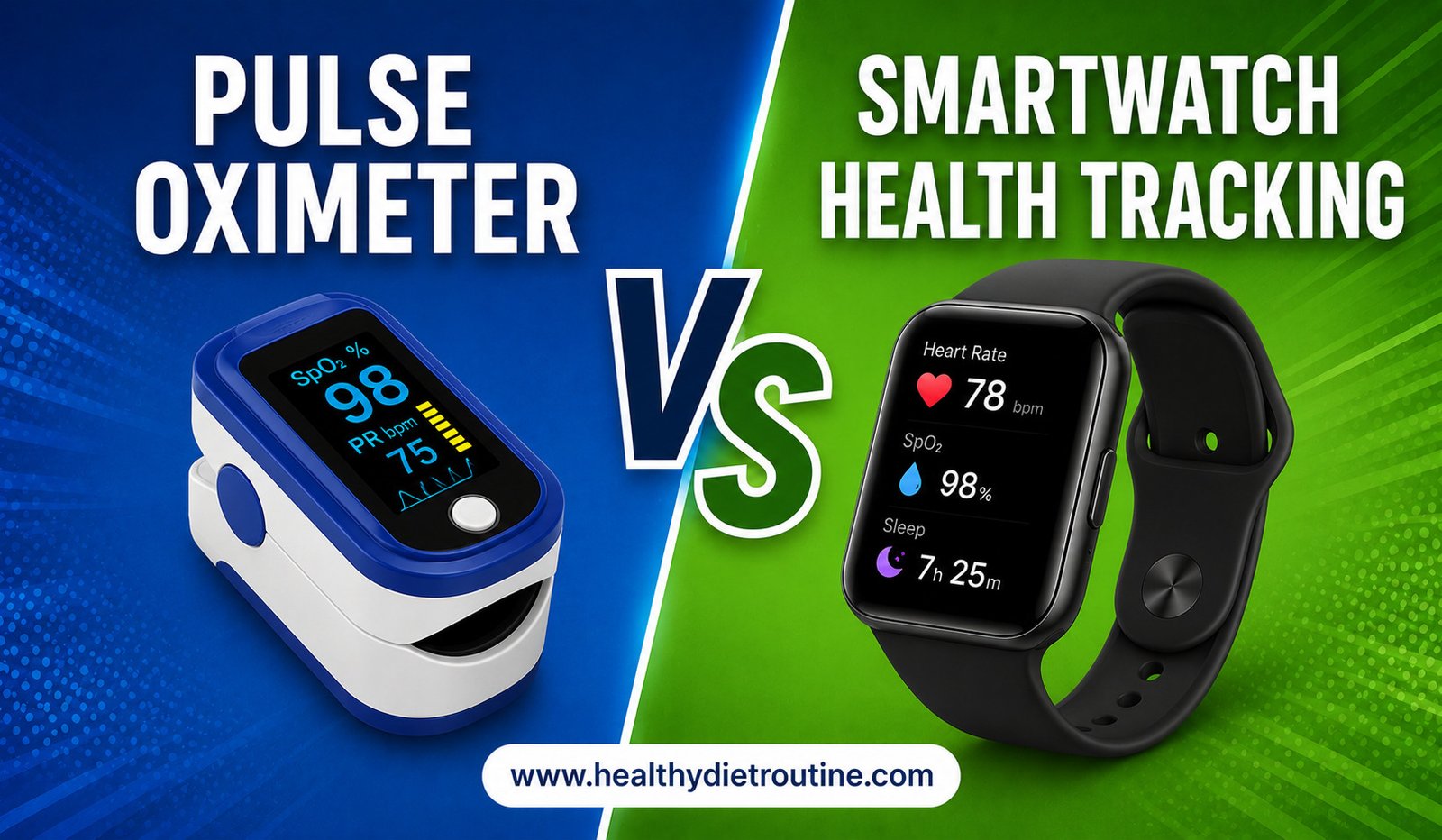
Wearable health technology has made it easier than ever to keep an eye on basic health and fitness information. A smartwatch can track heart rate, sleep, activity, and, on some models, blood oxygen levels. A dedicated pulse oximeter, meanwhile, is a small device designed specifically to measure blood oxygen saturation and pulse rate.
This creates an important question: pulse oximeter vs smartwatch health tracking—which is better?
Although both devices may provide blood oxygen information, they are designed for different purposes. A pulse oximeter is a dedicated measurement device, while a smartwatch is primarily a consumer wearable designed to track wellness and fitness trends.
Understanding the differences can help you decide which technology makes sense for your needs.
What Is a Pulse Oximeter?
A pulse oximeter is a small electronic device that is usually placed on a fingertip. It uses light to estimate blood oxygen saturation (SpO₂) and measure pulse rate.
The device typically displays two main values: an estimated oxygen saturation percentage and pulse rate in beats per minute.
Because it is small and simple to operate, a pulse oximeter can provide a quick spot measurement. It is commonly used in healthcare settings and is also available for home use.
However, a consumer pulse oximeter should not be treated as a substitute for professional medical evaluation. Readings can be affected by factors such as movement, poor circulation, cold hands, nail products, skin pigmentation, and device quality.
What Is a Smartwatch Health Tracker?
A smartwatch uses sensors positioned against the wrist to collect health and activity information throughout the day.
Depending on the model, a smartwatch may track heart rate, steps, sleep, workouts, stress-related metrics, blood oxygen estimates, and other wellness measurements.
Unlike a pulse oximeter, a smartwatch is designed to be worn for long periods. This means it can potentially collect information during everyday activities and sleep instead of only when you deliberately take a measurement.
Some smartwatches use optical sensors to estimate blood oxygen saturation. However, availability and functionality vary significantly by device, region, software, and manufacturer.
Pulse Oximeter vs Smartwatch: The Main Difference
The biggest difference is purpose.
A pulse oximeter is designed primarily to provide a quick measurement of oxygen saturation and pulse rate. A smartwatch is designed to provide broader health, fitness, and lifestyle tracking.
If you need a device specifically for occasional SpO₂ measurements, a dedicated pulse oximeter is more focused.
If you want to monitor trends in activity, heart rate, sleep, and other wellness metrics alongside occasional blood oxygen information, a smartwatch may be more convenient.
Which Is More Accurate for Oxygen Saturation?
You should not assume that a smartwatch and a pulse oximeter will produce identical SpO₂ readings.
A dedicated fingertip pulse oximeter is specifically designed for spot measurement of oxygen saturation. Smartwatch oxygen measurements are typically intended for wellness or trend monitoring rather than replacing a medical-grade assessment.
The U.S. Food and Drug Administration has warned that pulse oximeter readings have limitations and that accuracy can be affected by several factors, including circulation, skin pigmentation, temperature, and other conditions.
The FDA also emphasizes that consumers should not rely solely on pulse oximeter readings when evaluating their health.
For this reason, the number displayed by either device should be interpreted in context rather than treated as an absolute measurement.
Continuous Tracking vs Spot Checks
This is where smartwatches have a major advantage.
A pulse oximeter is normally used when you want to take a specific measurement. You put it on your finger, wait for a stable reading, and remove it.
A smartwatch can remain on your wrist for many hours. Depending on the device, it may collect health information periodically or during specific sessions.
This can help users identify longer-term patterns.
However, continuous or frequent data collection does not necessarily mean every individual reading is more accurate. Smartwatch measurements can be affected by wrist movement, loose fit, skin contact, and sensor limitations.
Ease of Use
Both devices are relatively simple, but in different ways.
A pulse oximeter requires you to deliberately perform a measurement. Its small screen usually displays the result within seconds.
A smartwatch requires almost no effort once it is being worn. Health information can be collected automatically and reviewed later in an application.
For someone who wants occasional oxygen measurements, a pulse oximeter may be simpler.
For someone who wants an overall picture of daily activity and wellness, a smartwatch offers greater convenience.
Portability
Pulse oximeters are extremely portable.
A fingertip device can easily fit into a small bag, making it convenient for travel or situations where you need a dedicated oxygen measurement device.
Smartwatches are also portable, but they serve many more purposes. Their larger size, battery requirements, and dependence on software make them more complex.
If your only requirement is checking oxygen saturation occasionally, carrying a pulse oximeter is generally more practical than relying on a smartwatch.
Heart Rate Monitoring
Both devices can measure pulse rate.
A pulse oximeter displays pulse rate alongside SpO₂ during the measurement. A smartwatch can monitor heart rate throughout the day and during workouts.
This makes a smartwatch considerably more useful for fitness tracking. It can provide information during exercise, rest, and sometimes sleep.
A pulse oximeter, in contrast, is primarily intended for a quick spot check rather than continuous heart-rate tracking.
Sleep Tracking
A smartwatch has a clear advantage when it comes to sleep tracking.
Many modern smartwatches can estimate sleep duration and provide information about sleep stages or nighttime heart-rate patterns.
Some models also record blood oxygen-related measurements during sleep.
A pulse oximeter can potentially be used for specific overnight monitoring in certain circumstances, but it is not designed to provide the broader sleep-tracking experience offered by a smartwatch.
If you are interested in understanding your overall sleep routine, a smartwatch or dedicated sleep tracker is generally more suitable.
Fitness Tracking
For fitness, the smartwatch wins easily.
A smartwatch can track steps, distance, calories, workouts, heart rate, and sometimes GPS-based activities such as running and cycling.
A pulse oximeter has a much narrower purpose.
If you want one device that combines fitness and wellness features, a smartwatch provides significantly more functionality.
Battery Life
Pulse oximeters generally have very simple power requirements and can often operate for a long time on small batteries.
Smartwatches require regular charging, with battery life varying from approximately a day to several days or more depending on the model and features.
If you want a device that can sit in a drawer and remain ready for occasional measurements, a pulse oximeter is convenient.
If you plan to wear a device continuously, charging becomes an important part of your routine.
Smartwatch vs Pulse Oximeter for Older Adults
For older adults who need a simple way to take occasional SpO₂ readings, a dedicated pulse oximeter may be easier to understand.
It generally has only a few functions and displays the relevant measurements directly.
A smartwatch can be useful for people who are comfortable with technology and want activity, heart-rate, sleep, and other wellness information in one device.
However, if someone has been advised by a healthcare professional to monitor oxygen saturation for a medical reason, they should ask which type of device is appropriate rather than relying on a consumer smartwatch.
Can a Smartwatch Replace a Pulse Oximeter?
In general, you should not automatically consider a smartwatch a replacement for a dedicated pulse oximeter.
Smartwatch SpO₂ features vary by manufacturer, and some models may not provide on-demand oxygen measurements at all. Others may collect data in ways intended primarily for general wellness or trend analysis.
A dedicated pulse oximeter is specifically designed for measuring oxygen saturation and pulse rate.
If accurate oxygen monitoring is important for a particular health situation, follow your healthcare professional’s recommendation regarding the appropriate device.
What Can Affect Pulse Oximeter Readings?
Even a dedicated pulse oximeter can produce misleading results.
The FDA lists several factors that can influence readings, including poor blood circulation, skin temperature, movement, nail polish, artificial nails, and certain device limitations.
For a better reading, keep your hand warm, remain still, and allow the device to stabilize before interpreting the number.
If a reading seems unusual, repeat the measurement according to the device’s instructions rather than immediately assuming something is wrong.
What Can Affect Smartwatch Health Measurements?
Smartwatches also depend heavily on proper fit and sensor contact.
A loose watch can reduce the quality of optical measurements. Movement during exercise can introduce noise, while sweat and positioning can also influence readings.
The watch should generally fit securely without being painfully tight.
It is also important to remember that smartwatch health metrics are estimates. A trend may be useful, but a single unusual number should not automatically be interpreted as a medical problem.
Price and Value
Basic pulse oximeters are usually inexpensive compared with smartwatches.
A smartwatch costs considerably more because it combines many functions, including notifications, fitness tracking, apps, communication, and sometimes GPS.
If your primary requirement is blood oxygen measurement, buying a smartwatch solely for that feature may not make financial sense.
If you already want a smartwatch for fitness and everyday convenience, its additional health features can be useful bonuses.
Which One Should You Buy?
Choose a pulse oximeter if you:
- Mainly want spot measurements of SpO₂
- Want a small and portable device
- Prefer simple controls
- Do not need smartphone notifications
- Want a dedicated oxygen and pulse measurement tool
Choose a smartwatch if you:
- Want all-day fitness tracking
- Want heart-rate monitoring
- Track sleep
- Need workout and activity information
- Want notifications and smartphone features
- Prefer having multiple wellness tools in one device
Some people may benefit from having both. The smartwatch can provide everyday fitness and wellness trends, while the pulse oximeter can provide a convenient dedicated spot measurement when appropriate.
Important Health Considerations
Neither a smartwatch nor a pulse oximeter should be used to diagnose a medical condition based on a single number.
If you feel unwell, symptoms matter. The FDA advises that people should not rely solely on pulse oximeter readings when assessing their health.
If you have symptoms such as significant breathing difficulty, chest pain, confusion, bluish lips or face, or other serious symptoms, seek appropriate medical care rather than waiting for a wearable reading.
For people who have been instructed to monitor oxygen levels at home, it is best to follow the measurement method and device recommendations provided by their healthcare professional.
Final Verdict
When comparing pulse oximeter vs smartwatch health tracking, neither device is universally better.
A pulse oximeter is the more focused choice when you need convenient spot measurements of blood oxygen saturation and pulse rate. Its simple design makes it portable and easy to use.
A smartwatch is the better option for broader wellness and fitness tracking. It can monitor activity, heart rate, sleep, workouts, and other metrics while remaining on your wrist throughout the day.
The key difference is that a pulse oximeter is primarily a dedicated measurement tool, while a smartwatch is a multi-purpose wellness device.
If you are choosing a device for general fitness and everyday health tracking, a smartwatch can be highly convenient. If you specifically need oxygen saturation measurements, a suitable dedicated pulse oximeter may be the more appropriate option.
Whatever device you choose, focus on consistent use, proper measurement technique, and the limitations of consumer health technology. When health concerns arise, device readings should support—not replace—professional medical advice.