
Smartwatch vs Fitness Band: Which Should You Buy?
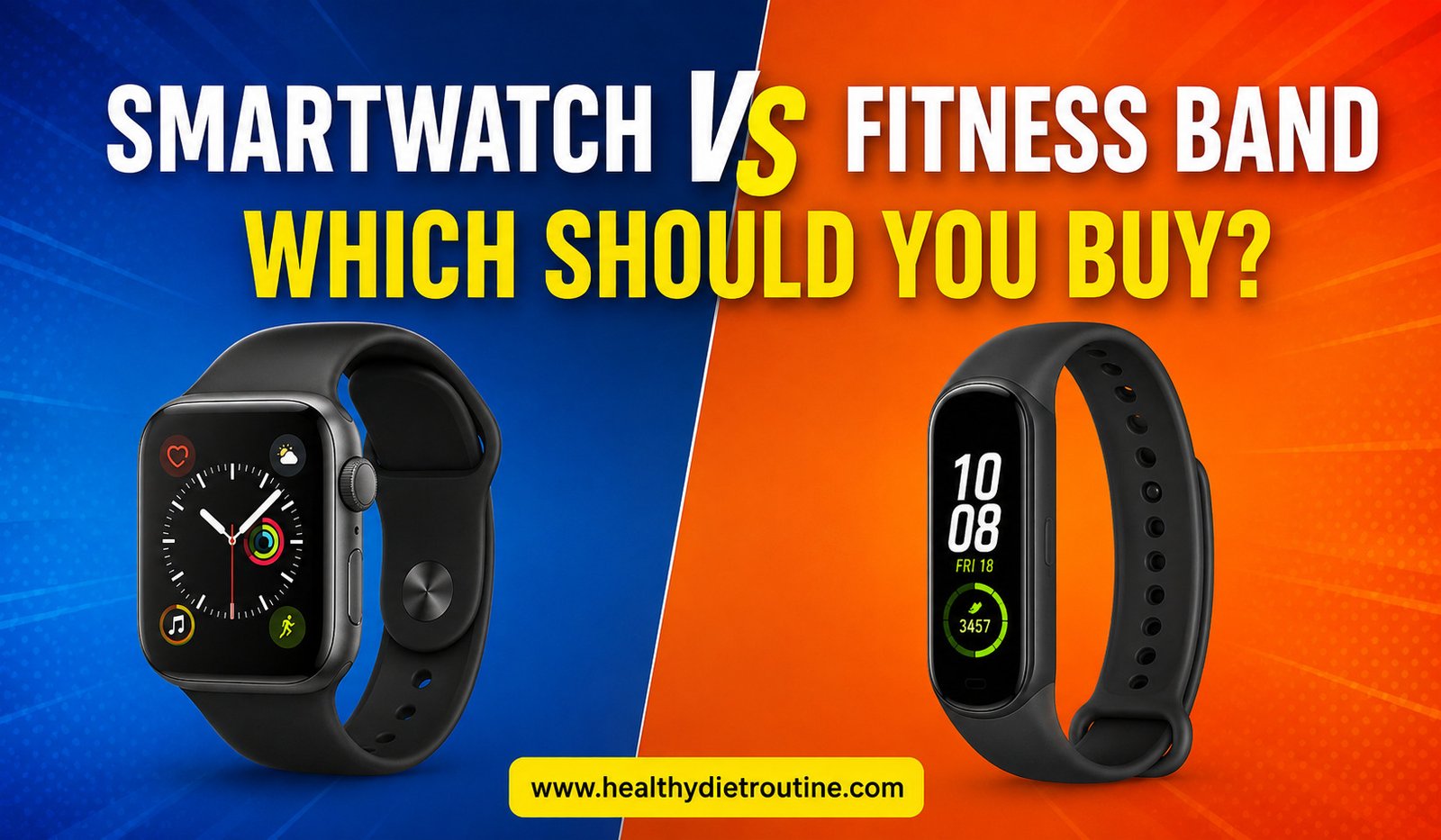
Wearable technology has become a common part of everyday life. From counting steps and monitoring workouts to receiving notifications and answering calls, both smartwatches and fitness bands can make it easier to stay connected and keep track of daily activity. But with so many affordable and feature-packed options available in 2026, choosing between a smartwatch vs fitness band can be confusing.
At first glance, the two devices may appear similar. Both can monitor activities, track heart rate, record sleep, and display fitness information. The major difference is their purpose. A fitness band is generally designed to focus on health and activity tracking, while a smartwatch combines fitness features with smartphone-style functions such as apps, notifications, calling, navigation, and payments.
So, which one should you buy? The answer depends less on which device has more features and more on how you actually plan to use it.
What Is a Fitness Band?
A fitness band is a lightweight wearable primarily designed for health and activity tracking. Typical features include step counting, heart-rate monitoring, sleep tracking, calorie estimates, workout modes, and sometimes blood oxygen monitoring.
Many modern fitness bands now have bright AMOLED displays, so the old idea that fitness bands are simply tiny screenless devices is no longer accurate. Some newer trackers also offer surprisingly detailed health and activity information while maintaining a slim design.
Their biggest advantage is simplicity. You can wear one throughout the day without feeling like you are carrying another miniature smartphone on your wrist.
What Is a Smartwatch?
A smartwatch is designed to do much more than track fitness. It can act as an extension of your smartphone, allowing you to receive notifications, answer calls, use applications, control music, check calendars, navigate with GPS, and sometimes make contactless payments.
Smartwatches also typically have larger displays and more powerful processors than fitness bands. Depending on the operating system and model, they can support third-party applications and provide more extensive customization.
The trade-off is that these additional capabilities generally result in higher prices and shorter battery life. Current buying guides commonly place many fitness trackers at around a week or more of battery life, while many smartwatches require charging every one to five days depending on features and usage.
Smartwatch vs Fitness Band: Key Differences
The easiest way to understand the difference is to look at what each device is designed to prioritize.
Fitness Tracking
Both categories can track common metrics such as steps, heart rate, workouts, and sleep. A fitness band may actually be the better choice if these are the only features you need.
Because fitness bands generally have fewer smartphone functions, they can remain focused on collecting activity and health information without constantly displaying notifications.
Smartwatches, meanwhile, can offer additional sensors and features depending on the model. Premium watches may include GPS, ECG-related functions, advanced workout tracking, skin-temperature sensors, and other health tools. However, more sensors do not automatically mean better results for every user.
Consumer wearables should also be treated as wellness and fitness devices rather than replacements for professional medical equipment.
Display and Design
Fitness bands are usually slimmer and lighter. This can make them particularly comfortable for sleep tracking and continuous wear.
Smartwatches generally have larger screens that make messages, workout statistics, maps, and other information easier to view. A larger screen is useful if you expect to interact with the device frequently.
If you want a wearable that mostly stays in the background, a fitness band may feel more natural. If you want to actively use your wrist as a small screen, a smartwatch has the advantage.
Battery Life
Battery life is one of the biggest practical differences between the two.
Many fitness bands can run for approximately a week or longer depending on the model and settings. Some specialized trackers can last substantially longer. Smartwatches usually need charging more frequently because their larger displays, processors, GPS, apps, and connectivity consume more power.
This matters particularly if you want continuous sleep tracking. A device that frequently needs to be removed for charging may create gaps in your data.
For users who dislike charging gadgets regularly, a fitness band can therefore be a much more convenient option.
Notifications and Calling
This is an area where smartwatches clearly have the advantage.
A smartwatch can provide notifications for messages, calls, calendars, applications, and other phone activity. Some models also support Bluetooth calling, allowing you to answer or make calls directly from your wrist.
Fitness bands usually provide more limited notification functionality. Some can display incoming messages or call alerts, but they are generally not designed to replace smartphone communication.
If you spend a lot of time in meetings, at work, or away from your phone, smartwatch notification features can be genuinely useful.
GPS and Outdoor Workouts
If you regularly run, cycle, hike, or participate in outdoor sports, built-in GPS can be an important consideration.
Many smartwatches include GPS, allowing you to record routes and monitor distance without carrying your phone during a workout. Some fitness bands also offer GPS, but it is less common, particularly among basic models.
For casual walking and general activity tracking, connected GPS through your phone may be sufficient. For serious outdoor training, a GPS-equipped smartwatch or dedicated sports watch is generally more convenient.
Apps and Smart Features
Smartwatches win when it comes to apps and connected features.
Depending on the ecosystem, you may be able to install applications, control smart-home devices, use navigation, manage music, respond to messages, and perform other tasks directly from the watch.
Fitness bands tend to keep things simpler. Their companion smartphone application is usually where you view detailed health and activity information.
This difference can be either an advantage or a disadvantage. If you want fewer distractions, a fitness band may be preferable. If you want more functionality on your wrist, the smartwatch makes more sense.
Which Is Better for Sleep Tracking?
Both devices can be useful for sleep tracking, provided they are comfortable enough to wear overnight.
A fitness band often has an advantage because its smaller, lighter design can make it less noticeable while sleeping. Longer battery life also reduces the need to remove it for charging.
Smartwatches can provide sophisticated sleep features, particularly premium models, but their larger size may not appeal to everyone.
If sleep tracking is one of your main reasons for buying a wearable, comfort should be more important than the number of features listed on the box.
Which Is Better for Fitness?
For basic fitness goals, a fitness band is usually sufficient.
If your main objectives are reaching a daily step target, monitoring general activity, tracking heart rate, and recording sleep, you may not need a full smartwatch.
However, people who participate in running, cycling, swimming, strength training, hiking, or structured sports may benefit from a smartwatch with GPS, advanced workout modes, detailed training metrics, and larger on-screen information.
In 2026, screen-free and minimalist fitness trackers are also becoming more popular among users who want health data without constant screen interaction.
Which Is Better for Everyday Use?
This depends on your lifestyle.
A fitness band is a better choice if you:
- Mainly want health and fitness tracking
- Prefer a lightweight wearable
- Want longer battery life
- Do not need many apps
- Want fewer smartphone distractions
- Have a limited budget
A smartwatch is a better choice if you:
- Want calls and notifications on your wrist
- Need GPS for outdoor activities
- Want access to apps
- Prefer a large, bright display
- Want music, navigation, or payment features
- Plan to use the wearable as a smartphone companion
Price and Value
Fitness bands generally cost less than smartwatches, although the gap has narrowed as premium fitness trackers have become more advanced.
In India, entry-level fitness bands can be relatively inexpensive, while smartwatches span a much wider range from budget models to premium devices. The right choice is therefore not necessarily the cheapest one.
Instead, consider how many features you will actually use. Paying extra for calling, GPS, apps, and advanced sensors does not provide much value if you only want step and sleep tracking.
At the same time, buying a very basic band and later discovering that you need GPS or smartwatch notifications can result in spending more money on another device.
Don’t Ignore Phone Compatibility
Before buying either device, check whether it works properly with your smartphone.
Apple Watch models are designed around Apple’s ecosystem, while Wear OS watches are primarily designed for Android phones, with compatibility varying by model. Other brands use their own operating systems and companion applications.
The best wearable is one that works smoothly with the phone you already own. Buying based only on specifications without checking compatibility can lead to frustrating limitations.
Smartwatch vs Fitness Band: Final Verdict
So, smartwatch vs fitness band which should you buy?
If your priority is fitness tracking, comfort, simplicity, and battery life, choose a fitness band. It can provide the essential health and activity information most people need without adding unnecessary complexity.
If you want fitness tracking plus calls, apps, GPS, notifications, navigation, and other smartphone-style features, a smartwatch is worth considering.
There is no universal winner. The best choice depends on what you expect from the device every day. A fitness-focused person may be happier with a lightweight band that lasts for many days, while someone who wants a connected device on their wrist may find a smartwatch far more useful.
Before buying, make a short list of the three features you will use most often. If those features are mainly related to health and exercise, a fitness band is probably enough. If you want your wrist device to handle communication and everyday smartphone tasks as well, a smartwatch is the better investment.
Ultimately, the best wearable is not the one with the longest feature list. It is the one you will actually wear consistently and use comfortably every day.