
Digital vs Manual Blood Pressure Monitors: Which One Should You Choose?
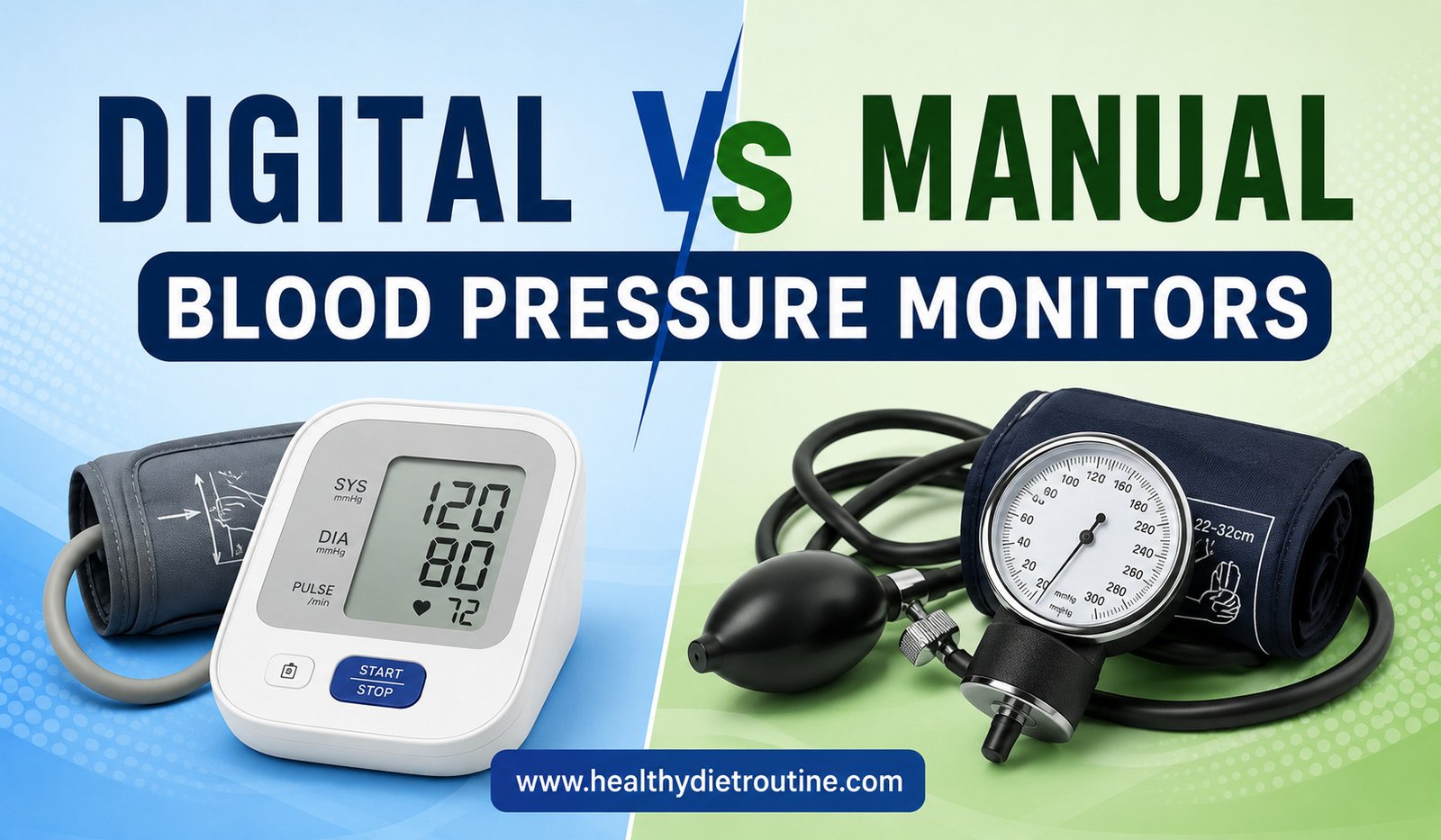
Monitoring blood pressure at home has become a practical part of health management for many people. Whether you want to keep track of your readings occasionally or monitor them regularly, choosing the right blood pressure monitor can make the process easier. Two common options are digital blood pressure monitors and manual blood pressure monitors.
Both types are based on the same basic principle: measuring pressure in the arteries as the heart beats and relaxes. However, the way they collect and display readings is quite different. Digital monitors automate much of the process, while manual monitors require a cuff, a stethoscope, and the ability to identify blood-flow sounds.
So, which is better—digital or manual? The answer depends on who will use the device, how often it will be used, and how comfortable the user is with taking blood pressure measurements correctly.
What Is a Digital Blood Pressure Monitor?
A digital blood pressure monitor uses an electronic sensor to detect pressure changes in the cuff. Most home models automatically inflate the cuff and then display the systolic pressure, diastolic pressure, and pulse rate on a digital screen.
Some modern models also offer additional features such as irregular-heartbeat detection, multiple-user profiles, memory storage, smartphone connectivity, and averaging of several readings.
The biggest advantage is convenience. A person can generally take a reading without needing another individual to operate the equipment or listen through a stethoscope.
Digital monitors are particularly popular for home use because they reduce the amount of technical skill required to obtain a reading.
What Is a Manual Blood Pressure Monitor?
A manual blood pressure monitor, often called an aneroid blood pressure monitor, generally consists of an inflatable cuff, a pressure gauge, and a stethoscope.
Instead of relying on an electronic sensor, the person taking the measurement listens for specific sounds through the stethoscope while gradually releasing pressure from the cuff. These sounds are used to determine systolic and diastolic blood pressure.
Manual monitors are commonly used by trained healthcare professionals because they can provide accurate readings when the equipment is properly maintained and the user knows the correct technique.
However, they can be more difficult for beginners to use accurately at home.
Digital vs Manual Blood Pressure Monitors: Main Differences
The biggest difference between the two is ease of use.
A digital monitor typically requires the user to place the cuff correctly, press a button, and remain still while the machine performs the measurement. A manual monitor requires more steps and greater familiarity with the measurement process.
For someone taking their own blood pressure at home, a digital model is usually more convenient.
Manual devices, on the other hand, can be useful when a trained person is available to take the measurement. Healthcare professionals are generally familiar with the technique and can recognize situations where the reading may need to be repeated.
Accuracy: Are Digital Monitors Reliable?
A common misconception is that manual blood pressure monitors are always more accurate than digital ones. In reality, the accuracy of a blood pressure monitor depends heavily on the device, cuff size, validation, maintenance, and measurement technique.
The American Heart Association recommends using a validated automatic upper-arm monitor for home blood pressure monitoring rather than relying on wrist or finger devices. It also emphasizes choosing the correct cuff size and following proper measurement procedures.
A high-quality, validated digital upper-arm monitor can therefore be an excellent choice for home use.
Manual monitors can also be highly accurate when used correctly, but poor technique, hearing difficulties, an incorrectly calibrated gauge, or difficulty identifying Korotkoff sounds can affect the result.
Ease of Use
Digital monitors have a clear advantage in this category.
Most models provide simple instructions and display the result in large numbers. Some even alert users when movement or incorrect cuff placement may have affected the measurement.
Manual monitors require the user to coordinate cuff inflation, gradual pressure release, stethoscope positioning, and sound recognition. This can be challenging without proper training.
For elderly users or people who live alone, an automatic digital monitor may therefore be significantly easier to operate.
Cuff Placement Matters More Than You Think
Regardless of the type of monitor, correct cuff placement is essential.
For most home users, an upper-arm cuff is preferable. The cuff should fit the arm properly, and the arm should be supported at approximately heart level during the measurement.
A cuff that is too small can produce an inaccurately high reading, while an inappropriate cuff size can make measurements less reliable.
The American Heart Association recommends sitting quietly for about five minutes before taking a reading and avoiding factors such as exercise, caffeine, and smoking for around 30 minutes beforehand.
Digital Monitors Are Better for Regular Home Monitoring
If you want to monitor your blood pressure regularly at home, a digital monitor is generally the more practical option.
Many models automatically store readings, making it easier to identify patterns over time. Some devices can store measurements for multiple users, while connected models can transfer readings to a smartphone application.
This can make it easier to share a record with a healthcare professional when appropriate.
A manual monitor can certainly be used at home, but maintaining consistent technique from one reading to another can be more difficult for someone without training.
When Is a Manual Monitor a Better Choice?
Manual monitors still have an important role.
They can be useful for trained healthcare professionals, medical students learning blood pressure measurement, and situations where an electronic monitor needs to be cross-checked.
They do not require batteries or electronic components, which can be an advantage in certain settings. However, the pressure gauge needs appropriate maintenance and the user must know how to operate the device correctly.
For everyday home monitoring by someone without clinical training, the practical advantages of an automatic digital monitor generally outweigh these benefits.
Digital Monitor Features to Look For
If you decide to buy a digital blood pressure monitor, do not choose one based only on price or the number of features.
Validation should be a priority. Look for a device that has been independently validated for accuracy. Organizations such as the American Medical Association’s ValidateBP initiative provide information about validated blood pressure devices.
An upper-arm design is generally preferable to finger or wrist devices for routine home monitoring. The cuff should also be available in a size appropriate for your arm.
Other useful features include:
- Large, easy-to-read display
- One-touch operation
- Memory storage
- Multiple-user profiles
- Irregular-heartbeat detection
- Average-reading function
- Bluetooth or app connectivity
- Automatic inflation and deflation
You do not need every feature. Choose the functions that genuinely make monitoring easier.
How to Take a Better Blood Pressure Reading
Even a validated monitor can produce a misleading reading if the measurement technique is poor.
Before measuring, sit quietly with your back supported and your feet flat on the floor. Avoid crossing your legs. Rest your arm on a table or other surface so that the cuff is approximately level with your heart.
Place the cuff directly on bare skin rather than over clothing. Stay quiet and avoid talking during the measurement.
For greater consistency, the American Heart Association recommends taking two readings one minute apart and recording the results. Your healthcare professional may recommend a different monitoring schedule depending on your situation.
Digital vs Manual: Cost Considerations
Manual monitors can be inexpensive, particularly basic aneroid models. However, the lower purchase price does not necessarily make them the better choice for everyone.
Digital monitors are available across a wide price range. Basic validated models can provide the essential functions needed for home monitoring without the expense of advanced connectivity.
When comparing prices, think about long-term usability. A slightly more expensive monitor that is easy to use correctly may provide more value than a cheaper device that is difficult to operate.
Which One Is Better for Older Adults?
For many older adults, digital monitors can be easier because they automate inflation and provide a clear numerical result.
Large displays, simple controls, and memory functions can also make regular monitoring less complicated.
However, physical limitations, hearing ability, arm size, and familiarity with technology vary from person to person. If an older adult has difficulty operating a particular device, another model or assistance from a caregiver may be more appropriate.
Can You Compare Digital and Manual Readings?
If you already use a digital monitor and want to check its readings against a manual device, it is best to have the comparison performed by a healthcare professional.
Bring your home monitor to a medical appointment when possible and ask the professional to compare readings using appropriate technique. This can help identify whether your home device is giving results that are reasonably consistent with the clinical measurement.
Do not assume that a difference between two readings automatically means one device is defective. Blood pressure naturally changes from minute to minute, and differences can result from measurement technique or timing.
Common Mistakes to Avoid
One of the most common mistakes is using an incorrectly sized cuff. Another is measuring immediately after physical activity, caffeine, or a stressful event.
Talking during the measurement, crossing your legs, unsupported arms, and placing the cuff over clothing can also affect readings.
It is also important not to become overly concerned about a single unusual result. Blood pressure varies throughout the day. If you repeatedly obtain readings that concern you, discuss them with a qualified healthcare professional.
If you get a very high reading accompanied by symptoms such as chest pain, shortness of breath, weakness, vision changes, or difficulty speaking, seek urgent medical attention rather than relying on repeated home measurements.
Final Verdict: Digital or Manual?
For most people looking for a blood pressure monitor for home use, a validated automatic upper-arm digital monitor is the better choice. It is easier to operate, requires less technical training, and often provides useful features such as memory and averaging.
A manual blood pressure monitor remains valuable when operated by someone properly trained in auscultatory blood pressure measurement. It can be reliable and does not depend on batteries, but it is generally less convenient for independent home monitoring.
Ultimately, the best blood pressure monitor is not necessarily the most expensive or technologically advanced model. It is a validated device with the correct cuff size that you can use consistently and correctly.
If you monitor blood pressure regularly, focus on proper technique, record your readings, and discuss your results with your healthcare professional. A reliable home monitor can be a useful tool for understanding your blood pressure over time, but it should complement—not replace professional medical care.