
Simple Desk Stretches for Long Working Hours
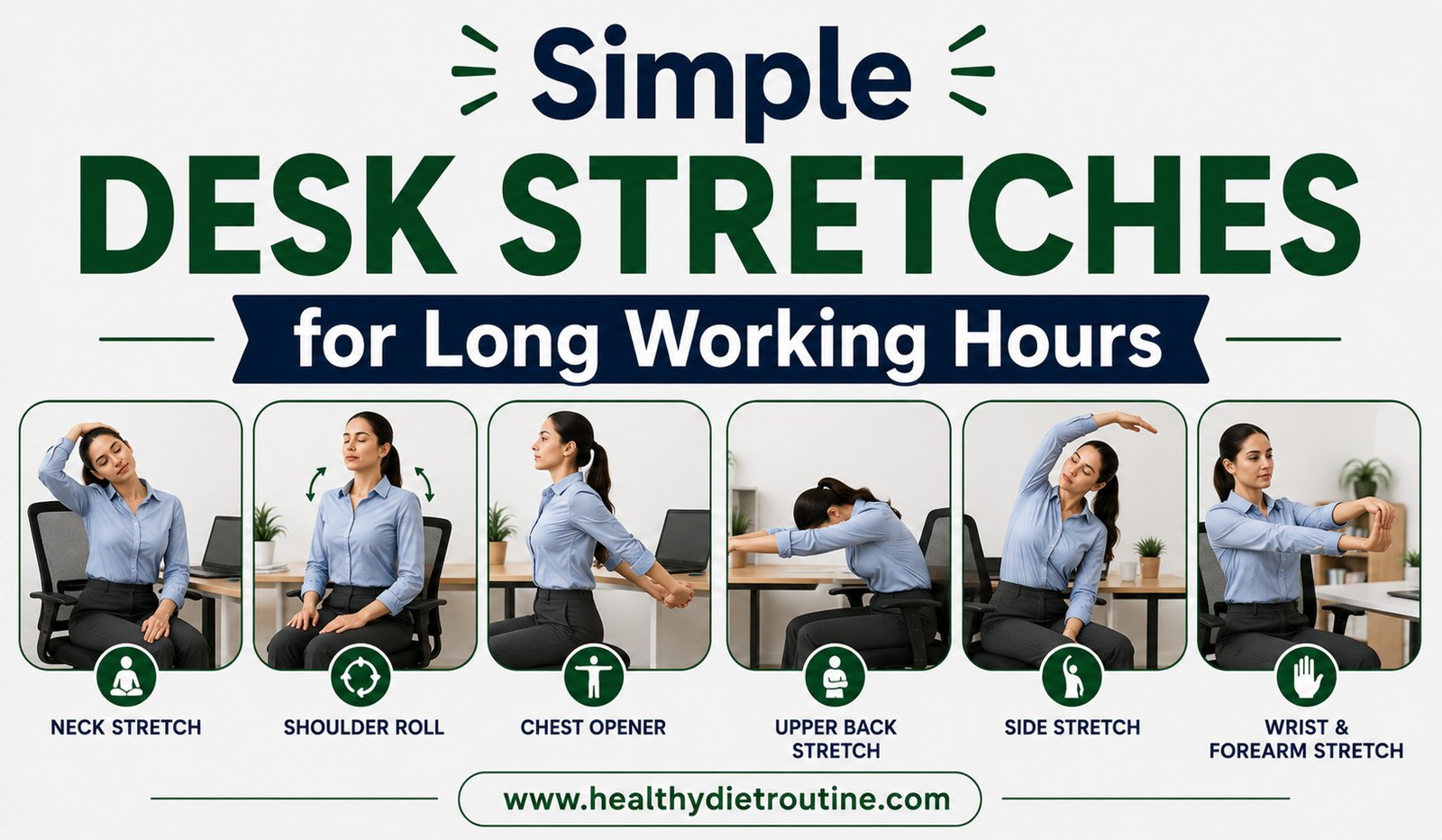
Spending long hours at a desk can make your body feel stiff and uncomfortable. Whether you work from home, sit in an office, study for several hours, or spend much of your day using a computer, staying in one position for too long can leave your neck, shoulders, back, wrists, and legs feeling tense.
The good news is that you do not need a gym or a long exercise session to add more movement to your workday. Simple desk stretches and short movement breaks can help you change positions and give your body a break from prolonged sitting.
These stretches are easy to perform and require little or no equipment. However, they should feel comfortable rather than painful. Move slowly, avoid forcing a joint, and stop if a particular movement causes sharp or unusual pain.
Why Desk Stretches Matter
When you remain seated for a long period, your body stays in a relatively fixed position. You may also lean toward a computer screen, raise your shoulders while typing, or keep your wrists and hands in the same position.
Taking regular movement breaks gives you an opportunity to change posture and move areas that may have become stiff.
Desk stretches are not a replacement for regular exercise. Instead, they can complement an active lifestyle by breaking up long periods of sitting.
Even a few minutes of movement throughout the workday can make your routine feel less sedentary.
1. Neck Side Stretch
Neck tension is common when working at a computer, particularly if you spend hours looking at the same screen.
Sit comfortably with your back reasonably upright. Slowly tilt your head toward one shoulder without lifting the opposite shoulder. Hold the position gently for several seconds, then return your head to the center.
Repeat on the other side.
Do not pull your head down with your hand or force the stretch. The movement should remain gentle and controlled.
2. Shoulder Rolls
Shoulder rolls are simple and can be performed while sitting or standing.
Relax your arms by your sides. Slowly move your shoulders upward, then backward and downward in a smooth circular motion.
Repeat several times and then change direction.
This movement can be particularly useful after spending a long period typing or working with a mouse.
Keep the movement comfortable and avoid rushing through the circles.
3. Upper-Back Stretch
Long periods at a desk can encourage a rounded posture. A gentle upper-back stretch can provide a useful change of position.
Sit upright and extend your arms in front of you. Bring your hands together or reach forward comfortably. Gently round your upper back while allowing your shoulders to move forward.
Hold the position briefly, then return to a neutral posture.
Avoid collapsing your entire body forward. Focus on creating a gentle stretch across the upper back.
4. Chest Opener
Working at a computer often involves keeping the arms in front of the body. A chest-opening movement can provide a different position.
Sit or stand upright and gently move your shoulders back. If comfortable, place your hands behind you and bring them slightly toward each other.
Keep your chest open without forcing your shoulders backward.
Hold for several seconds, breathe normally, and then relax.
If placing your hands behind your back is uncomfortable, simply draw your shoulders gently backward while keeping your arms relaxed.
5. Wrist and Forearm Stretch
Typing and using a mouse can involve repetitive movements of the hands and wrists.
Extend one arm in front of you with the palm facing upward. With the other hand, gently move the fingers downward until you feel a mild stretch along the forearm.
Hold briefly, then release.
You can also turn the palm downward and gently stretch the opposite side of the wrist.
Avoid pushing hard. If you regularly experience wrist pain, numbness, tingling, or weakness, do not rely on stretching alone; consider discussing the symptoms with a healthcare professional.
6. Seated Spinal Rotation
A seated rotation can help you move your upper body after remaining in one position.
Sit upright with both feet comfortably supported. Place one hand on the outside of your opposite thigh or on the chair, depending on what feels comfortable.
Slowly rotate your upper body to one side while keeping the movement controlled. Return to the center and repeat on the other side.
Do not force the rotation or twist suddenly.
7. Seated Hamstring Stretch
Your legs can also become stiff after prolonged sitting.
Move toward the front of your chair and extend one leg forward with the heel resting on the floor. Keep your back relatively straight and gently lean forward from your hips until you feel a comfortable stretch along the back of your leg.
Return to the starting position and repeat on the other side.
You do not need to reach your toes. The goal is a gentle stretch rather than maximum flexibility.
8. Ankle Circles
Ankle circles are easy to perform while sitting at your desk.
Lift one foot slightly from the floor and slowly rotate your ankle in one direction several times. Then reverse the direction.
Switch to the other foot.
This simple movement gives your ankles a chance to move through different positions after being still for a long period.
9. Seated Hip Stretch
Sitting for extended periods can leave the hips feeling stiff.
Sit upright and place one ankle over the opposite thigh if this position is comfortable for you. Keep your back straight and gently lean forward until you feel a mild stretch around the hip.
Return to the starting position and switch sides.
If your knees or hips feel uncomfortable in this position, skip the stretch and choose a gentler movement instead.
10. Standing Calf Stretch
A standing calf stretch can be useful when you take a short break away from your chair.
Stand facing a wall or sturdy surface for support. Step one foot backward while keeping the heel down. Bend the front knee slightly and shift your weight forward until you feel a gentle stretch in the calf of the back leg.
Hold briefly and switch sides.
Keep the back foot positioned comfortably rather than forcing it into an extreme angle.
11. Gentle Standing Back Extension
After sitting for a long time, standing up and changing your spinal position can feel refreshing.
Stand with your feet comfortably apart and place your hands on your hips or lower back. Gently straighten your posture and lean back only slightly if it feels comfortable.
Return to a neutral standing position.
This should be a small, controlled movement. Do not force your lower back into a deep bend.
12. Finger and Hand Movements
Your fingers may perform thousands of small movements during a typical computer-based workday.
Take a short break to open and close your hands slowly. Spread your fingers comfortably, then relax them. You can also gently rotate your wrists.
These movements take only a few seconds and can be performed without leaving your desk.
Combine Stretching With Movement Breaks
Stretching works best when it is part of a broader movement routine.
Instead of sitting continuously for several hours and then performing a long stretch session, try to interrupt prolonged sitting throughout the day.
Stand up to refill your water bottle, walk around the room, use the stairs when practical, or take a short walking break.
You can also perform one or two simple stretches whenever you notice yourself becoming stiff.
The goal is to change position regularly rather than remain in the same posture all day.
Improve Your Desk Setup
Stretching can help you move during the workday, but your workstation also matters.
Position your monitor so that you can work comfortably without constantly bending your neck. Keep your keyboard and mouse within an easy reach and use a chair that provides comfortable support.
Your feet should be able to rest comfortably, and your desk should allow you to work without excessive reaching.
A comfortable setup can make it easier to maintain a more natural working position.
Create a Simple Desk Stretch Routine
You do not need to memorize a long list of movements.
A simple routine could include shoulder rolls, a neck stretch, wrist movements, an upper-back stretch, and a brief walk around the room.
After another period of work, you could add a seated hamstring stretch, ankle circles, or a gentle hip movement.
The routine can take only a few minutes and can be adapted around meetings, study sessions, or work deadlines.
Listen to Your Body
Stretching should generally feel gentle and controlled. You should not have to force your body into a position to make a stretch effective.
If you experience sharp pain, significant discomfort, numbness, tingling, weakness, dizziness, or other unusual symptoms, stop the movement.
Persistent pain should not simply be attributed to sitting at a desk. If symptoms continue or interfere with your normal activities, consider seeking appropriate professional advice.
Final Thoughts
Long working hours do not have to mean staying completely still for the entire day. Simple desk stretches can provide opportunities to move your neck, shoulders, back, wrists, hips, and legs while breaking up prolonged periods of sitting.
Try shoulder rolls, neck stretches, wrist movements, gentle spinal rotations, leg stretches, and ankle circles throughout your workday. Combine these movements with short walks and regular changes in position.
The most important habit is consistency. You do not need a long stretching session to make movement part of your workday. A few minutes here and there can help create a more active and comfortable daily routine.