
Wrist vs Upper-Arm Blood Pressure Monitors: Which Is Better for Home Use?
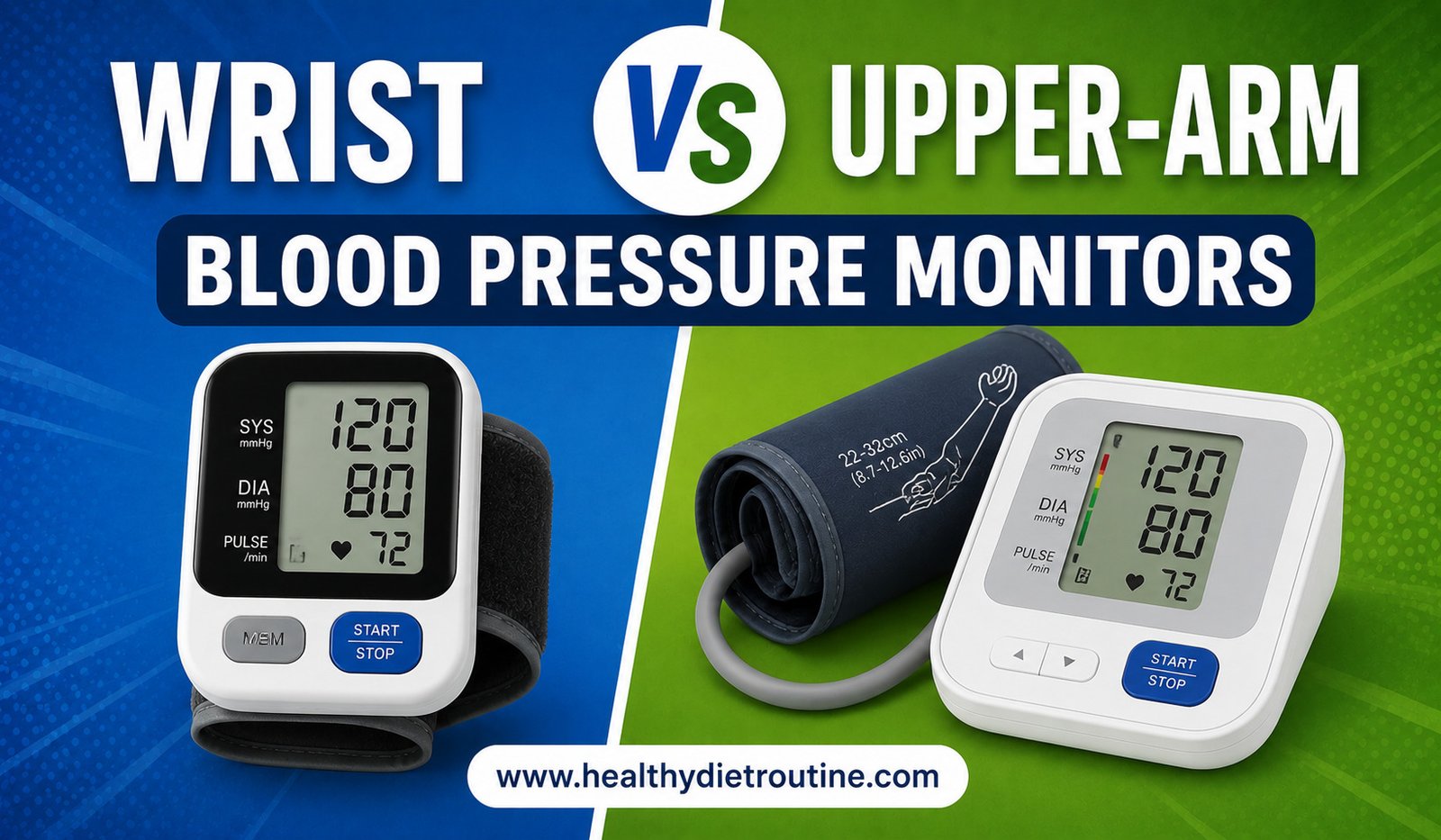
Home blood pressure monitoring can be a useful way to keep track of blood pressure between healthcare appointments. With different types of monitors available, one of the most common decisions is whether to choose a wrist blood pressure monitor or an upper-arm blood pressure monitor.
Both devices are designed to measure blood pressure, but they differ significantly in how they are positioned and used. Wrist monitors are compact and convenient, while upper-arm monitors are generally recommended for routine home monitoring because they tend to provide more reliable readings when used correctly.
If you are planning to buy a blood pressure monitor for your home, understanding these differences can help you make a more informed choice.
What Is an Upper-Arm Blood Pressure Monitor?
An upper-arm blood pressure monitor uses an inflatable cuff that wraps around the upper arm, usually with the cuff positioned so that it is approximately level with the heart.
Most modern home upper-arm monitors are automatic. You place the cuff correctly, press a button, and the device inflates and calculates the reading electronically.
The American Heart Association recommends using a validated automatic upper-arm monitor for home blood pressure monitoring. It also recommends choosing an appropriately sized cuff and following proper measurement technique.
This makes upper-arm monitors the standard starting point for most people looking for a home blood pressure device.
What Is a Wrist Blood Pressure Monitor?
A wrist blood pressure monitor uses a smaller cuff that wraps around the wrist rather than the upper arm.
Its compact design makes it easy to carry and can be particularly appealing to people who find conventional upper-arm cuffs uncomfortable.
However, wrist monitors require more careful positioning. The wrist generally needs to be held at heart level during measurement, and even a small change in position can influence the result.
Because of this sensitivity, wrist monitors can be more difficult for some users to operate consistently.
Wrist vs Upper-Arm: The Main Difference
The biggest difference is measurement location and positioning.
An upper-arm monitor measures pressure around the upper arm, while a wrist monitor measures it at the wrist.
Blood vessels in the wrist are smaller and positioned farther from the heart than those in the upper arm. The measurement can therefore be more sensitive to body position and technique.
The American Heart Association specifically recommends upper-arm devices for home monitoring and advises users who rely on wrist monitors to ensure that the wrist is positioned correctly at heart level.
Which Is More Accurate?
For most home users, a validated upper-arm monitor is generally the preferred option.
That does not mean every wrist monitor is inaccurate. A validated wrist device can provide useful measurements when used exactly as instructed. However, wrist measurements can be more easily affected by positioning.
If your wrist is below heart level, for example, the reading may be different from what you would obtain when the wrist is correctly positioned.
Upper-arm monitors are generally easier to position consistently, which is one reason they are preferred for routine monitoring.
The American Medical Association’s ValidateBP initiative provides a searchable list of blood pressure devices that have undergone validation testing.
Why Position Matters So Much
Blood pressure measurement is sensitive to body position.
When using an upper-arm monitor, sit with your back supported, keep your feet flat on the floor, and rest your arm on a table so the cuff is approximately level with your heart.
With a wrist monitor, you generally need to raise and support the wrist at heart level while keeping the device positioned correctly.
This additional positioning requirement means wrist monitors can produce inconsistent readings if the user changes their posture from one measurement to another.
Comfort and Convenience
This is where wrist monitors have a clear advantage.
A wrist cuff is smaller and can be easier to put on without assistance. People who find upper-arm cuffs uncomfortable may also prefer the compact design.
Wrist monitors can be particularly convenient for travel because they take up less space.
Upper-arm monitors are bulkier, but their larger cuff can be easier to position correctly once you become familiar with the process.
For everyday home monitoring, accuracy and consistency should generally take priority over portability.
Ease of Use
Both types can be simple to operate, but they require different techniques.
With an upper-arm monitor, the main challenge is putting the cuff on correctly and selecting the right cuff size.
With a wrist monitor, cuff placement is relatively straightforward, but the wrist must be held at the correct height and angle.
For many older adults or people who have difficulty maintaining a steady position, an upper-arm monitor may be easier to use consistently.
Cuff Size Is Important
One of the most overlooked aspects of choosing a blood pressure monitor is cuff size.
An incorrectly sized cuff can affect readings. The cuff should match the circumference of your arm according to the manufacturer’s specifications.
Upper-arm monitors are available with different cuff sizes, including larger options for people who need them.
Before purchasing, measure your arm and check the monitor’s supported cuff range rather than assuming that a standard cuff will fit everyone.
Which Is Better for Older Adults?
For most older adults who need regular home monitoring, a validated upper-arm monitor is usually the better option.
It may provide a more straightforward measurement process and is the type recommended by major health organizations for home monitoring.
However, individual circumstances matter. Someone with difficulty fitting an upper-arm cuff may find a wrist monitor easier to use.
If you prefer a wrist device, discuss your choice with your healthcare professional and consider bringing the monitor to an appointment so its readings can be compared with measurements taken in the clinic.
Which Is Better for People With Large Arms?
Upper-arm monitors are available with different cuff sizes, so people with larger arms should look for a device that specifically supports their arm circumference.
Do not use a standard cuff simply because it is the one included with the monitor.
A wrist monitor may appear convenient if finding a suitable upper-arm cuff is difficult, but it is still important to choose a validated device and follow positioning instructions carefully.
If you are uncertain about which type is appropriate for you, ask your healthcare professional for guidance.
Which Is Better for Travel?
If portability is your top priority, wrist monitors have an obvious advantage.
They are compact, lightweight, and easy to pack. For occasional travel, this convenience can be valuable.
However, some modern upper-arm monitors are also designed to be relatively compact. If you travel frequently but require regular blood pressure monitoring, a smaller upper-arm model may provide a better balance between portability and measurement reliability.
Features to Look for in a Blood Pressure Monitor
Whether you choose an upper-arm or wrist model, look beyond the display and price.
A good home monitor should ideally be validated for accuracy. It should also have a cuff that fits correctly and controls that are easy to operate.
Useful features may include:
- Large, readable numbers
- One-button operation
- Memory storage
- Multiple-user profiles
- Average-reading functions
- Irregular-heartbeat alerts
- Automatic inflation and deflation
- Smartphone connectivity
You do not necessarily need every feature. A simple validated monitor that you can use correctly is more valuable than an expensive model filled with functions you will never use.
How to Take a More Reliable Reading
The monitor itself is only part of the equation. Your measurement technique can have a major effect on the result.
The American Heart Association recommends avoiding exercise, caffeine, and smoking for about 30 minutes before measurement. Sit quietly for at least five minutes beforehand, keep your back supported, and avoid talking during the reading.
For an upper-arm monitor, keep your arm supported with the cuff at heart level.
For a wrist monitor, carefully follow the manufacturer’s instructions for positioning the wrist at heart level.
Taking two readings about one minute apart can also provide a more useful picture than relying on a single measurement. Your healthcare professional may recommend a specific monitoring schedule based on your circumstances.
Can You Use Both Types?
You can use both, but it is important not to assume that readings from a wrist monitor and an upper-arm monitor will be identical.
If you are considering switching from one type to another, take your home monitor to a healthcare appointment when possible. A professional can compare the device’s readings with a clinical measurement and help determine whether it is suitable for you.
This is especially useful if you have noticed significant differences between readings.
Common Mistakes to Avoid
A common mistake with wrist monitors is allowing the wrist to hang below heart level. Another is moving or talking during the measurement.
With upper-arm monitors, incorrect cuff size and placement are frequent problems.
Taking measurements immediately after exercise, drinking caffeine, or experiencing stress can also produce temporary changes.
It is better to establish a consistent measurement routine and look at patterns over time rather than becoming concerned about one isolated reading.
If you repeatedly receive unusually high readings, contact your healthcare professional. If a very high reading occurs with symptoms such as chest pain, difficulty breathing, weakness, vision changes, or difficulty speaking, seek urgent medical attention.
Final Verdict
When comparing wrist vs upper-arm blood pressure monitors, an upper-arm monitor is generally the better choice for routine home monitoring. It is the type recommended by the American Heart Association and can provide reliable readings when the device is validated, the cuff fits properly, and the measurement technique is correct.
A wrist monitor can still be useful when portability or physical comfort makes an upper-arm monitor difficult. However, correct wrist positioning is especially important.
If you are buying your first home blood pressure monitor, prioritize validation, cuff fit, ease of use, and proper measurement technique rather than simply choosing the smallest or most feature-packed device.
For most households, a validated automatic upper-arm monitor offers the best combination of convenience, consistency, and suitability for regular home blood pressure tracking.