
How to Keep a Simple Food and Fitness Journal
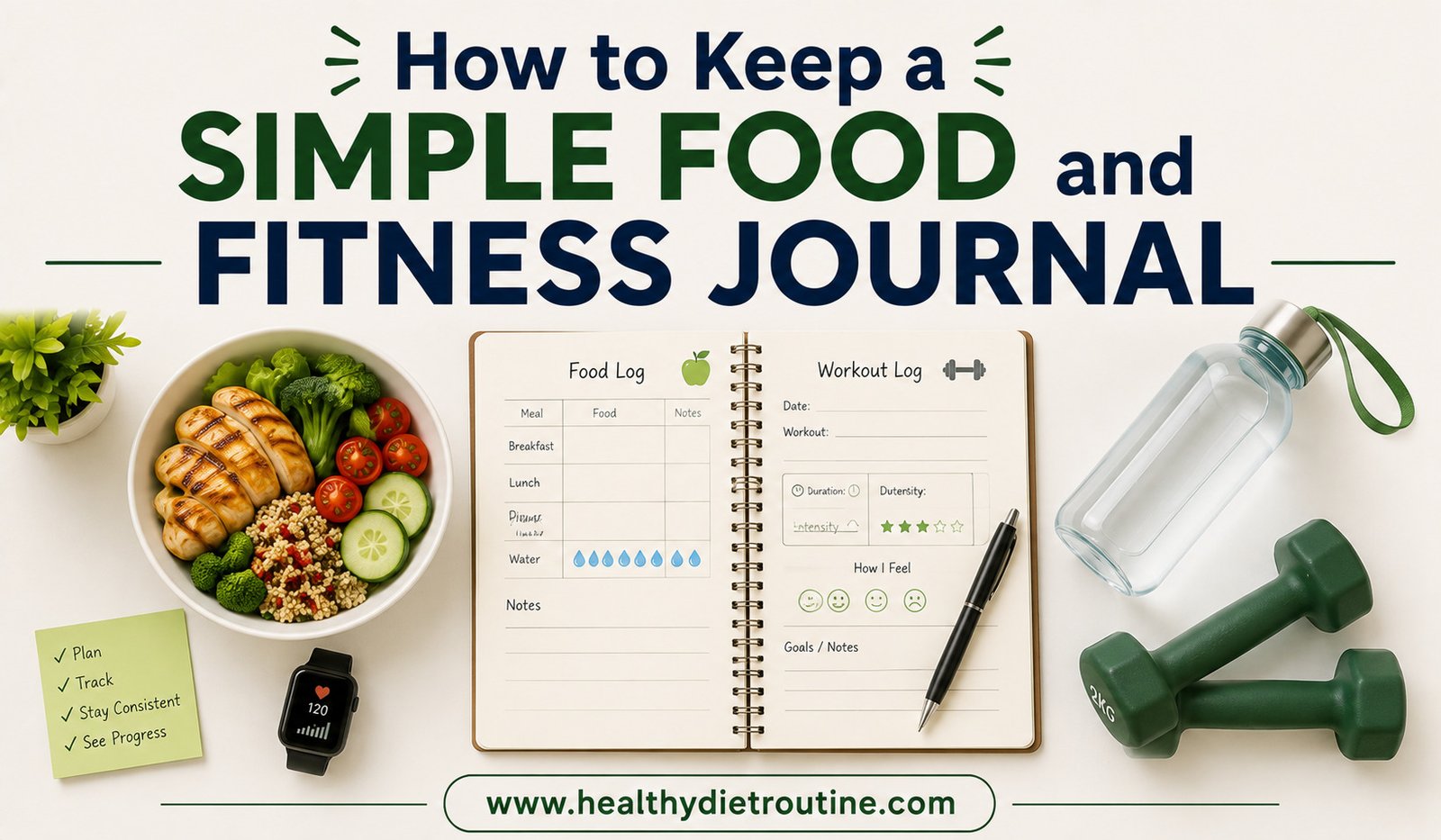
Keeping a food and fitness journal can be a simple way to understand your daily habits. You do not need a complicated spreadsheet, expensive app, or detailed nutrition knowledge to get started. A basic journal can help you notice patterns in your meals, physical activity, energy levels, sleep, and everyday routine.
The purpose of a food and fitness journal is not to judge everything you eat or turn exercise into a numbers game. Instead, it can help you become more aware of your habits and identify small areas where you may want to make changes.
Whether you are beginning a fitness routine or simply trying to become more consistent, a simple journal can provide useful information about your daily lifestyle.
What Is a Food and Fitness Journal?
A food and fitness journal is a record of what you eat, how you move, and sometimes how you feel throughout the day.
It can be as simple as a notebook with a few lines for breakfast, lunch, dinner, snacks, exercise, and general notes. You can also use a phone app, digital document, or calendar.
There is no single correct format. The best journal is one that you can maintain without feeling overwhelmed.
For many people, recording basic information is more useful than trying to document every tiny detail.
1. Choose a Format That Feels Easy
Start with the simplest method you are likely to use consistently.
A small notebook can work well if you enjoy writing by hand. A notes app may be more convenient if you always have your phone nearby. A spreadsheet can be useful if you like organizing information digitally.
Do not spend too much time creating a perfect tracking system before you begin.
The easier your journal is to access, the more likely you are to use it regularly.
2. Record Your Meals
Begin by writing down your main meals and snacks.
You can note what you ate without making the process overly detailed. For example:
Breakfast: Oats, banana, and yogurt
Lunch: Rice, vegetables, and dal
Snack: Fruit and nuts
Dinner: Chapati, vegetables, and a protein source
The purpose is to create a general picture of your eating habits.
You do not necessarily need to calculate calories or weigh every ingredient unless you have a specific reason to do so and know how to do it appropriately.
3. Include Your Drinks
It is easy to forget beverages when recording food.
Include water, tea, coffee, juices, soft drinks, smoothies, and other beverages you consume.
Recording drinks can help you notice habits that might otherwise be overlooked. For example, you may realize that you drink very little water during busy workdays or regularly consume caffeinated beverages late in the evening.
This information can help you make practical adjustments.
4. Record Your Exercise
After recording your meals, add a simple exercise section.
Write down the type of activity, approximate duration, and how difficult it felt.
For example:
Activity: Brisk walking
Duration: 30 minutes
Effort: Moderate
Or:
Activity: Bodyweight workout
Duration: 25 minutes
Notes: Felt energetic
You do not need to record every repetition or movement unless detailed tracking is useful for your particular training routine.
5. Track Everyday Movement
Fitness is not limited to formal workouts.
Your journal can also include walking, cycling to work, household chores, outdoor activities, playing with children, or other forms of physical movement.
Recording these activities provides a broader picture of how active your day actually was.
A day without a formal workout can still include plenty of movement.
6. Add Your Energy Level
One of the most useful additions to a food and fitness journal is a short note about how you feel.
You could rate your general energy on a simple scale, such as low, moderate, or high.
You can also write short observations such as:
- Felt energetic during the morning
- Tired after a late night
- Felt good during the walk
- Low energy during the afternoon
Over time, these notes may help you identify patterns between your daily routine and how you feel.
7. Record Your Sleep
Sleep can influence your energy, exercise performance, and daily routine, so consider including it in your journal.
Record approximately when you went to bed and woke up, or simply note how well you slept.
For example:
Sleep: 7 hours
Quality: Good
You can also make a brief note if your sleep was interrupted.
The purpose is not to obsess over exact numbers but to understand whether your sleep habits seem connected with how you feel during the day.
8. Note How Your Workout Felt
Two workouts that look identical on paper can feel very different.
After exercising, write down a quick observation.
You might say that the workout felt easy, moderate, challenging, or unusually tiring.
Over several weeks, these notes can help you recognize changes in your fitness and recovery.
If a normally comfortable workout suddenly feels extremely difficult, that may be useful information to consider when planning future activity.
9. Track Your Consistency
A journal can help you see how regularly you follow your planned routine.
Instead of focusing only on performance, count how many workouts you completed each week or how many days you included some form of movement.
For example, you might aim to complete three planned workouts per week.
Marking completed sessions on a calendar can provide a simple visual reminder of your consistency.
10. Avoid Making the Journal Too Complicated
One of the biggest mistakes people make is creating a tracking system that requires too much effort.
If recording every meal, ingredient, calorie, exercise, step, and measurement takes 30 minutes every day, you may eventually stop doing it.
Start with the essentials.
A useful daily entry might only take a few minutes:
Meals: What I ate
Activity: What I did
Sleep: Approximately how long
Energy: Low, moderate, or high
Notes: Anything unusual
You can always add more information later if you find it helpful.
11. Look for Patterns Instead of Judging Yourself
The journal should be a tool for learning, not criticizing yourself.
Instead of writing “I ate badly today,” record what actually happened.
Perhaps you skipped lunch because of work and became very hungry later. Maybe you had little energy because you went to bed late. Perhaps you felt better during exercise after eating a balanced meal beforehand.
These observations are more useful than labeling your choices as good or bad.
The goal is to understand what influences your routine.
12. Review Your Journal Weekly
Daily tracking becomes more useful when you occasionally review it.
At the end of each week, spend a few minutes looking for patterns.
Ask yourself:
- Did I exercise as often as planned?
- Did I eat regular meals?
- Did I drink enough fluids?
- How was my sleep?
- When did I have the most energy?
- What made it difficult to stay active?
- Which habits felt easy to maintain?
You may discover small patterns that are difficult to notice from a single day.
13. Set One Small Goal at a Time
Use the information from your journal to choose a realistic goal.
If you notice that you rarely move during working hours, your next goal could be taking short movement breaks.
If your workouts are inconsistent, you might schedule three manageable sessions each week.
If your meals are often rushed, you could prepare a few ingredients in advance.
Small goals are easier to maintain than trying to change every part of your lifestyle at once.
14. Use Photos If You Prefer
Some people find food photos easier than writing down every meal.
Taking a quick photo before eating can create a simple visual record. You can combine photos with short notes about exercise and energy.
This approach may be particularly useful if writing everything down feels inconvenient.
However, do not let food photography become stressful or interfere with your ability to enjoy meals.
15. Be Honest but Flexible
Your journal is only useful if it reflects your actual routine.
There is no benefit in leaving out a snack, skipped workout, or late-night meal because you think it looks unfavorable.
At the same time, you do not need to record every detail perfectly.
Missing an entry does not mean you have failed. Simply continue the next day.
Consistency over time matters more than maintaining a flawless record.
16. Avoid Becoming Obsessed With Numbers
Fitness tracking can become unhelpful when every meal and workout becomes a source of anxiety.
You do not need to constantly calculate calories, weigh yourself, or chase exercise numbers to make progress.
If tracking makes you feel stressed or overly focused on food and exercise, simplify your journal.
For many people, qualitative information such as meal choices, activity type, sleep, and energy is enough to identify useful patterns.
A Simple Daily Journal Template
You can use a format like this:
Date: __________
Breakfast: __________
Lunch: __________
Dinner: __________
Snacks: __________
Drinks: __________
Exercise: __________
Duration: __________
General movement: __________
Sleep: __________
Energy: Low / Moderate / High
How I felt today: __________
Tomorrow’s small goal: __________
This takes only a few minutes and can be adapted to your needs.
How Long Should You Keep a Journal?
There is no requirement to maintain a food and fitness journal permanently.
Try tracking your routine for a few weeks and see whether you find it useful. A month can provide enough information to identify recurring patterns.
After that, you may decide to continue daily tracking, switch to weekly check-ins, or stop detailed tracking once you understand your habits.
The journal should support your lifestyle rather than become another responsibility.
When Professional Guidance May Help
A general food and fitness journal can help with awareness, but it should not replace professional guidance when you have specific nutritional, medical, or fitness concerns.
If you need a specialized eating plan, are managing a health condition, are recovering from an injury, or have concerns about your relationship with food or exercise, consider speaking with an appropriate healthcare or qualified fitness professional.
Professional advice can help ensure that your goals are suitable for your individual situation.
Final Thoughts
A food and fitness journal does not have to be complicated. Recording your meals, drinks, exercise, sleep, energy, and a few daily observations can provide a clearer picture of your habits.
Start with a notebook or phone app, keep your entries brief, and review them once a week. Look for patterns rather than judging individual choices, and use what you learn to create small, realistic goals.
The biggest benefit of journaling is awareness. When you understand how your daily habits fit together, it becomes easier to identify what is working, what needs adjustment, and which healthy routines you can realistically maintain over time.