Simple Fitness Goals You Can Set for 30 Days
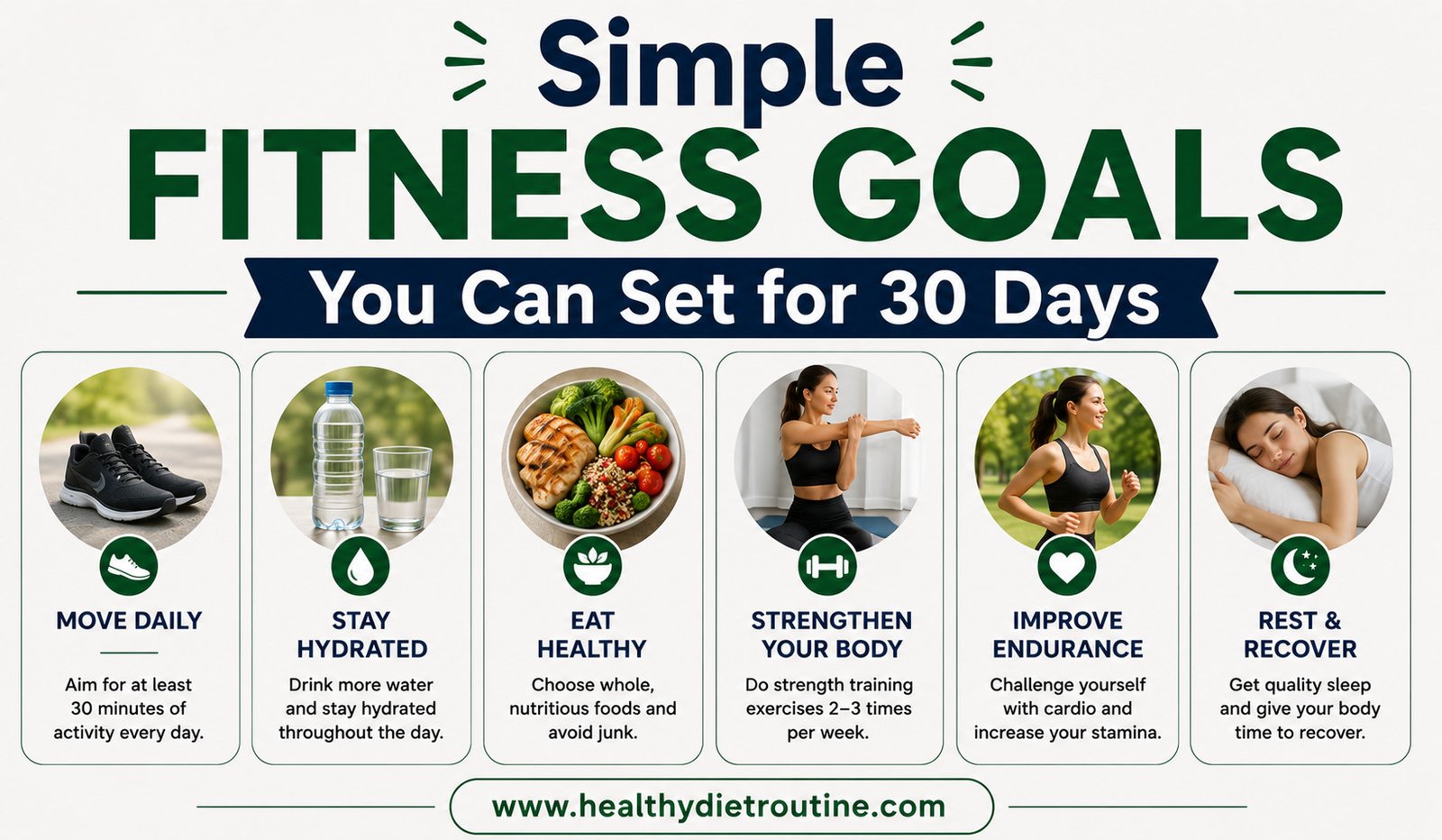
A 30-day fitness goal can be a simple way to bring more structure to your exercise routine. Thirty days is long enough to practice new habits while still feeling like an achievable short-term challenge. You do not need to train intensely every day or completely change your lifestyle to make meaningful progress.
The best 30-day fitness goals are realistic, measurable, and suited to your current fitness level. Whether you are a beginner, returning to exercise, or simply looking for more consistency, choosing one or two clear targets can make it easier to stay motivated.
Here are some simple fitness goals you can set for the next 30 days.
Why Choose a 30-Day Fitness Goal?
Long-term fitness goals can sometimes feel overwhelming. A goal such as “become healthier” or “get stronger” may be difficult to measure because it does not have a clear starting point or deadline.
A 30-day goal gives you a defined period to focus on one behavior or improvement. You can track your progress throughout the month and review what worked at the end.
The goal is not necessarily to achieve a dramatic physical transformation in 30 days. Instead, use the month to build consistency, improve your habits, and create a foundation for longer-term fitness.
1. Walk More Every Day
Walking is one of the easiest fitness habits to introduce into your routine.
Instead of choosing an extreme daily target, aim to increase your walking gradually from your current level. You could take a short walk in the morning, walk after dinner, or take movement breaks during work.
Track your walks by time, distance, or another measure that feels practical.
The objective is to make regular movement a normal part of your day rather than treating exercise as something that only happens during formal workouts.
2. Complete Three Workouts Each Week
A simple goal for beginners is to complete three planned workouts each week for 30 days.
Your sessions do not need to be extremely long. Depending on your fitness level, they could include strength exercises, brisk walking, cycling, yoga, bodyweight movements, or another activity you enjoy.
Scheduling workouts in advance can make the goal easier to follow.
If you miss a planned session, do not abandon the challenge. Simply continue with your next available workout.
3. Build a Basic Strength Routine
Strength training can be an excellent 30-day focus.
Choose a small number of basic movements that match your ability. These might include squats, supported lunges, wall push-ups, regular push-ups if appropriate, glute bridges, rows using resistance bands, or other beginner-friendly exercises.
Focus on learning good technique before increasing resistance or repetitions.
Your goal could be to complete two or three strength sessions each week while gradually becoming more comfortable with the exercises.
4. Improve Your Exercise Technique
Fitness goals do not always have to involve doing more.
A valuable 30-day goal could be improving the quality of your movements. Spend the month learning how to perform exercises such as squats, lunges, push-ups, planks, or resistance-band movements with controlled technique.
Record yourself occasionally if you can do so safely, or consider working with a qualified fitness professional for guidance.
Better technique can provide a stronger foundation for future training.
5. Hold a Plank for Longer
If you enjoy measurable challenges, improving your plank endurance can be a simple goal.
Start with a duration that is appropriate for your current ability. Gradually increase the time over the month rather than attempting to hold a plank for as long as possible immediately.
Focus on maintaining a stable position rather than simply chasing a bigger number.
If your form begins to break down, stop and rest.
6. Improve Your Mobility
A 30-day mobility goal can be useful if you spend much of your day sitting.
Spend a few minutes each day moving areas such as your shoulders, hips, ankles, and upper back through comfortable ranges of motion.
You might create a short routine that includes gentle shoulder circles, hip movements, ankle mobility, and controlled stretches.
Consistency is more important than making the routine long.
7. Take Regular Movement Breaks
If you work or study at a desk, make movement breaks your 30-day fitness goal.
Set practical reminders to stand up and move around during long periods of sitting. Walk to refill your water bottle, stretch gently, or spend a few minutes away from your workstation.
This goal does not require a traditional workout. It simply encourages you to interrupt long periods of inactivity.
8. Try a New Physical Activity Every Week
If you quickly become bored with repetitive workouts, make variety your goal.
During the month, try different activities such as cycling, swimming, dancing, hiking, badminton, yoga, or a beginner fitness class.
You may discover an activity you genuinely enjoy.
Finding enjoyable ways to move can make it easier to stay active after the 30-day challenge ends.
9. Improve Your Workout Consistency
Instead of setting a performance goal, focus on showing up.
For example, aim to complete a certain number of planned exercise sessions during the month.
You can mark each completed session on a calendar or in a simple notes app.
This approach shifts your attention from immediate physical results to building the habit of regular exercise.
10. Increase Your Cardio Endurance Gradually
If you already enjoy walking, cycling, jogging, swimming, or another cardiovascular activity, use 30 days to gradually improve endurance.
You could aim to exercise for a slightly longer period or cover a little more distance than you currently do.
Avoid increasing duration and intensity dramatically at the same time. Give your body time to adapt and include easier days.
A gradual approach can make your goal more sustainable.
11. Practice Stretching Regularly
Another simple goal is to establish a short stretching routine.
You could spend five to ten minutes stretching after appropriate workouts or during a quiet part of your day.
Focus on comfortable movements rather than trying to achieve extreme flexibility.
If a stretch causes pain, stop and choose a gentler movement.
12. Improve Your Balance
Balance is an important part of everyday movement and can be practiced with simple exercises.
You might practice standing on one foot near a stable surface for support. As your control improves, you can gradually increase the duration.
Do not perform balance exercises in unsafe locations or where a fall could cause injury.
A 30-day balance goal can focus on improving control and confidence rather than achieving a specific advanced position.
13. Reduce Long Periods of Inactivity
Rather than focusing entirely on workouts, set a goal to spend less time sitting continuously.
Take short walking breaks, stand while doing certain tasks, or move around during phone calls when practical.
This can be particularly useful if your daily routine involves many hours at a desk.
Small amounts of movement throughout the day can complement your planned exercise sessions.
14. Track Your Progress
Tracking can make a 30-day fitness goal more motivating.
You could record workouts completed, walking time, exercise repetitions, cycling distance, flexibility improvements, or simply the number of active days.
Avoid becoming obsessed with daily numbers. The purpose of tracking is to understand your progress and encourage consistency.
A simple calendar with a mark for each completed session may be enough.
15. Set a Recovery Goal
Fitness is not only about training. Recovery also deserves attention.
You could make a 30-day goal to maintain a consistent sleep schedule, take planned rest days, or avoid turning every workout into a high-intensity session.
Giving your body appropriate recovery time can help you maintain your routine more comfortably.
A recovery goal can be particularly useful if you have a habit of doing too much when you first become motivated.
How to Choose the Right 30-Day Fitness Goal
Start by considering your current fitness level and daily schedule.
If you are new to exercise, a consistency goal such as completing three manageable workouts per week may be more appropriate than trying to run a certain distance.
If you already exercise regularly, you might focus on improving endurance, strength, mobility, or technique.
Choose something that can be measured. “Exercise more” is vague, while “complete three workouts each week” provides a clear target.
Most importantly, make the goal challenging enough to keep you interested but realistic enough that you can actually maintain it.
Avoid the All-or-Nothing Approach
A 30-day challenge should not become a test of perfection.
If you miss a workout, eat differently than planned, or have a busy day, do not assume that the entire challenge has failed.
Return to your routine as soon as practical.
Progress is rarely perfectly linear. Building a lasting fitness habit means learning how to continue even when your schedule does not go exactly as planned.
Combine Fitness Goals With Healthy Habits
Your exercise goal can become easier when supported by other healthy routines.
Prepare workout clothes in advance, keep your exercise equipment accessible, stay hydrated, plan enough recovery time, and maintain balanced meals.
You do not need to change everything at once. Choose a few habits that support your main goal.
For example, if your goal is to walk regularly, keeping comfortable walking shoes ready can remove a small barrier to getting started.
What to Do After the 30 Days
At the end of the month, review your progress.
Ask yourself what was easy, what was difficult, and which habits you actually enjoyed.
If you achieved your goal comfortably, you can gradually increase the challenge. If it was too difficult, adjust it rather than giving up.
You can also choose a completely different goal for the next month. One month might focus on consistency, while the next focuses on strength, endurance, mobility, or another aspect of fitness.
The long-term objective is to build a sustainable relationship with physical activity.
Final Thoughts
A 30-day fitness goal does not need to be extreme to be valuable. Walking more, completing regular workouts, improving exercise technique, practicing mobility, taking movement breaks, or trying new activities can all provide realistic starting points.
Choose one clear goal, track your progress, and give yourself room for imperfect days. Avoid comparing your progress with other people and focus on what is appropriate for your current fitness level.
Thirty days can be enough to create momentum. By using the month to practice consistent habits rather than chase dramatic results, you can build a stronger foundation for an active lifestyle that continues long after the challenge ends.