Simple Leg Exercises for a Home Workout
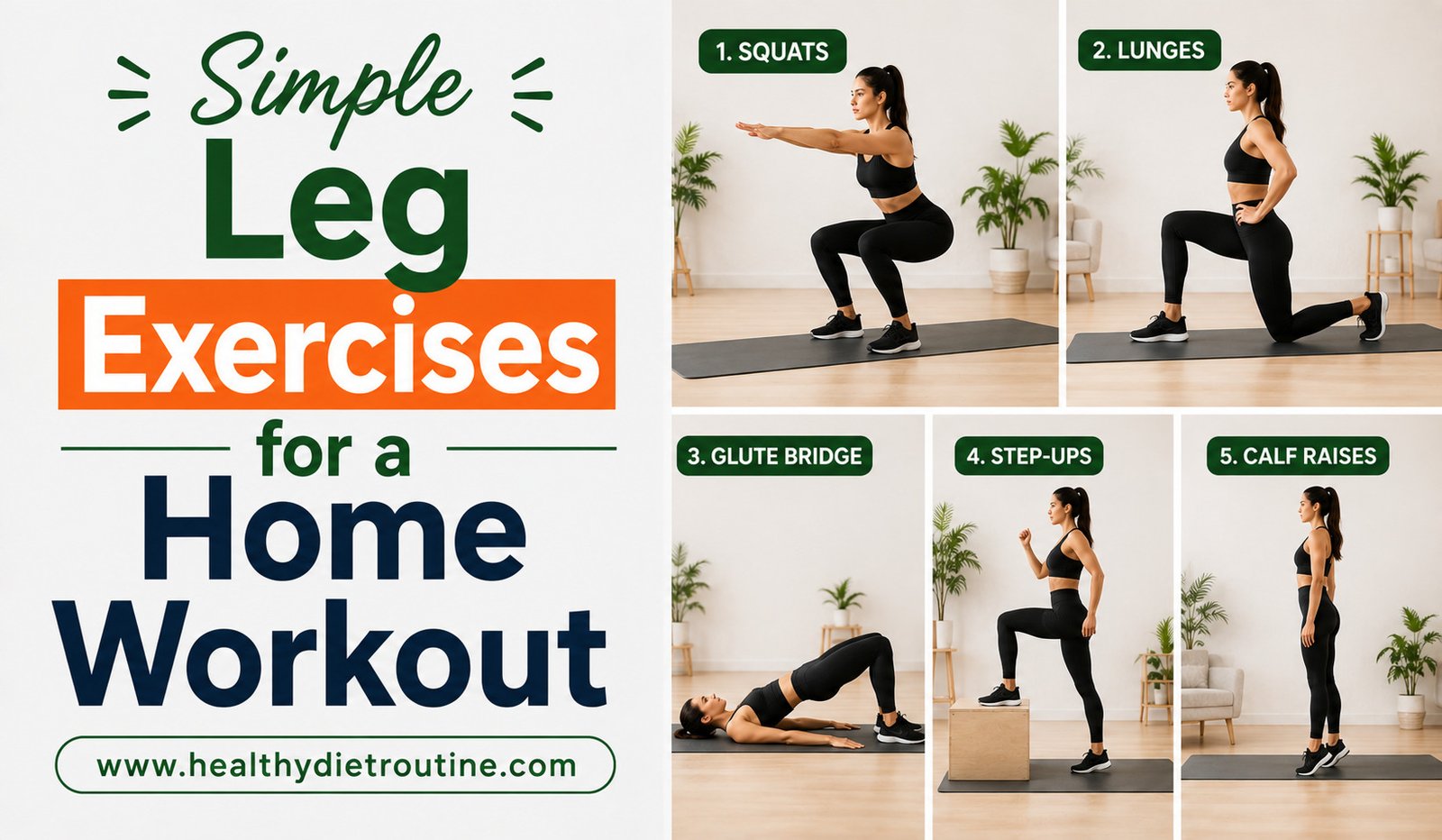
Strong legs are important for much more than athletic performance. Your legs support your body while you walk, climb stairs, stand, bend, and perform everyday activities. Building lower-body strength can also improve balance, coordination, and general physical fitness.
The good news is that you do not need a gym membership or expensive equipment to exercise your legs. Many effective movements use your body weight and can be performed in a small area at home.
If you are a beginner, the goal should be to learn the movements, maintain good control, and gradually increase the challenge. Here are some simple leg exercises for a home workout that can help you create a practical lower-body routine.
Why Leg Exercises Matter
The legs contain some of the body’s largest muscle groups, including the muscles around the thighs, hips, and calves. Regular strengthening exercises can help improve functional strength and make everyday movements feel easier.
Leg workouts do not have to involve heavy weights. Bodyweight exercises such as squats, lunges, glute bridges, and calf raises can provide a useful starting point.
A balanced routine should also include adequate rest. Your muscles need time to recover between challenging sessions.
1. Bodyweight Squats
Squats are one of the most accessible lower-body exercises for beginners.
Stand with your feet comfortably apart. Keep your chest upright and slowly bend your knees while moving your hips backward. Lower yourself only as far as feels comfortable, then push through your feet to return to standing.
Try 8–12 repetitions for one set.
Focus on smooth movement rather than trying to squat as deeply or quickly as possible. If you need extra support, practice near a sturdy surface.
2. Chair Squats
Chair squats are useful for beginners who are still developing confidence and balance.
Stand in front of a sturdy chair with your feet comfortably positioned. Slowly lower your hips toward the chair until you lightly touch it, then stand back up.
The chair provides a reference point and can make it easier to control the depth of the movement.
Start with 8–12 repetitions and gradually work toward regular bodyweight squats as you become more comfortable.
3. Glute Bridges
Glute bridges target the muscles around your hips and lower body while also requiring core stability.
Lie on your back with your knees bent and feet flat on the floor. Keep your arms beside you and lift your hips slowly. Pause briefly at the top before lowering them.
Perform 10–15 repetitions.
Avoid using momentum. Concentrate on controlled movement throughout the exercise.
4. Reverse Lunges
Lunges can challenge your legs and balance, but beginners may find reverse lunges easier to control than stepping forward.
Stand upright and step one foot backward. Bend both knees comfortably and lower your body, then push through the front foot to return to the starting position.
Alternate legs and maintain a controlled pace.
Start with 6–10 repetitions per side.
If balance is difficult, perform the exercise near a wall or sturdy surface.
5. Calf Raises
Calf raises are simple and require very little space.
Stand upright with your feet comfortably positioned. Slowly raise your heels until you are standing on the balls of your feet, then lower your heels back down.
Use a wall or sturdy surface for balance if necessary.
Try 10–15 repetitions and gradually increase the number as your calves become stronger.
6. Step-Back Taps
Step-back taps are a beginner-friendly lower-body movement that also works on coordination.
Stand upright and move one foot backward, lightly tapping the floor. Bring it forward again and repeat with the other leg.
Keep your weight controlled and avoid rushing.
Perform the movement for 30–60 seconds or complete several repetitions per side.
This exercise can also work well as part of a warm-up.
7. Wall Sit
Wall sits are an isometric exercise that challenges the muscles of the thighs.
Stand with your back against a wall and slowly slide downward until your knees are comfortably bent. Hold the position for several seconds before returning to standing.
Beginners do not need to reach a deep squat position. A higher position can make the exercise easier.
Start with a 10–20 second hold and rest between attempts.
8. Side Leg Raises
Side leg raises focus on the muscles around the hips and outer legs.
Stand beside a sturdy surface for support. Slowly lift one leg out to the side while keeping your upper body relatively still. Lower the leg with control and repeat.
Perform 8–12 repetitions per side.
Avoid swinging the leg. A smaller, controlled movement is usually more useful than a large movement performed with momentum.
9. Standing Hamstring Curls
Standing hamstring curls are another simple exercise that can be performed without equipment.
Stand upright while holding a sturdy surface if needed. Bend one knee and bring your heel toward the back of your body, then lower it slowly.
Alternate legs or complete one side at a time.
Try 10–12 repetitions per side.
Keep your thighs relatively stable instead of moving your entire leg backward.
10. Supported Split Squat
A split squat can provide a stronger challenge for each leg individually.
Stand with one foot slightly in front of the other. Hold a wall or sturdy surface if needed. Bend both knees and lower your body comfortably, then push through your feet to return to the starting position.
Begin with 6–10 repetitions per side.
Because balance can be challenging, use support until you are confident with the movement.
11. Glute Kickbacks
Glute kickbacks can be performed standing and are easy to adapt for beginners.
Hold onto a sturdy surface and stand tall. Slowly extend one leg backward without leaning forward excessively. Return the leg to the starting position and repeat.
Complete 8–12 repetitions per side.
Keep the movement controlled and avoid swinging your leg.
12. Marching in Place
Marching may seem simple, but it can add movement and challenge the legs while raising your activity level.
Stand upright and alternate lifting your knees. Move your arms naturally and maintain a comfortable pace.
March for 30–60 seconds.
You can use this movement as a warm-up, between strength exercises, or as a low-impact activity during a home workout.
A Simple Beginner Leg Workout
You do not need to perform all 12 exercises during one session. A simple routine could include:
- Chair or bodyweight squats – 8–12 repetitions
- Glute bridges – 10–15 repetitions
- Reverse lunges – 6–10 repetitions per side
- Calf raises – 10–15 repetitions
- Side leg raises – 8–12 repetitions per side
- Wall sit – 10–20 seconds
- Marching in place – 30–60 seconds
Start with one round and rest between exercises. As your fitness improves, you can gradually add another round or increase repetitions.
How to Make Leg Exercises More Challenging
You do not need weights to progress your workout. Once basic exercises become easier, you can increase repetitions, add another set, slow down the movement, or increase the range of motion when comfortable.
For example, you might progress from chair squats to regular squats and later to split squats or other more challenging variations.
Another option is to reduce rest periods slightly, provided you can still maintain proper technique.
Progress should be gradual. There is no benefit to making an exercise unnecessarily difficult if you cannot perform it with control.
Common Mistakes to Avoid
A common mistake is rushing through repetitions. Fast movements can reduce control and make it harder to maintain proper form.
Another mistake is trying to copy advanced workouts immediately. Beginners should start with easier variations and build strength over time.
Do not ignore balance problems. Use a wall or sturdy support when necessary, particularly during lunges, split squats, and single-leg movements.
It is also important to give your body adequate recovery time. Performing intense leg workouts every day is not necessary for most beginners.
Safety Tips for Home Leg Workouts
Choose a clear, stable area where you can move without slipping or hitting furniture. Wear comfortable footwear when appropriate and make sure the surface is suitable for the exercises you are performing.
Start with a few minutes of gentle movement to warm up. Focus on comfortable ranges of motion and controlled repetitions.
Exercise should create effort, but sharp or unusual pain is a reason to stop. If you have an existing injury, health condition, or specific exercise restrictions, consider speaking with a qualified healthcare or fitness professional before starting a new workout routine.
Final Thoughts
Simple leg exercises at home can help beginners build lower-body strength without needing a gym or specialized equipment. Squats, glute bridges, reverse lunges, calf raises, wall sits, side leg raises, and standing movements are practical options for creating a home workout.
The most important part is consistency. Start with a manageable number of exercises, focus on good technique, and increase the challenge gradually.
You do not need an advanced routine to become stronger. A simple workout performed regularly can help you build a foundation for a more active and healthier lifestyle.